Showing posts with label aluminium. Show all posts

17 Dec 2013

The new classier, luxurious and far better looking Mercedes C-Class

The all-new C-Class heralds a new chapter in the Mercedes-Benz success story and sets new standards in the premium mid-range class. Thanks to an intelligent lightweight design concept boasting weight savings of up to 100 kilograms, excellent aerodynamics and new, economical engines, the C-Class establishes new benchmarks in its class. A host of new assistance systems offer safety of the highest standard, while a new suspension, optionally air-sprung, provides for exemplary ride and driving comfort as well as nimble and agile handling.


In terms of appearance, the new C-Class adopts a progressive approach with its clear yet emotional design and its high-class interior. Many other innovations and interior touches underscore the Saloon's comfort and refined sportiness. In all, the perceived quality of the new C-Class feels like an “upgrade to a higher class of travel”.

The C-Class is the biggest-selling model series from Mercedes-Benz. Sales of the preceding model, which was launched in 2007, total over 2.4 million (165,194 examples in the UK). The new C-Class offers sensuous and clear design and a host of technical innovations as well as a comprehensive scope of standard equipment and exemplary emission and fuel consumption values.


"Mercedes at its best - that's the new C-Class, which sets new standards for the mid-range segment on many fronts," says Prof. Dr Thomas Weber, Member of the Board of Management of Daimler AG responsible for Group Research and Mercedes-Benz Cars Development. "It is characterised by an emotional yet clear design which is continued in the high-quality and modern interior. Its efficient and high-performance engineering provides the basis for a high standard of driving enjoyment."

Ola Källenius, Executive Vice President, Sales and Marketing Mercedes-Benz Cars, adds: "The new C-Class embodies Mercedes-Benz's claim "The best or nothing" in uncompromising style. This is immediately apparent when encountering our new Saloon for the first time, as it creates the impression that one is sitting in a higher class of automobile. I am sure that our customers will be delighted by the high-class appeal and agility of the new C-Class."


The C-Class has grown to take account of people's increasing average height. With an 80-mm increase in the wheelbase (2840 mm) compared with the previous model, the vehicle is 95 mm longer (4686 mm and 40 mm wider (1810 mm). The resultant additional space benefits first and foremost the rear passengers, who now travel in even greater comfort. The new C-Class also outstrips its predecessor in terms of boot capacity, at 480 litres (in accordance with ISO 3832).

Sensuous clarity and purist forms

On a visual level, the new C-Class represents a bold departure from its predecessor. Its striking, dynamic design exudes sensuous clarity and arouses emotions. Nature was a source of inspiration for the new Saloon's aesthetically sensuous lines and surfaces, whose harmony and dynamism create an immediate effect. The designers have created minimalist, purist forms for the C-Class, which emphasize its intelligent technology and engineering. The clearly defined surfaces deliberately display a degree of tension, lending them a muscular and sensuous character. Precise lines and sculptural surfaces create lively light and shade effects.


As Gorden Wagener, Vice President Design Daimler AG, notes: "The new C-Class showcases automotive passion by way of a contemporary design idiom. Progressive and emotional highlights underscore the ground-breaking design style of the new C-Class and demonstrate sensual clarity. The new C-Class interprets modern luxury on a new level.

In the side view a long bonnet, a passenger compartment set well back and short overhangs define the C-Class's classic, well-balanced Mercedes-Benz saloon proportions. Large wheels emphasise the rear and communicate a stylishly sporty character.


The new C-Class comes with H7 halogen headlamps as standard. In addition to the standard-fit headlamps, two energy-saving LED variants are available: a static system and a dynamic version with "LED Intelligent Light System". The characteristic night design lends the new C-Class its very own distinctive look in the dark, too. The rear lamp and brake light in the tail lights feature LED technology in all headlamp versions.

High-class interior with fine details

The Mercedes-Benz designers have styled the interior on a level, which is rarely encountered even in higher vehicle categories. This applies to the carefully chosen high-class materials and their pleasant touch and feel as well as the precision of the finely crafted details. The interior also embodies a new design idiom, which combines sensuousness and clarity perfectly with dynamic sportiness and contributes to the quality feel of the interior.

The driver and front passenger enjoy plenty of space and luxury in a discreet, modern guise on board the new C-Class. This gives rise to a feel-good atmosphere, which is new to this class of vehicle – settling into your seat in the C-Class, is akin to the uplifting feeling of being upgraded from economy to business class on an aeroplane.

The interior design demonstrates a bold new approach by Mercedes-Benz. Here the designers combine in accomplished style the architecture of Mercedes-Benz sports cars with an all new centre console featuring flowing lines. In automatic vehicles, a large one-piece centre console panel performs an elegant sweep from the centre air vents to the armrest. These seamless clear-cut lines create a sense of open space and convey a thrillingly purist and modern feel.


On vehicles with manual transmission, the centre console is slightly steeper and features two separate trim elements in order to create ample space for ergonomic operation of the shift lever.

A centrally positioned free-standing central display is the main eye-catching feature across the centre console – with a screen diagonal of 17.78 cm (7 inches), or 21.33 cm (8.4 inches) if COMAND Online is specified.

Five round air vents lend the dashboard a sporty touch. With their metallic cool-touch effect, they create a fascinating, tangible contrast to the warm look of the other materials – such as the wood in the centre console or the leather on the dashboard. The "upgrade" feel duly continues with the controls. All switches feature a high-quality, three-dimensional design befitting a luxury vehicle and benefit from a clear layout.


The innovative touchpad in the handrest over the Controller on the centre tunnel marks a further evolutionary step developed in-house at Mercedes-Benz. As on a smartphone, this provides for very simple and intuitive operation of all the head-unit functions using finger gestures. The touchpad also permits letters, numbers and special characters to be entered in handwriting - in any language. The user receives clear haptic feedback when operating the touchpad's control surface, which is highly conducive to genuine intuitive use.

Head-up display is also new to the C-Class. Like in a jet fighter, it displays important information directly in the driver's field of vision on the front windscreen, thus providing for clear legibility and ensuring that the driver is distracted less from the road ahead. The system provides information on vehicle speed, speed limits and navigation instructions and displays messages from DISTRONIC PLUS.


Three different design and equipment lines for the exterior and interior respectively offer further scope for individualisation in addition to the standard equipment and appointments.

Robust yet lightweight bodyshell

The body-in-white of the new C-Class provides an innovative basis for reduced weight, outstanding rigidity for excellent handling, combined with optimum noise and vibration characteristics and a high level of crash safety. Thanks to intelligent and innovative lightweight construction, the aluminium hybrid body is around 70 kg lighter than a conventional steel body. The vehicle's overall weight is reduced by around 100 kilograms. As such, the new C-Class leads the "lightweight rankings" in its segment. This spawns numerous benefits: the lightweight construction of the new C-Class cuts fuel consumption by up to 20 per cent without any loss of performance, while at the same time enabling a lower centre of gravity, which in turn gives rise to the vehicle's noticeably sporty and agile handling.

Mercedes-Benz achieves this feat of lightweight construction by various measures, including a completely new structural design and the use of an unusually high proportion of aluminium for a mass-produced range. The share of aluminium has risen compared with the successful predecessor from under 10 per cent to almost 50 per cent.

In keeping with Mercedes-Benz traditions, the body is designed for exemplary crash safety. As a result, the Saloon complies not only with all current national laws but also with all rating requirements, as well as meeting the more stringent internal Mercedes-Benz safety standards based on what actually happens during accidents.

A high-strength safety passenger compartment forms the core of this concept. It is surrounded by specifically configured and field-tested deformation zones, which ensure maximum safety for the occupants by virtue of optimised force paths and a combination of aluminium castings and ultra-high-strength materials. An outer skin consisting almost completely of aluminium provides a protective shell for the body.

Leading the field in aerodynamics and quiet running

Low drag is crucial to achieving outstanding efficiency. From a speed of just under 43 mph, aerodynamic drag exceeds the sum total of all other driving resistance factors. As such, drag constitutes a major parameter in efforts to reduce fuel consumption and CO2 emissions. With a Cd value of 0.24 for the

C 220 BlueTEC ECO, the new C-Class Saloon sets a new benchmark in the mid-range segment. The wind noise level, which was already very low in the preceding generation of the C-Class, has been lowered still further.

The engineers have also devoted painstaking attention to optimising other potential sources of disturbance which may have an adverse effect on the driver's and passengers' wellbeing and concentration, even though they may not consciously notice the effects. NVH (noise, vibration, harshness) is the technical term for such nuisance factors. The specialists have optimised the noise characteristics of the interior blower, the power windows, the seat adjustment functions and many other actuation and operating noises, for example. As a result, the new C-Class occupies a benchmark position in its segment.

Outstanding CO2 values with new small diesel engine

Powerful and efficient petrol and diesel engines, all equipped with the ECO start/stop function and complying with the Euro 6 emissions standard, provide for lively performance and great driving enjoyment. They also cut fuel consumption by up to 20 per cent compared with the preceding model.

Three engine variants are available at the market launch - a diesel in the guise of the C 220 BlueTEC and the two petrol models, C 180 and C 200:


Soon after the launch, Mercedes-Benz will expand the range of engines including a new, small diesel engine with a displacement of 1.6 litres.  Reduced weight, compact design and low fuel consumption are among its special merits. Depending on its configuration, the single-stage supercharged four-cylinder engine generates 115 or 136 hp of power from a cubic capacity of 1598cc and delivers 280 or 320 Nm of torque. Its common rail direct injection system operates at a maximum injection pressure of 1600 bar. This engine places the new C-Class in a leading position within its segment in terms of CO2 emissions.


In addition to this new small diesel engine, an advanced version of the proven 2.2-litre four-cylinder diesel engine is also to become available in several output variants. The diesel engines will then cover an output range from 115 hp to 204 hp. The C 220 BlueTEC will also be available with an output of 170 hp. All the diesel engines of the new C-Class are equipped with the established SCR technology (selective catalytic reduction) for environmental friendly driving and to ensure that the C-Class models with diesel engines attain efficiency class A at least, and in most cases even efficiency class A+.

BlueDIRECT petrol engines with third-generation direct injection

The BlueDIRECT four-cylinder petrol engines of the C-Class combine spontaneous response and exemplary power delivery with high efficiency and best in class emission performance. To this end, Mercedes-Benz has transferred the BlueDIRECT technology from the V6 and V8 engines to the four-cylinder engine. The direct injection system with spray-guided combustion, which was introduced into series production by Mercedes-Benz as the first automotive manufacturer, employs a multiple injection process, which is precision-controlled by means of an electronic system. The third-generation direct injection technology is complemented by "fast multiple ignition"

Hybrid with four-cylinder diesel and petrol engine

As in the S and E-Class, Mercedes-Benz will additionally be offering a diesel engine combined with a hybrid module. The C 300 BlueTEC HYBRID with four-cylinder diesel engine and a compact electric motor generates an output of 204 + 27 hp and runs on only 72.4 mpg in NEDC combined mode (provisional figure). A further particularly economical hybrid model, which is to follow in time, will feature state-of-the-art plug-in technology.

Optimised drivetrain

Depending on the installed output ratings, Mercedes-Benz is offering two new 6-speed manual transmissions for the four-cylinder engines in the new C-Class which stand apart first and foremost by virtue of their enhanced ease of shifting coupled with increased shifting precision and a harmonious gear-change sequence. Smooth automatic gear shifting is provided by the 7G-TRONIC PLUS automatic transmission, which has undergone further development at Mercedes-Benz in the interests of enhanced environmental-friendliness and driving pleasure.

Suspension – sporty yet comfortable

The suspension on the new C-Class is an all-new development. It provides for nimble and agile handling that makes driving a great pleasure on winding roads while also offering the highest standard of ride comfort in the segment.

A newly designed 4-link front axle plays a major part in the agile handling characteristics. Thanks to the 4-link principle, the front independent suspension is fully decoupled from the spring strut. Axle kinematics allow more grip and higher lateral stability. As a result, the suspension responds more sensitively to steering movements and allows a sporty, agile driving style. An optimised multi-link independent rear suspension with 5-link concept ensures unsurpassed wheel location qualities and supreme straight-line stability.

The new C-Class Saloon is fitted as standard with steel suspension. Three DIRECT CONTROL suspensions with selective damping system are available in conjunction with this suspension:

  • a comfort suspension
  • a lowered comfort suspension with a sportier character
  • a sports suspension lowered by 15 mm
First air suspension in this category

Alternatively, the new C-Class is the first vehicle in its segment that can be fitted with an air suspension (AIRMATIC) on the front and rear axles. Thanks to electronically controlled, continuous variable damping at the front and rear, it offers outstanding road roar and tyre vibration characteristics even with the vehicle loaded. The driver can use the AGILITY SELECT switch to choose between the various characteristics: "Comfort", "ECO", "Sport" and "Sport+". The additional "Individual" option enables drivers to configure their vehicle according to their own wishes. AIRMATIC also features all-round self-levelling for optimum ride comfort even when the vehicle is loaded.


The new C-Class also comes with an electric parking brake as standard. This brake is released automatically when the driver ends parking mode with the aim of moving off.

Steering with a sporty character

All models of the C-Class family will feature the electromechanical Direct Steer system as standard. This combines road-speed-dependent power assistance from the speed-sensitive power steering system with a steering ratio, which varies according to the given steering angle. The power steering assistance provided by the rack and pinion steering gear is controlled on-demand, thereby contributing towards efficiency.

Mercedes-Benz Intelligent Drive: The intelligent car

It is the declared aim of Mercedes-Benz to make the highest standard of safety available to everyone. To this end, the new C-Class incorporates almost all of the new assistance systems with a host of enhanced functions, which celebrated their world premiere in the S-Class and E-Class only a few months ago. The assistance systems enhance both comfort and safety. Mercedes-Benz calls this Intelligent Drive.

The new C-Class offers numerous innovative safety and assistance systems. It is fitted as standard with ATTENTION ASSIST, which can warn the driver of inattentiveness and drowsiness. On motorways, the COMAND system navigation function flags up nearby break options as stopovers, providing the system has been specified in the vehicle. The ATTENTION ASSIST function offers an adjustable level of sensitivity and can inform the driver in a separate view in the instrument cluster about their level of drowsiness and how long they have been driving since their last break.


In addition to Adaptive Brake Assist, which offers protection from collisions from speeds as low as 5 mph, standard-fit COLLISION PREVENTION ASSIST PLUS also features an additional function: when a danger of collision persists and the driver fails to respond, the system is able to carry out autonomous braking at speeds of up to 125 mph, thereby reducing the severity of collisions with slower or stopping vehicles. The system also brakes in response to stationary vehicles at a speed of up to 31 mph, and is able to prevent rear-end collisions at speeds of up to 25 mph.

New assistance systems and existing assistance systems with a host of enhanced functions from the new S-Class and E-Class are also optionally available, combining data from various sensor technologies as part of the Intelligent Drive concept to enhance comfort and safety substantially:

  • DISTRONIC PLUS with Steering Assist and integrated Stop Go Pilot is a semi-automatic traffic jam assistant which at speeds less than 37 mph is able to follow the vehicle ahead even where lane markings are unclear or completely lacking, thus providing a safe and convenient means of following the flow of traffic.
  • The BAS PLUS Brake Assist System can now also detect crossing traffic and boost the braking force if the driver fails to apply the brakes sufficiently; the PRE-SAFE® Brake can detect stationary vehicles as well as pedestrians, brake automatically if the driver fails to react, thus preventing accidents up to 31 mph and mitigating the severity of collisions at speeds of up to 45 mph. In flowing traffic, the PRE-SAFE® Brake provides assistance according to the same mode of operation throughout the speed range from five to 125 mph.
  • Enhanced Active Lane Keeping Assist can now also prevent the vehicle from unintentionally drifting out of lane when broken lane markings apply and a risk of a collision arises, e.g. as a result of vehicles overtaking at high speed, parallel traffic or even oncoming traffic, by applying the brakes on one side.

The numerous assistance systems also include

  • Active Parking Assist, which enables automated parking with active steering and brake intervention in both parallel and end-on parking spaces,
  • a 360° camera, which is able to show the vehicle and its surroundings from various perspectives, including a virtual bird's eye view,
  • Traffic Sign Assist with Wrong-Way Alert, which warns of speed limits and alerts the driver to no-overtaking zones and no-entry signs,
  • Adaptive Highbeam Assist Plus, which allows the high-beam headlamps to be kept on permanently without dazzling traffic by masking out other vehicles in the cone of light from the high-beam headlamps.

Airbags for safety

In addition to 3-point seat belts with pyrotechnical belt tensioning and belt force limitation for the driver, the front passenger and those in the outer rear seats, numerous airbags serve to protect the vehicle's occupants in an accident.

These include:

  • pelvisbags for driver and front passenger
  • a newly developed windowbag
  • sidebags for the outer rear seats
  • a kneebag for the driver

The front passenger seat can additionally be fitted with automatic child seat recognition, which dispenses with the previous transponder in favour of a weight mat. This enables any child seat to be used. The airbag is automatically deactivated when a child seat is fitted and reactivated once it has been removed.

Air conditioning: signals from space

Mercedes-Benz has undertaken systematic further development and substantial improvement of the air conditioning system in the new C-Class. This applies in particular to the control quality, performance, efficiency and air quality. The new C-Class is also the only vehicle in the segment to offer tunnel detection via satellite navigation. It uses the map information from the navigation system and the GPS location data to close the air recirculation flap automatically when the vehicle enters a tunnel, subsequently re-opening it when the vehicle emerges from the tunnel.


Another highlight contributing to a feel-good atmosphere is the AIR-BALANCE package with active fragrancing, air ionisation and more efficient filtration than is available on the standard model.

Vibrant infotainment

A completely new multimedia generation offers intuitive operation in the new C-Class, featuring elaborate animations and visual effects, which present all the functions in a clear and highly attractive manner. The new C-Class is also equipped with the unique Frontbass system. This avant-garde acoustic systems uses the space within the cross-member and side member in the body structure as a resonance chamber for the bass speakers to conjure up a listening experience almost on a par with a concert hall. A Burmester® surround sound system is optionally available.

The navigation system presents its contents in interactive mode. Its features include an animated compass, a "Drive Show" with information for passengers similar to the on-screen presentations on board aeroplanes and Google Maps displayed on the head unit. The navigation system is also able to provide more accurate real-time information about the situation on the roads when it receives its traffic data via internet by means of the "Live Traffic Information" service.

Internet and diverse data sources already available in the basic version

A Bluetooth-capable mobile phone with data option is all it takes to make the Audio 20 system internet-capable. This enables the internet to be surfed without restrictions when the vehicle is stationary. While on the move, Mercedes-Benz Apps such as Weather, GoogleTM Local Search with StreetView and Panoramio, Destination/Route Download and Facebook can be used.


Audio and video playback is possible from various sources, e.g. via Bluetooth, from the Apple iPod and iPhone, from SD card, USB stick or CD/DVD (with Audio 20 CD or higher and with COMAND Online).

COMAND Online with hotspot functionality

COMAND Online not only offers a larger display with a resolution of 960 x 540 pixels and a special bonded glass cover such as is familiar from consumer devices like the iPhone or iPad. It also enables digital TV / radio reception, for example, and offers a host of other features including fast hard-disc navigation, automatic tailback avoidance via up-to-date and accurate "Live Traffic Information" traffic data, integrated WLAN hotspot functionality and the LINGUATRONIC voice control system.


Telephony via Bluetooth as standard

The basic Audio 20 system as well as Audio 20 CD and COMAND Online all offer basic telephony as standard, which links up a mobile phone to the vehicle via a standard Bluetooth interface.

UK specification and pricing are still to be confirmed.

11 Dec 2013

Stunning A1 crossover concept to debut at NAIAS in Detroit


  • Crossover for all roads and tracks, for everyday driving and recreational use
  • Pioneering design, with precise lines and taut surfaces
  • Audi to present the two-door car at the NAIAS in Detroit

Agile, compact and versatile: The new Audi show car is making its debut in January 2014 at the North American International Auto Show (NAIAS) in Detroit. The two-door model with its high ground clearance is a crossover with a distinctly sporting slant – a car for all roads and tracks, for everyday driving and recreational use.

The show car is a systematic development of the Audi design language. It combines a host of visual elements from future models with the Audi-typical allroad concept and independent “Shooting Brake”
body style.

Measuring 4.20 metres in length, the show car has a powerful road stance. Precise and clearly drawn lines as well as geometric surfaces are combined to create a sculpted, clear design form. It is almost as if the outer skin of the two-door car has been modelled from a solid piece, from the Singleframe grille and striking side tornado line to the taut, coupé-like rear. The overhangs are short; the roof line is low and it ends in a strong C pillar. The pronounced horizontal body line and the large 19-inch wheels emphasise the impression of concentrated energy.

The show car is a compelling blend of form and function. The characteristic allroad design features serve to seemingly contract its dimensions visually while also underscoring its offroad character. The aluminium underbody guards at front and rear emphasize the width and protect the car off road.

Design elements that are typical of e-tron models, such as the ribs in the Singleframe grille and in the side air inlets, fit in harmoniously with the overall design concept. The dual headlights and the honeycomb-structured Singleframe grille indicate the further development of the quattro design language which Audi already presented with its Sport quattro concept show car in September of this year at the International Motor Show (IAA) in Frankfurt.

20 Nov 2013

The most stunning car in the world - I give you the new Jaguar F-Type Coupe


  • The new F-TYPE Coupé is the most dynamically capable, performance-focused, production Jaguar ever
  • The model line-up is headlined by the F-TYPE R Coupé, its 550PS/680Nm 5.0-litre V8 supercharged engine enabling acceleration from 0-60mph in 4.0-seconds, and a top speed of 186mph (limited)
  • The F-TYPE R Coupé features Jaguar’s second-generation Electronic Active Differential which works in parallel with a new Torque Vectoring by braking system to deliver enhanced agility and exploitable handling at the limit
  • F-TYPE Coupé builds on Jaguar’s industry-leading expertise in aluminium delivering torsional rigidity of 33,000 Nm/degree – it is the most torsionally rigid production Jaguar ever
  • The all-aluminium F-TYPE Coupé embodies the uncompromised design vision of the award-winning C-X16 concept
  • F-TYPE S Coupé and F-TYPE Coupé models complete the range, powered respectively by 380PS and 340PS versions of Jaguar’s 3.0-litre supercharged V6 engine, giving 0-60mph in 4.8/5.1-seconds and top speeds of 171/161mph
  • F-TYPE Coupé price starts at £51,235 on-the-road (OTR)
  • F-TYPE S Coupé from £60,235 and F-TYPE R Coupé priced at £85,000 OTR
  • A Carbon Ceramic Matrix (CCM) braking system – featuring 398/380mm discs front/rear – is optional on both F-TYPE R and F-TYPE S Coupé models
  • All engines drive the rear wheels through an eight-speed 'Quickshift' transmission with full manual sequential control via steering wheel-mounted paddles or the central SportShift lever
  • The F-TYPE Coupé has up to 407-litres* of boot space – easily accommodating two sets of golf clubs – the tailgate being available with power assisted opening
  • The F-TYPE Coupé range complements the existing 2013 ‘World Car Design of the Year’ award-winning F-TYPE Convertible model line-up of F-TYPE,
  • F-TYPE S and F-TYPE V8 S

The all-aluminium F-TYPE Coupé – the most dynamically capable, performance-focused sports car that Jaguar has ever produced – is available in three versions: F-TYPE R, F-TYPE S and the F-TYPE.

The range-topping F-TYPE R Coupé is powered by Jaguar’s 5.0-litre supercharged V8 engine in 550PS/680Nm tune, delivering acceleration to 60mph in 4.0-seconds, and a top speed of 186mph (electronically limited).


The F-TYPE S Coupé and F-TYPE Coupé are powered by Jaguar’s 3.0-litre V6 supercharged petrol engines in 380PS/460Nm and 340PS/450Nm forms respectively, giving 0-60mph in 4.8/5.1-seconds and top speeds of 171/161mph.

The F-TYPE Coupé embodies the uncompromised design vision of the stunning Jaguar C-X16 concept sports coupé that debuted at the 2011 Frankfurt Motor Show, its dramatic cabin-rearward stance being defined by three heartlines. The first two heartlines – shared with F-TYPE Convertible – form the muscular front and rear wings, the third heartline being the sweeping Coupé roof profile which provides an unbroken silhouette while emphasising the visual drama of the tapered cabin sitting between powerful rear haunches.


“The F-TYPE Coupé provides its driver with a unique sports car experience. It combines seductive design with cutting-edge technology and performance which is truly breathtaking. Engaging, precise, intuitive and alive – it is the definitive sports Coupé.”
Phil Popham, Group Marketing Director, Jaguar Land Rover

Jaguar’s expertise in aluminium technology has enabled the design vision for the F-TYPE Coupé to be delivered in a lightweight yet extremely strong bodyshell. Torsional rigidity for all F-TYPE Coupé variants is 33,000 Nm/degree – greater than in any previous production Jaguar – this rigidity providing the basis for excellent dynamic attributes.


The F-TYPE Coupé’s body side is made from a single-piece aluminium pressing, probably the most extreme cold-formed aluminium body side in the automotive industry, eliminating the requirement for multiple panels and cosmetic joints. The roof panel itself is available in either aluminium or panoramic glass form. A deployable rear spoiler sits within the tapered shut-line of the F-TYPE Coupé, while slim, wrap-around LED lamps flank a beautifully engineered tailgate, with optional powered open/close functionality.

To deliver assured, progressive handling in line with its 550PS output, the range-topping F-TYPE R Coupé features a bespoke suspension set-up and new dynamic technologies. These include a second-generation Electronic Active Differential (EAD) and – for the first time on a Jaguar – Torque Vectoring by braking, these systems working in parallel to provide immediacy of response and exploitable handling. The EAD system automatically redistributes engine torque between the rear wheels to ensure excellent on-the-limit control, while Torque Vectoring by braking intelligently applies precisely metered braking force to the inner wheels as necessary during cornering to enhance agility. Sports suspension with Adaptive Dynamics damping and Configurable Dynamic Mode further enhance the F-TYPE R’s immediacy of response, providing an exhilarating and involving driving experience.

F-TYPE R and F-TYPE S Coupé models also have the option of Carbon Ceramic Matrix (CCM) brakes which offer absolute consistency of performance and excellent fade resistance, as well as a total unsprung-weight saving of 21kg.

Every F-TYPE Coupé model utilises Jaguar’s eight-speed close-ratio Quickshift transmission which is optimised for sporting performance, with full manual sequential control from the central SportShift selector or steering wheel-mounted paddles.


The F-TYPE Coupé range complements the existing three-car F-TYPE Convertible model line-up; the V6-engined F-TYPE (340PS) and F-TYPE S (380PS), and the 495PS F-TYPE V8 S.

“With F-TYPE Coupé, the Jaguar engineering team has exceeded our considerable target of building a car that delivers even more driver reward than the acclaimed F-TYPE Convertible. Engineering an exceptionally rigid all-aluminium Coupé body structure was the key to achieving this, as it’s the fundamental basis for enhanced dynamic attributes. The result is that the F-TYPE Coupé is the most dynamically capable and involving Jaguar we’ve ever built.”
Ian Hoban, Vehicle Line Director, Jaguar

F-TYPE COUPE: UK PRICING (OTR)

  • F-TYPE Coupé £51,235
  • F-TYPE S Coupé £60,235
  • F-TYPE R Coupé £85,000

F-TYPE COUPÉ: DESIGN AND STRUCTURE

Visual appeal is fundamental to Jaguar and, as such, the F-TYPE Coupé is immediately recognisable, building on the design of the stunning C-X16 concept sports Coupé and the F-TYPE Convertible – winner of the 2013 ‘World Car Design of the Year’ award.


“Creating a sports Coupé is the purest of design tasks, and also the most challenging; get it right and aesthetically the result will be as dynamic as the car should be rewarding to drive. In F-TYPE Coupé, I believe we’ve got it right.

The purity of the C-X16 concept has been retained without compromise; the F-TYPE Coupé’s long bonnet, low roofline and tapering cabin inspire me every time I see it.”
Ian Callum, Director of Design, Jaguar

The F-TYPE Coupé visual message is defined by three key ‘heartlines’, that visual message beginning with the formidable grille. It is from the twin ‘shark gill’ openings that sit either side of the grille that the essential first heartline – which mirrors the design of the F-TYPE Convertible – flows and begins to take shape. Running up through the headlamp, and accentuated by the LED ‘J blade’ daylight running lamps, the line then arcs up over the front wheelarch before dropping elegantly as it runs through the door, washing out into the muscular rear haunch.


The Coupé’s second heartline, also shared with the Convertible, begins at the rear edge of the door, swelling outwards and upwards to create a visually strong wheelarch, emphasising the car’s rear-wheel drive layout, before dropping vertically through the tail lamp.

The third heartline forms the Coupé’s dramatic, cabin-rearward, sweeping roof profile. Providing an unbroken silhouette, it highlights the visual drama of the tapered cabin nestled between the powerful rear haunches. The distinctive side window graphic, finished as standard in bright aluminium, accentuates both the compactness of the car and the roof profile.

Jaguar's expertise in aluminium vehicle architecture has been essential in enabling both the F-TYPE Coupé’s uncompromised design aesthetic, while delivering the fundamental dynamic attributes – essential to any sports car – of low mass and an extremely rigid body. Measuring 33,000 Nm/degree, the F-TYPE Coupé is the most torsionally rigid production car Jaguar has ever built.

A fundamental requirement for excellent dynamic attributes, delivering that rigidity figure required some innovative engineering solutions in order to maximise strength without impacting on the design vision. Due to the lack of B-pillars, Jaguar’s engineers were presented with the challenge of keeping the design’s sleek, pillarless, low roofline – combined with the need to create the optimum amount of interior space – while still achieving the necessary rigidity and strength targets. The solution was a high-strength, hydro-formed aluminium alloy beam which runs from the front of the A-pillar through to the back of the D-pillar, through the door opening line and back to the rear quarter window.


The F-TYPE Coupé is available with either aluminium or panoramic glass roof panels that are bonded into the main roof structure – torsional rigidity is identical regardless of which roof is fitted.

The F-TYPE Coupé’s dramatic body sides are single-piece aluminium pressings – probably the most extreme cold-formed aluminium body side outer panels in the automotive industry. These exceptionally deep-draw aluminium pressings have totally eliminated the requirement for joints in the panel surface. The body side panel is fabricated from high-strength and formable AC600 aluminium, which has also been used for structural reinforcement – both engineering firsts for Jaguar. The use of AC300 T61 aluminium in the body structure of the car provides additional strength thanks to its energy absorbing properties, ensuring maximum occupant protection.

In order to achieve the required aesthetic at the rear of the car, the F-TYPE Coupé features a hidden rear spoiler that sits within the tapered shut-line of the tailgate, and rises at speed in order to balance front and rear lift. The spoiler automatically rises at 70mph and lowers when the speed drops below 50mph, reducing lift by up to 120kg.


The width of the tail is emphasised by the slim, full-LED lamps that wrap all the way around the wings almost to the trailing edge of the rear wheelarches. These lamps feature hidden-until-lit technology, appearing solid until one of their functions is activated. The F-TYPE Coupé also features a ‘ribbon of light’ LED high-mounted stop light, which is hidden at the top of the beautifully engineered tailgate. The tailgate, available with powered open/close functionality, is made from composite materials, the boot-volume itself being up to 407-litres*.

Aluminium forms a significant part of Jaguar's commitment to sustainability with up to half the content of the body coming from recycled metal. In addition, the F-TYPE Coupé's structure is exclusively riveted and bonded – this manufacturing process emits up to 80% less CO2 compared to that from welding a comparable steel structure. Jaguar is also rolling out its closed-loop aluminium recycling system to its suppliers, ensuring all offcuts of metal from the manufacturing process are reused.

F-TYPE R COUPÉ

The F-TYPE R Coupé represents the pinnacle of the F-TYPE range. Powered by Jaguar’s 5.0-litre supercharged petrol V8 all-aluminium engine in 550PS and 680Nm form, the F-TYPE R Coupé achieves headline figures of 0-60mph in 4.0-seconds with an electronically limited top speed of 186mph, 50-75mph taking a mere 2.4-seconds. CO2 emissions are 259g/km.

“The F-TYPE R Coupé represents the pinnacle of Jaguar’s R Performance range – its power, performance and immediacy of response will reward the most enthusiastic of drivers while, most importantly, we’ve engineered the chassis to provide exploitable handling that inspires confidence. It’s precise, and it’s fast… a true driver’s car.”
Mike Cross, Chief Engineer, Vehicle Integrity, Jaguar


The R Coupé’s supercharged engine delivers not only exhilarating performance but also tremendous efficiency thanks to the technologies incorporated into it, including spray-guided direct injection (SGDI) and dual independent variable cam timing (DIVCT). The high-pressure die-cast lightweight aluminium block is stiffened with cast-iron liners and cross-bolted main bearing caps, providing refinement to match its power. The four-valve cylinder heads are constructed from high-grade, bespoke aluminium, between them sitting the Roots-type twin vortex supercharger fed by two intercoolers, which feature their own water-cooling circuit to reduce the temperature of the pressurised air, thereby optimising power and efficiency.

The torsional rigidity of the F-TYPE R Coupé’s aluminium structure has ensured the best possible basis for offering the connected feel, agility and engaging driving experience expected of a Jaguar sports car. Every response, from the steering to the gearchange, throttle, brakes and the all-round double wishbone suspension, has been finely honed to be accurate, involving and immediate.


The F-TYPE R Coupé is fitted with Jaguar’s Adaptive Dynamics system that actively controls vertical body movement, roll and pitch rates. The system continuously monitors driver inputs and the attitude of the car on the road, adjusting damper rates accordingly up to 500 times a second to optimise stability. For the F-TYPE R, the Adaptive Dynamics controlling software has a bespoke tune, working in tandem with revised spring rates all-round to deliver consistent, progressive and exploitable handling. Spring rates are increased by 4.3% at the front and 3.7% at the rear (compared to F-TYPE V8 S Convertible).

Engaging Dynamic mode delivers an even more focused driving experience thanks to enhanced body control through firmer damping rates, increased steering weighting, faster gear changes and sharper throttle response. In the F-TYPE R Coupé, Dynamic mode is configurable as standard via the central 8in touchscreen, allowing the driver to select and save settings according to their preference.

In addition to the fundamental suspension tune changes, the F-TYPE R Coupé features a new second-generation Electronic Active Differential which, for the first time on a Jaguar, works in conjunction with Torque Vectoring by braking. Together, the two systems ensure agility at all speeds and exploitable on-the-limit handling.

The F-TYPE R Coupé’s Electronic Active Differential (EAD) builds on the progressive handling advantages of a mechanical limited-slip differential by intelligently controlling the amount of driveline torque fed to each wheel. The EAD utilises an electric motor which operates a multiplate clutch; by rapidly and continuously analysing a range of electronic inputs it is able to immediately vary torque transfer to each driven wheel to maximise traction in any condition.


The EAD system fitted to the F-TYPE R Coupé features a highly sophisticated second-generation controller. It continuously estimates surface friction, comparing that to the driver’s torque demand and delivering accurate locking torque as a result. A new handling controller also means the EAD has the ability to match the car’s response more accurately with the driver’s inputs during both on-power understeer or off-power oversteer conditions. Working in parallel with the Torque Vectoring by braking system, the controller is capable of reacting to the ECU’s torque request – ranging from open to full locking torque – in under 200 milliseconds.

Torque Vectoring by braking – a standard feature on F-TYPE R Coupé – applies finely metered braking torque individually to the inner wheels as necessary, helping to turn the car into corners more precisely. Using the F-TYPE R Coupé’s array of electronic sensors, the Torque Vectoring system determines when corner entry speed may induce understeer. It then calculates the level of brake force needed to correct the car’s direction and, via the ABS system, applies that precise braking force to individual inner wheels as necessary. Torque Vectoring by braking works at a subtle level, both correctively and predictively, finely adjusting the trajectory of the F-TYPE R Coupé for optimal handling.

The F-TYPE R’s EAD and Torque Vectoring by braking systems – which work together with the car’s Dynamic Stability Control system – complement each other to optimise traction, cornering ability and, most importantly, to maximise steering feel and agility. Torque Vectoring by braking works to fine-tune trajectory around a corner, and as the car is pushed further to its limits, there is a natural, seamless transition to EAD.

As a result, the use of available grip is always optimised, enabling the F-TYPE R Coupé to carry more speed both into, through and out of corners, while delivering precision handling during high-speed manoeuvres.

The F-TYPE R Coupé uses Jaguar’s Super Performance braking system as standard. This system features 380mm front and 376mm rear discs – with red or black painted calipers. Brake cooling is optimised via under-body channelling of air, the air-flow being derived through the use of Computational Fluid Dynamics analysis.

The R Coupé is also available with optional Carbon Ceramic Matrix (CCM) brakes which offer consistent performance and excellent fade resistance even during extreme performance driving conditions, while retaining the precise pedal feel of the standard system and extending disc life in everyday driving use.

The F-TYPE’s eight-speed 'Quickshift' transmission has been recalibrated to make the best use of the F-TYPE R Coupé’s 550PS engine. Its eight, closely-stacked, sporting ratios help to fully exploit the engine’s rev range and ensure that it remains within its optimal power band with every gearchange. Manual control is available to the driver at any time, using either the steering wheel-mounted paddles or the central SportShift selector.


The F-TYPE R Coupé’s switchable Active Sports Exhaust system – with its signature quad, outboard-mounted tailpipes – takes the aural excitement delivered by the 550PS engine to new levels. It offers an authentic, rich sound, developing to a howling crescendo as the upper limits of the rev range are reached. The system uses electronically controlled bypass valves in the rear section of the exhaust which are mapped to open according to a range of parameters, effectively altering the exhaust gas routing into a free-flowing straight-through arrangement to both reduce back pressure and enhance sound quality. Selecting Dynamic mode also opens the bypass valves, an optional override button enabling further driver control of the system.

The F-TYPE R Coupé’s aerodynamic bodywork – gloss black front vanes beneath the shark gills and flat side sill extensions – aid its stability at the very high speeds of which it is capable. As standard the R Coupé’s window finishes are highlighted in bright anodised aluminium along the frames of the side glass, with the grille surround and side air vents in bright chrome, while the optional Black Pack adds gloss black window finishers, gloss black side power air vents and a gloss black grille surround. The front splitter, side power vents, door mirrors casings, bonnet power vents and engine cover are also available in carbon fibre.

20in ‘Gyrodyne’ wheels in silver finish are standard on the F-TYPE R Coupé, while a dark grey and diamond-turned version is optional. As on any F-TYPE specified with 20in wheels, the F-TYPE R Coupé is available with optional ultra-high performance tyres which, with a unique tread pattern, offer additional steering precision, and increased levels of grip for the enthusiast driver.

Interior

Like all models in the F-TYPE range, the R Coupé’s driver-focused cabin clearly conveys the car’s pedigree and sporting prowess, through a combination of taut, technical styling, involving interfaces and premium materials and textures.

The F-TYPE R Coupé’s Performance seats have inflatable side-bolstering and prominent wings for support during high-speed cornering. The seats are finished in premium leather, with the ‘R’ logo embossed on the headrest. A pure ‘Jet’ interior colourway is offered with three options of contrast stitching – Ivory, Red or Firesand – on the instrument panels, door casings, grab-handle highlight and cubby box. There are a further three sporting options on the Jet seats – Ivory, Camel or Red duo-tones, each with similarly-matched contrast stitching.

The F-TYPE R Coupé’s premium trim also includes leather on the instrument panel and binnacle, armrests, door inserts and the centre console. Leather or Suedecloth headlinings are optional. The driver-focused cockpit conveys its sporting intentions with a small-diameter, flat-bottomed steering wheel wrapped in Jet leather with the R logo. A round wheel is a no-cost option.

A new, full leather and Suedecloth Jet interior (with Cirrus contrast stitch) is also optional on all derivatives. Suedecloth is used on the seat facings, door casings, instrument binnacle pods and headlining – and can also be combined with a Suedecloth steering wheel.

F-TYPE COUPÉ AND S COUPÉ

The Jaguar F-TYPE Coupé is also available in two V6-supercharged powered petrol variants, both driving the rear wheels through eight-speed Quickshift transmissions; the F-TYPE Coupé and the F-TYPE S Coupé. Featuring the same rigid yet lightweight Coupé bodyshell as the F-TYPE R, and combined with a finely tuned focus on ride, handling and performance, both the F-TYPE Coupé and F-TYPE S Coupé are true drivers’ cars.

The F-TYPE Coupé is powered by Jaguar’s 3.0-litre V6 supercharged petrol engine in 340PS/450Nm tune, and is capable of 0-60mph in 5.1-seconds with an electronically limited top speed of 161 mph. Standard features include Dynamic Mode, sports exhaust – both V6 models use twin, centrally-mounted tailpipes – sports suspension and Jaguar’s Performance Braking system (354/325mm discs front/rear) with silver calipers. The F-TYPE Coupé is fitted as standard with 18in Vela wheels, partial leather/Suedecloth sports seats and a leather steering wheel with black paddles.

The F-TYPE S Coupé, powered by Jaguar’s 3.0-litre V6 supercharged petrol engine in 380PS/460Nm tune is capable of 0-60mph in 4.8-seconds on its way to an electronically limited top speed of 171 mph. It features Dynamic Mode, Dynamic Launch, Active Sports Exhaust, sports suspension with Adaptive Dynamics, Jaguar’s High Performance Braking system (380/325mm discs front/rear) with red calipers and a mechanical limited-slip differential. Both Jaguar’s Super Performance and CCM braking systems are optional. The F-TYPE S Coupé is fitted as standard with 19in Propeller wheels, leather sports seats and a leather steering wheel with Ignis paddles.

All F-TYPE models – Coupé and Convertible – are equipped with Jaguar's Intelligent Stop/Start system which, when conditions allow, automatically shuts down the engine when the car comes to a halt and the driver's foot is on the brake pedal. When the brake is released, the system can restart the engine in less time than it takes for the driver’s foot to move from the brake to the accelerator. The system offers fuel economy and emissions benefits of up to 5 per cent.

The F-TYPE Coupé model range is available with three audio systems, two of which come from globally recognised British experts Meridian. These offer either 10 or 12 loudspeakers with outputs of 380W and 770W respectively. The Meridian systems benefit from the company’s huge experience in digital signal processing to create audio reproduction that is second to none. The top of the range offering also features Meridian’s proprietary Trifield technology, which delivers an authentic and consistent surround sound to both occupants.

CARBON CERAMIC MATRIX BRAKES

The F-TYPE R and S Coupé models have an exclusive option of Carbon Ceramic Matrix (CCM) brakes. Vivid yellow monoblock calipers – six-piston at the front and four-piston at the rear – grip 398mm front and 380mm rear brake discs made from a matrix of carbon fibre and ceramic, which is extremely hard and highly resistant to wear.

The CCM system offers consistent performance and excellent fade resistance even during sustained extreme driving conditions, while retaining the precise pedal feel of the standard system. Reduced wear and tear in day-to-day driving also means extended disc life.

CCM brakes offer considerable weight savings over standard steel brakes – the overall 21kg reduction in unsprung weight further enhancing handling dynamics. As CCM brakes generate more surface temperature than steel brakes, open-air intakes on the bumper and deflectors on the anti-roll bar direct increased airflow to the braking system – the attention to detail even extending to the use of new, heat-resistant valve caps.

CCM brakes feature a pre-fill system function that applies a low brake pressure to all four calipers when the throttle is released – and before the brake pedal is pressed again. The pre-fill system ensures a consistent brake pedal feel, and is tuned for speed proportionality. This means that at higher speeds it will give a consistently sharp, confidence-inspiring response, while at low car park type speeds the system will provide a more comfort-biased pedal feel.

Specify CCM brakes and the F-TYPE R or S Coupé will come with 20in ‘Storm’ wheels. As standard these are in a satin grey anthracite finish, but an optional, forged version with gloss black/diamond-turned finish is offered.

CCM brakes are now also optional on F-TYPE S and V8 S Convertible models.


2014 Nissan GT-R, refined, relaxed and re-imagined


  • Recalibrated suspension for more sophisticated ride and better road-holding
  • Enhanced exterior with LED lamp technology and distinctive front and rear design
  • Added premium cabin interior with improved quality and trim options

Evolution never stops for the Nissan GT-R.  Nissan's iconic sports car brings a refreshed vision of "innovation that excites" with the introduction of the 2014 model offering a new level of sophistication, yet with no compromise in performance.


The sales of 2014 Nissan GT-R begin in Japan on December 2, to be followed by sales at Nissan dealerships in other markets worldwide.


The 2014 Nissan GT-R offers smoother ride comfort, more refinement and benchmark fit and finish, in the spirit of a great "GT", while delivering breathtaking performance and road-holding. Its "multi-dimensional performance" means the driver can enjoy the full depth of the GT-R's capabilities, whether navigating corners of a winding mountain road, cruising on the highway or even in an urban environment.


Adding premium appeal to the exterior and interior design, the 2014 Nissan GT-R delivers sophisticated driving pleasure and is the ultimate embodiment of Nissan's brand philosophy: "innovation that excites."


2014 Nissan GT-R Overview

Outstanding performance meets a new level of sophistication

Mechanical Updates

Chassis

With outstanding adhesion from its tyres, the GT-R is capable of stunning confident acceleration and braking performance

  • The suspension was fine-tuned to reduced load fluctuation between the four wheels, giving better stability and more consistent grip.
  • More constant tyre contact is achieved by optimized electronic control of the shock-absorber valves, as well as modified front stabiliser spring rates and updated bush link. The tuning of these parts, which makes best use of the suspension strokes and enhances road-holding capability, gives a poised, confident ride and outstanding traction on rough roads.
  • With minute vibrations and road noise reduced, a relaxing, comfortable ride is assured. An additional benefit is improved straight-line stability, with fewer small steering corrections needed to maintain the correct trajectory during highway driving.
  • The upgraded GT-R is now fitted as standard with Dunlop SP Sport Maxx GT 600 DSST CTT tyres, for outstanding road-holding and precise response in all conditions thanks to stiffer sidewalls which reduce deformation, improving steering response under hard cornering. At the front, their specification is: 255/40ZRF20(97Y) and at the rear: 285/35ZRF20(100Y)
  • The braking calibration has been retuned for a more firm, linear response at everyday speeds, making smooth braking more intuitive, generating greater confidence, particularly in wet conditions.
  • The GT-R's steering has been fine-tuned to reduce the effort required for in-town manoeuvers, while maintaining its exceptional feedback during high-speed driving. The combination of retuned suspension and exceptional steering feel give outstanding confidence at high speed.


Exterior design

Dazzling motion when standing still 


  • The 2014 Nissan GT-R maintains its position as one of the most striking supercars in the market. Significant updates to the Nissan GT-R's lights both enhance the visual impact of the car. Customers looking for added visual impact now have a wider color palette to choose from.The 2014 Nissan GT-R sports new efficient, high-intensity, multi-LED headlights that create a distinctive "lightning" motif, generating a striking exterior visual signature. With such a unique visual reference, the GT-R's road presence is enhanced, particularly in low-light and at night - while the fitment of the new headlights gives the driver increased visibility.
  • The new headlights feature AFS (Adaptive Front lighting System*) that automatically adapts the angle of the light beam according to the speed of the car. At highway speeds, actuators in the headlight unit adjust the angle of the projectors to project the light further. The four LED units are configured with new intensive LED hi-beam and three different LED low-beams including long-distance-illumination and wide-illumination.
  • At the rear, the GT-R's distinctive four-ring tail light signature now forms coherent circles of illumination, giving the GT-R an equally distinctive appearance, making it easily recognisable to fellow owners and enthusiasts.
  • Upon start up, the full new lighting signature is illuminated, creating a dramatic start-up procedure.
  • Visual appeal is reinforced with the addition of a new body colour called Gold Flake Red Pearl. As its name suggests, there are microscopic gold-tinted glass flakes infused into the red paint, creating a spectacular effect in the deep, lustrous paint as the light catches the finish.
Interior


Upscale cabin appointments

  • Choice of three interior colour schemes includes a new pale ivory trim option.
  • The steering wheel is trimmed in leather, for premium tactility, while the part-aniline leather seats are further embellished with stitched accents, giving the ambience of a genuine GT designed for cross-continental, first-class travel.
  • Body construction


Advanced body construction

  • To achieve the project's ambitious targets for high-speed handling and ride comfort, Nissan enhanced the level of precision-constructed body elements and advanced assembly methods to create the 2014 Nissan GT-R.
  • Each part is made of materials selected for optimum performance: Precision-constructed, multi-material hybrid body combines steel, carbon fibre and die-cast aluminum to achieve high stiffness and light weight.
  • Thanks to the rigidity of the GT-R's body construction, suspension precision is guaranteed while refinement is enhanced, resulting in exceptional cabin refinement even at high speeds and under hard cornering.
  • Thanks to optimised insulation and acoustic tuning, even at high speeds, the occupants are able to enjoy the sporty engine sound.
  • An optional carbon rear wing is offered, which is attached to a carbon boot lid, giving a weight saving of half compared with the standard boot lid.

*Adapative Front lighting System is unavailable in some regions.

19 Nov 2013

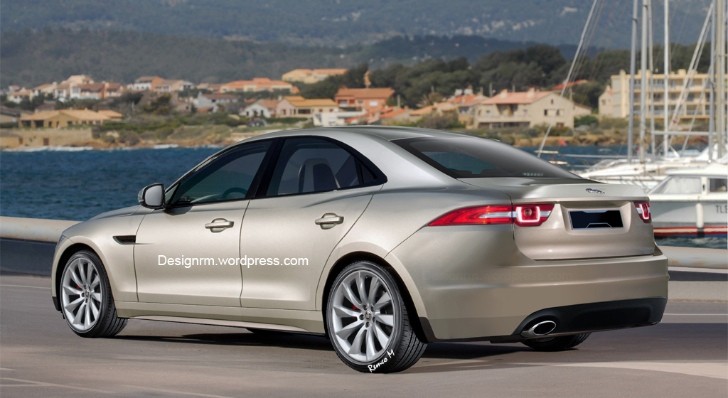
Can this be the brand new Jaguar XS, XT, X-Type or whatever jaguar decide to call it ?

Jaguar is a little bit like Mercedes in that they aren't very good at making small engines. It's just one of the reasons why the Germans are even topping them in sales back in Britain.

The automaker's incursion into the small executive sedan segment resulted in the launch of the X-Type. They tried to hide what it really was with all-wheel drive and big engines, but you know what they say… you can take the Jaguar out of Ford, but you can't take the Ford out of a Jaguar.


Now, Jaguar is getting back in the fight with another small executive sedan, this time based on their own aluminum architecture. The model will sit in the range under the XF and reports indicate it really will be called the "XS", despite the humorous nature of the name.

autoevolution

JLR is currently developing a whole new family of efficient four-cylinder engines, both diesel and petrol, which together with ZF's 8-speed auto should deliver a splendid alternative to the BMW 3 Series or Mercedes C-Class.

REPORT HERE

9 Sept 2013

Stunning Jaguar C-X17 SUV Concept for Frankfurt, Pics and Vids

  • Jaguar announces next-generation lightweight technologies in the form of an all-new advanced aluminium monocoque architecture 
  • It is lightweight, extremely stiff and incorporates innovative technologies that emphasise Jaguar’s commitment to sustainability
  • This advanced lightweight architecture will form the basis for a new range of future Jaguars; the first product will be a mid-size premium C/D segment sedan on sale in 2015
  • This will be the first aluminium monocoque product in the segment and is set to be the most advanced, efficient and refined sports sedan in its class
  • Power will be provided by a range of engines including the new family of high-output, fuel-efficient petrol and diesel engines to be built at Jaguar Land Rover’s new UK engine manufacturing facility
  • These will enable Jaguar to offer vehicles with class-leading performance, including top speeds of over 300km/h (186mph), and emissions lower than 100g of CO2 per km
  • Looking to the future, the C-X17 concept is a study to demonstrate the capabilities of the new advanced aluminium monocoque architecture
  • It blends the sleek design and sporting performance that are hallmarks of Jaguar, with the crossover benefits of an assured driving position and high levels of flexibility
  • The C-X17 also showcases advanced interior technologies including Interactive Surface Console – a multi-screen infotainment network that links passengers with each other and the outside world through social media channels


Jaguar’s first ever sports crossover concept vehicle – the C-X17 – makes its debut at the 2013 Frankfurt Motor Show.

The C-X17 has been created as a design study to introduce Jaguar’s all-new advanced aluminium monocoque architecture, codenamed iQ[Al], on which an exciting range of future Jaguars will be built. This new philosophy underpins the entire innovative future of the Jaguar brand. A modular and scalable vehicle architecture, engineered and developed for Jaguar, the architecture is high-strength, lightweight, extremely stiff and incorporates innovative efficiency technologies. It enables flexible high-volume production while allowing creative design freedom and competitive interior packaging, without compromising the unique character, dynamics, performance and luxury that Jaguar is famous for. This will enable Jaguar to grow its product portfolio, targeting high-growth areas of the premium market.

As a sports crossover, the Jaguar C-X17 stretches the design possibilities of the segment by combining the character and driving experience of a sports car with increased presence, style and flexibility. The sports crossover concept represents the potential expansion of Jaguar’s portfolio of body styles, with the associated enhancement of the brand’s relevance and appeal to a wider global audience.

“The C-X17 sports crossover represents an exciting new direction for Jaguar. Its purpose is to highlight our all-new aluminium architecture. With this technical foundation, we will dramatically expand Jaguar's product offering, market potential and customer appeal. This new philosophy will bring technology from our luxury products into an accessible price segment, and when combined with our new ultra-efficient engines, we will set a global standard. Add to these rational values, the class-leading dynamics, and the beauty and purity of form that Jaguar is renowned for, and we have the formula for a monumental leap forward.”

Adrian Hallmark, Global Brand Director, Jaguar

Jaguar’s first product from the new iQ[Al] architecture will be a new premium C/D segment sedan. Its global rollout will begin in 2015, and it will be the first aluminium monocoque product in the segment.

Power will be provided by engines with a wide range of capacities and output, all delivering inspirational performance and offering the latest innovations in fuel-efficient technologies without sacrificing drivability. These will include the high-output petrol and diesel engines to be built at Jaguar Land Rover’s new engine manufacturing facility in the UK, as well as the powerful V6 petrol engine in the F-TYPE, which will provide best-in-class specific power output thanks to the lightweight architecture. These attributes will enable Jaguar to offer a wider variety of vehicles, with exhilarating performance, top speeds of over 300km/h (186mph), as well as emissions below 100g of CO2 per kilometre.

The C-X17 concept illustrates the diversity of vehicles that could be produced using the architecture. A four-seater sports crossover concept built on the aluminium-intensive architecture, it blends sleek lines, sporting design and luxurious sophistication with enhanced flexibility and an assured driving position. In its exciting proportions, purity of form and its beautiful lines – overseen by Director of Design Ian Callum – the C-X17 is every inch a Jaguar.

The C-X17 could offer refined on-road dynamics and sedan car-like handling, thanks to its low height, optimised centre of gravity, and use of cutting-edge dynamic technologies such as Torque Vectoring by Braking, in which the car intelligently uses its brake system to balance the distribution of engine torque to the wheels during cornering, reducing understeer and maximising grip.

“We designed the C-X17 from the ground up from a distinct set of principles, a deep sense of what makes a Jaguar: exciting proportions, clean lines, balance of form. Assertive and powerful, yet with a beautiful sensuality about it, the C-X17 is boldly, distinctively Jaguar.”

Ian Callum, Design Director, Jaguar

At 4,718mm long and 1,649mm tall, its dimensions are clearly that of a crossover, yet in its design it shares strong family traits with Jaguar’s current range. For instance, the grille is an evolution of the distinctive nose of the Jaguar XJ luxury sedan, while the sculptured haunch lines hint strongly of the award-winning design of the Jaguar F-TYPE sports car. A low-sitting stance and overall profile combine with 23-inch alloy wheels to give the C-X17 a sporting, aggressive presence, while the LED headlamps, J-shaped running lights and frosted-glass foglights set into the large front intakes add to the C-X17’s purposeful intent. The C-X17 is painted in a lustrous Caesium Blue finish, with gloss black brightwork surrounding the windows, while the split five-spoke alloys are Dark Atlas graphite with gloss black finishers.

The interior of the C-X17 features four individual bucket seats, which are luxuriously appointed, yet designed for a sculpted, lightweight appearance. The car’s unique roof features contoured vanes that provide a distinctive ‘elliptical’ panoramic view to the C-X17’s passengers, while retaining the roof’s sleek appearance from the exterior. Two additional rear-mounted leisure seats incorporated in the boot floor swing out for recreational use. Accessories that support an active lifestyle, such as a torch and a camera, are positioned in storage compartments in the boot.

The interior of the C-X17 marries premium, authentic materials and traditional craftsmanship with modern finishing techniques. It features a combination of Jet saddle Connolly leather and Orchid Connolly leather on the instrument panel, seats, armrests, doors, floor and in the boot, with stitching on the saddle leather creating a tactile feel. A subtle layered effect is created through the use of die-cut Houndstooth-pattern leather patches on the main leather panels. Ruthenium, milled aluminium and black brushed anodised metal finishes impart a darker tonal effect to the C-X17’s interior. The door finish is gloss black.

A centre tunnel running the length of the car, from the instrument panel through to the rear passenger seats, incorporates the Interactive Surface Console – an interactive multi-passenger infotainment hub with a series of touchscreens under a continuous panel of transparent acrylic glass, which in conjunction with the secure in-car wi-fi network, enables the vehicle’s passengers to connect and share experiences with each other and the outside world via social media. The C-X17’s premium in-car digital audio system has been specially designed for the vehicle by British specialist audio firm Meridian, and the car’s centre console is configured for a Head Up Display projector.

ALL-NEW ALUMINIUM ARCHITECTURE: UNDERPINNING THE FUTURE

iQ[Al] is not just a vehicle architecture, it is a completely new philosophy that underpins the innovative future of the Jaguar brand, enabling Jaguar to significantly grow its product portfolio, targeting high-growth areas of the premium market in global markets.

The first Jaguar to be delivered from the new architecture will be a new C/D segment premium sedan, which will be rolled-out globally from 2015. The first aluminium monocoque product in its segment, the new sedan will be produced at an all-new, ultra high-tech production facility in Solihull, creating new jobs and substantial opportunities for the supplier base.

The aluminium-intensive architecture will be modular and scalable, providing a high degree of flexibility and making it possible to produce a wider bandwidth of models and derivatives than ever before. It is lightweight, extremely stiff and incorporates innovative technologies that emphasises Jaguar’s commitment to sustainability, such as a new high-strength alloy made from almost 100% recycled raw material.

The architecture is being carefully developed to fully incorporate all the vehicle attributes established by Jaguar engineers. All products will perform like true Jaguars, the flexibility and scope of the architecture guaranteeing the individual character of each one. Jaguar design and engineering teams collaborated closely on its development from the outset to ensure versatility of design combined with fully competitive interior packaging.

The flexibility that this architecture will provide, means Jaguar designers and engineers can apply the philosophy “anything we can imagine, we can create,” to deliver a new portfolio of products less restricted by technical or manufacturing constraints. The new architecture will allow Jaguar to move into higher volume production, without compromising the unique character, breath-taking design, outstanding vehicle dynamics, performance and luxury that Jaguar is famous for. The flexibility of the new architecture will enable the manufacture of different products on the same production line at the same time. The highly efficient, state-of-the-art production process will allow rapid response to variations in market demand for individual models by balancing production volume accordingly.

Powertrains

Future Jaguars will be powered by engines with a wide range of capacities and outputs, all delivering inspirational performance and offering the latest innovations in fuel-efficient technologies, without sacrificing drivability or feel. The new sedan will be the first vehicle to be equipped with all-new four-cylinder diesel and petrol engines, allowing Jaguar to break the 100g CO2/km barrier for the first time. These advanced, high-output engines will be built at Jaguar Land Rover’s new engine production facility, currently under construction in Wolverhampton in the UK as part of a £500 million investment, which will be operational from 2015.

These vehicles are also designed to be powered by the powerful V6 petrol engine seen in the Jaguar F-TYPE sports car, which, combined with the lightweight architecture, will bestow them with best-in-class specific power output as in the F-TYPE. Together, the family of engines will offer the best of both worlds and deliver all-encompassing capabilities: sporting performance and class-leading fuel efficiency and CO2 emissions.

C-X17 DYNAMICS: FLEET-FOOTED AND SURE-FOOTED

As a sports crossover, the C-X17 concept is positioned as a driver’s car. It has an on-road bias, and its low height, optimised centre of gravity and lightweight all-aluminium body endow it with superior, car-like driving dynamics and a level of agility that would make it quite at home on the fastest roads. The C-X17 also features cutting-edge dynamic technologies such as Torque Vectoring by Braking, a system which constantly monitors the vehicle’s cornering dynamics and, when required, intelligently uses the brake system to rebalance the distribution of engine torque to the wheels, in order to reduce understeer and maximise grip.

With its 213mm ground clearance and intelligent All-Wheel Drive, the C-X17 could also offer reassuring capability and enhanced grip on poor roads and in varying weather conditions. Jaguar’s intelligent All-Wheel Drive system continuously monitors grip levels and driver inputs and uses feed-forward torque distribution to both pre-empt and react to wheel-slip, providing greater driver confidence and vehicle stability in low-grip conditions. In normal grip conditions, the system predominantly delivers drive to the rear wheels, providing the dynamic driving experience all Jaguars are renowned for.

EXTERIOR DESIGN: BEAUTY OF PROPORTION

With a crossover being a new journey for Jaguar, Director of Design Ian Callum and his team were clear that the C-X17 would not compromise on the time-honoured values of Jaguar car design: purity of form, beauty of line and balance of proportion. Even as it subscribed to the practicalities expected of the crossover category, the C-X17 had to be stylish, sporty and exciting. It had to instantly stand out from the crowd, yet retain the sense of timeless sophistication that is typically Jaguar.

The C-X17 has dynamic yet perfectly balanced proportions, with the low profile and large wheels giving it a powerful, planted stance. In terms of form, it is sleek and fast, relying on pure lines rather than exaggeration or showmanship. The long bonnet’s twin ‘power bulges’ and prominent grille impart a muscular look. The headlamps hint at the C-X17's sedan siblings while the grille is inspired by the XJ, resulting in a distinctive family look that is reassuringly familiar yet uniquely appealing. The grille features a hexagonal pattern, with small aluminium panels within its structure that can close to enhance the vehicle’s aerodynamic properties.

The C-X17's twin ‘heartlines’ are clearly visible when viewed in profile. Two clean and simple design lines, with a subtle crease in the metal to catch the light, visually tie together the C-X17's shoulder and haunch. The accentuated length of the windows adds to the vehicle’s overall sense of sleekness.

The rear of the vehicle has a distinctive touch of sports car about it, with the haunch, taillights and detailing all bringing to mind the seductive Jaguar F-TYPE. The C-X17's roofline swoops quickly rearwards, culminating in a distinctive cantilevered spoiler over a steeply raked rear window that enhances the crossover's sporting, ‘fast-even-at-standstill’ appearance.

The exterior paint finish is a lustrous Caesium Blue, and the window liners are gloss black, with the only brightwork on the vehicle being the badging at each end, lending the car a darker, sportier look. The large 23-inch wheels, which enhance the C-X17’s solid stance, are a one-off design with five split spokes. They have a Dark Atlas graphite grey finish with gloss black finishers on the spokes.

INTERIOR DESIGN: CRAFTSMANSHIP AND TECHNOLOGY

“The C-X17's design is timeless, yet absolutely up-to-the-minute. Artisan treatment meets modern techniques in an innovative cabin full of luxurious touches and cutting-edge technical ideas.”

Julian Thomson, Director of Advanced Design, Jaguar

The interior of the C-X17 blends high-end interactive technology with premium, traditionally crafted materials, resulting in a spacious, airy, luxurious and sophisticated cabin.

The C-X17 seats four passengers in individual bucket seats. The seating position is relatively low for a crossover, giving the occupants a feeling of sitting deep within the cabin. The seats are lightweight units with a sculpted free-standing appearance, visually enhancing the airiness of the cabin.

The spacious boot incorporates two leisure seats that swing up and out of the boot floor for use when the car is stopped and the rear hatch opened. Solidly constructed from milled aluminium and finished in Connolly saddle leather, these seats swing outwards on a beautifully engineered hinge to provide a practical seating area when the car is stationary. Accessories that support an active lifestyle, such as a torch and a camera, are positioned in leather holsters, in storage compartments located in the boot.

Panoramic sculpted roof

The sense of openness inside the cabin is heightened by the C-X17’s unique panoramic roof. The designers of the C-X17 have constructed the interior of the roof from a series of sculpted vanes running from front to rear, closely arranged in parallel and integrated into the header and cant rails. They are contoured on the lower side to generate extra headroom, and shaped to create a ring of space that enables a whole-roof view of the sky above, giving the occupants a sense of openness. The topside of the vanes follows the smooth profile of the glass roof, maintaining the sleek exterior lines of the C-X17.

Premium two-tone leather trim

The interior of the C-X17 is a juxtaposition of premium traditional materials and modern finishing techniques. Designers drew inspiration from a variety of sources, from extruded aluminium lampshades and lattice-framed stools to premium leather shoes, jackets and handbags, which favoured strong colour contrasts.

Accordingly, the seats, instrument panel, floors, doors and boot are finished in an overlapping combination of Jet saddle leather and Orchid leather panels. Renowned British leather specialist Connolly, the benchmark name in premium automotive cabin craftsmanship, created the bespoke leather panels specially for the C-X17. The 3mm-thick saddle leather, which features bands of stitching to increase the passenger’s tactile experience of these surfaces, is die-cut in a Houndstooth pattern inspired by traditional tailoring materials, lending the interior of the car a classy yet contemporary feel.

The interior door finish is gloss black, while for the interior metal finishes, ruthenium (a member of the platinum family) is used instead of brightwork, creating a darker, more tonal effect that suits the subtle, premium feel of the cabin.

Multi-passenger interactivity

The C-X17 takes interactivity to a new level with the unique Interactive Surface Console that runs the length of the car’s centre tunnel, from the centre console of the dashboard through to the rear seats. Made up of a series of interconnecting touch screens encased in transparent acrylic glass, the Interactive Surface Console connects those in the rear cabin with the driver and front seat passengers via a secure in-car Wi-Fi network.

The Interactive Surface Console allows the vehicle occupants to upload pictures, video and sound files from their mobile devices and share them with their fellow passengers, as well as on Facebook, Twitter, Instagram and other social media channels. Using the touchscreens and an intuitive user interface, information can be ‘flicked’ forwards and rearwards between the front and the rear passengers. By enabling sharing, both in terms of technology and information, between the occupants of the C-X17, the Interactive Surface Console puts as much focus on the rear compartment as on the front and immerses all four passengers in a unified multisensory experience.

The C-X17 features a 12-loudspeaker system specifically developed for the vehicle by British ultra-premium audio experts Meridian. Designed closely in conjunction with the development of the C-X17’s interior, the system draws on Meridian’s award-winning digital sound processing technology. Trifield technology creates an all-enveloping sound field that makes each listener feel that the music is exclusively focused on him or her. With sub-woofer drive units in the rear centre tunnel, dashboard-mounted tweeters, speakers in the A and B pillars, twin door speakers, rear speakers, and head-height speakers situated in the tops of the front seat head rests, this unique system enables every occupant of the C-X17 to enjoy optimum, authentic sound for an exceptional in-car audio experience.

The C-X17’s instrument panel has a twin-dial configurable TFT console with provision for a Head Up Display – a system which projects vital information onto the windscreen for the driver to process quickly, akin to the systems used in modern fighter aircraft.

The gearshift has a rotary dial, finished in ruthenium, which rises on activation and serves as the interface to toggle between driving modes such as Road, Sport or All-Road. Milled aluminium vents on the console, seats and doors mirror the pattern of the grille mesh.

C-X17 TECHNICAL SPECIFICATIONS

Dimensions (mm)

Length 4718
Wheelbase 2905
Height 1649
Width 1959
Ground clearance 213