The Volvo Concept XC Coupé won two prestigious design awards this week, further raising the excitement around Volvo Car Group’s (Volvo Cars) new design language. The Concept XC Coupe was awarded the title “Best Concept Car” at the 2014 EyesON Design Awards at the 2014 Detroit Motor Show, while Volvo’s latest concept vehicle also won the award for “Best use of Color, Graphics and Materials”.
The 2014 North American International Auto Show in Detroit hosts the world premiere of Volvo Cars’ new Concept XC Coupé – the second of three concept cars that showcase the company’s future design direction. Like the highly acclaimed and award-winning Volvo Concept Coupé, the Concept XC Coupé demonstrates the design possibilities of Volvo Cars’ new Scalable Product Architecture (SPA) that will underpin most cars from Volvo Cars in the future, starting with the all-new Volvo XC90 that premieres later this year.
“I’m honored and very happy of course. This is very encouraging and it shows that Volvo’s new design direction is appreciated not only by the general public and the press, but also by the leading people in the car design business. And Volvo Cars has only just started its exciting new journey with a brand new design language,” says Thomas Ingenlath, senior vice president design at Volvo Cars.
The EyesOn Design Award ceremony is an annual event that takes place in conjunction with the Detroit Motor Show. The EyesOn Design Award jury contains of a prominent group of designers and from auto makers and academia.
Showing posts with label Concept. Show all posts
14 Jan 2014
NAIAS - VW Beetle Dune Concept, this HAS to be produced.
The new Volkswagen Beetle Dune concept has made its debut at the North American International Auto Show (NAIAS) in Detroit.
Based on the latest version of the iconic Volkswagen, the Beetle Dune adds a cool, rugged off-road look, thanks to a body that has been raised by 50 mm compared with a standard Beetle, and 19-inch wheels with large tyres.
A rear-mounted ski-rack is reminiscent of those fitted to classic Beetles, and makes a perfect accessory for the season. In the summer, it could hold sand skis – the ideal accessory for surfing the sand dunes from which the Beetle Dune takes its name.
The Beetle Dune concept revisits an idea from January 2000, when Volkswagen showed the New Beetle Dune concept in Los Angeles. But while that vehicle was far from a production possibility, the Beetle Dune is very much based on the current production model, using the same 210 PS turbocharged petrol engine and six-speed DSG gearbox, providing power to the front wheels.
Under its shining ‘Arizona’ paint – a yellow-orange metallic – the Dune has two-part wheelarch extensions. A ‘blade’ of 1.5 mm-wide plastic separates the main matt black wheelarch extensions from the body. The matt wheelarch housings widen the body by 24 mm each side, for a total width of 1,856 mm, while the front and rear cladding lengthens the car overall by 12 mm to 4,290 mm. At 1,536 mm tall, the Dune is 50 mm higher than a standard Beetle.
To fit with the increased body width, the Beetle Dune’s track has also been increased by 29 mm, to 1,607 mm at the front and 1,573 mm at the rear. The five-spoke 19-inch alloy wheels wear 255/45 tyres.
Visually, the front and rear wheelarch extensions are joined by a brushed aluminium sill panel that runs between them, into which a chrome-plated underbody protection panel sits.
At the front, the bumper has been comprehensively redesigned to incorporate a large black honeycomb air intake, with trapezoidal inserts either side. In these inserts sit semi-circular LED fog lights, and above these is a slender horizontal LED turn indicator. The Dune’s bonnet, meanwhile, has been made more bulbous, with a raised central section and prominent air vents on either side.
At the rear, above the modified bumper, sits a large rear spoiler, which, together with another roof-mounted spoiler, serves a dual purpose as a ski rack.
The interior of the car is largely familiar from the production Beetle, but with the characteristic dash-mounted glovebox this time replaced with a passenger grab handle. The centre of the dash is dominated by a large high-resolution 7.7-inch touchscreen display.
Although a concept at this stage, Volkswagen is keen to gauge reaction to the car from the public and media at the NAIAS.
Based on the latest version of the iconic Volkswagen, the Beetle Dune adds a cool, rugged off-road look, thanks to a body that has been raised by 50 mm compared with a standard Beetle, and 19-inch wheels with large tyres.
A rear-mounted ski-rack is reminiscent of those fitted to classic Beetles, and makes a perfect accessory for the season. In the summer, it could hold sand skis – the ideal accessory for surfing the sand dunes from which the Beetle Dune takes its name.
The Beetle Dune concept revisits an idea from January 2000, when Volkswagen showed the New Beetle Dune concept in Los Angeles. But while that vehicle was far from a production possibility, the Beetle Dune is very much based on the current production model, using the same 210 PS turbocharged petrol engine and six-speed DSG gearbox, providing power to the front wheels.
Under its shining ‘Arizona’ paint – a yellow-orange metallic – the Dune has two-part wheelarch extensions. A ‘blade’ of 1.5 mm-wide plastic separates the main matt black wheelarch extensions from the body. The matt wheelarch housings widen the body by 24 mm each side, for a total width of 1,856 mm, while the front and rear cladding lengthens the car overall by 12 mm to 4,290 mm. At 1,536 mm tall, the Dune is 50 mm higher than a standard Beetle.
To fit with the increased body width, the Beetle Dune’s track has also been increased by 29 mm, to 1,607 mm at the front and 1,573 mm at the rear. The five-spoke 19-inch alloy wheels wear 255/45 tyres.
Visually, the front and rear wheelarch extensions are joined by a brushed aluminium sill panel that runs between them, into which a chrome-plated underbody protection panel sits.
At the front, the bumper has been comprehensively redesigned to incorporate a large black honeycomb air intake, with trapezoidal inserts either side. In these inserts sit semi-circular LED fog lights, and above these is a slender horizontal LED turn indicator. The Dune’s bonnet, meanwhile, has been made more bulbous, with a raised central section and prominent air vents on either side.
At the rear, above the modified bumper, sits a large rear spoiler, which, together with another roof-mounted spoiler, serves a dual purpose as a ski rack.
The interior of the car is largely familiar from the production Beetle, but with the characteristic dash-mounted glovebox this time replaced with a passenger grab handle. The centre of the dash is dominated by a large high-resolution 7.7-inch touchscreen display.
Although a concept at this stage, Volkswagen is keen to gauge reaction to the car from the public and media at the NAIAS.
13 Jan 2014
Toyota unveils its Ultimate sports coupe concept.
A daring new Toyota coupe concept breaks cover at the Detroit motor show today. The new FT-1 concept is the result of Toyota’s Calty design studio’s mission to create the ultimate sports car.
The California-based team, which celebrates its 40th anniversary this year, has produced a car that is strikingly modern, yet which makes reference to Toyota’s rich sports car history, going back to the 2000GT of the mid-1960s.
The exterior captures the look of racecar with a curvilinear form, pronounced front wings and sharply defined contrasts that express powerful performance. The FT-1’s optimum aerodynamic qualities are communicated by its large air intakes, exhaust ports and retractable rear wing.
The front engine/rear-wheel drive configuration allows the cockpit to set further towards the rear of the car, within the wheelbase, helping improve weight distribution and create classic sports car proportions. The wraparound windscreen and side glass arrangement are a clear nod to the design of the original 2000GT.
The ergonomics of the cabin capitalise on the car’s low centre of gravity, helping the driver derive the maximum reward from the driving experience. A delta-shaped display zone helps make the driver feel at the heart of the action, fully connected to the car. This quality is reinforced by the Formula 1-style steering wheel and a colour head-up display that projects key information just above the wheel. The designers have pushed the A-pillars as far back as possible, to increase visibility when cornering.
Traditionally Toyota’s design decisions have been driven by consensus among a large group of people; as part of a company movement to give Toyota products more energy and passion, the process has been streamlined. This approach has been fundamental to the development of the FT-1, a concept that captures Toyota’s aim of creating cars that connect more deeply with customers and generate a more satisfying ownership experience.
The California-based team, which celebrates its 40th anniversary this year, has produced a car that is strikingly modern, yet which makes reference to Toyota’s rich sports car history, going back to the 2000GT of the mid-1960s.
The exterior captures the look of racecar with a curvilinear form, pronounced front wings and sharply defined contrasts that express powerful performance. The FT-1’s optimum aerodynamic qualities are communicated by its large air intakes, exhaust ports and retractable rear wing.
The front engine/rear-wheel drive configuration allows the cockpit to set further towards the rear of the car, within the wheelbase, helping improve weight distribution and create classic sports car proportions. The wraparound windscreen and side glass arrangement are a clear nod to the design of the original 2000GT.
The ergonomics of the cabin capitalise on the car’s low centre of gravity, helping the driver derive the maximum reward from the driving experience. A delta-shaped display zone helps make the driver feel at the heart of the action, fully connected to the car. This quality is reinforced by the Formula 1-style steering wheel and a colour head-up display that projects key information just above the wheel. The designers have pushed the A-pillars as far back as possible, to increase visibility when cornering.
Traditionally Toyota’s design decisions have been driven by consensus among a large group of people; as part of a company movement to give Toyota products more energy and passion, the process has been streamlined. This approach has been fundamental to the development of the FT-1, a concept that captures Toyota’s aim of creating cars that connect more deeply with customers and generate a more satisfying ownership experience.
11 Jan 2014
Volkswagen Dune Concept to début in Detroit
In the midst of a ferociously cold Michigan winter, the new Volkswagen Beetle Dune concept is all set to bring a hint of summer sunshine when it makes its debut at the North American International Auto Show (NAIAS) in Detroit next week.
The Beetle Dune is based on the latest version of the iconic Volkswagen, and adds a cool, rugged off-road look. The body has been raised by 50 mm compared with a standard Beetle, while 19-inch wheels with large tyres lend an all-terrain look. A rear-mounted ski-rack is reminiscent of those fitted to classic Beetles, and makes a perfect accessory for the season. In the summer, it could hold a sandboard – the ideal accessory for surfing the sand dunes from which the Beetle Dune takes its name.
The latest Beetle Dune concept also revisits an idea from January 2000, when Volkswagen showed the New Beetle Dune concept in Los Angeles. But while that vehicle was far from a production possibility, the Beetle Dune is very much based on the current production model, using the same 210 PS turbocharged petrol engine and six-speed DSG gearbox, providing power to the front wheels.
Further information on and images of the Beetle Dune concept will be available after the car makes its debut at the NAIAS on 13 January.
The Beetle Dune is based on the latest version of the iconic Volkswagen, and adds a cool, rugged off-road look. The body has been raised by 50 mm compared with a standard Beetle, while 19-inch wheels with large tyres lend an all-terrain look. A rear-mounted ski-rack is reminiscent of those fitted to classic Beetles, and makes a perfect accessory for the season. In the summer, it could hold a sandboard – the ideal accessory for surfing the sand dunes from which the Beetle Dune takes its name.
The latest Beetle Dune concept also revisits an idea from January 2000, when Volkswagen showed the New Beetle Dune concept in Los Angeles. But while that vehicle was far from a production possibility, the Beetle Dune is very much based on the current production model, using the same 210 PS turbocharged petrol engine and six-speed DSG gearbox, providing power to the front wheels.
Further information on and images of the Beetle Dune concept will be available after the car makes its debut at the NAIAS on 13 January.
Labels:
Concept,
detroit,
dsg,
dune,
naias,
north american international auto show,
off road,
ps,
raised,
volkswagen,
VW
9 Jan 2014
Kia GT4 Stinger Concept to be launched at Detroit
Kia’s GT4 Stinger concept will be unveiled at the 2014 North American International Auto Show next week.
Beneath the low wedge of the sculpted bonnet resides a tuned version of Kia’s proven 2.0-litre turbocharged gasoline direct injection (T-GDI) four-cylinder engine pumping out an impressive 315 horsepower.
A close-ratio six-speed manual transmission directs power to the rear wheels where 275/35R20 Pirelli P-Zero performance tyres meet the asphalt. Custom 20-inch aluminium centre-lock wheels feature carbon fibre inserts for strength and weight reduction.
Tucked inside the massive wheels and bringing the GT4 to a halt are Brembo Gran Tourismo two-piece cross-drilled rotors with four-piston callipers. And underpinning the GT4 Stinger’s sculpted ‘Ignition Yellow’ covered body is a custom chassis with an independent double wishbone suspension.
Full details are to be revealed at the Detroit Motor Show next week.
Beneath the low wedge of the sculpted bonnet resides a tuned version of Kia’s proven 2.0-litre turbocharged gasoline direct injection (T-GDI) four-cylinder engine pumping out an impressive 315 horsepower.
A close-ratio six-speed manual transmission directs power to the rear wheels where 275/35R20 Pirelli P-Zero performance tyres meet the asphalt. Custom 20-inch aluminium centre-lock wheels feature carbon fibre inserts for strength and weight reduction.
Tucked inside the massive wheels and bringing the GT4 to a halt are Brembo Gran Tourismo two-piece cross-drilled rotors with four-piston callipers. And underpinning the GT4 Stinger’s sculpted ‘Ignition Yellow’ covered body is a custom chassis with an independent double wishbone suspension.
Full details are to be revealed at the Detroit Motor Show next week.
8 Jan 2014
Volvo'c latests XC concept the way forward for the XC90?
The second of Volvo’s three concept cars is the new Volvo Concept XC Coupé. Inspired by the design of modern sports equipment and demonstrating the safety capabilities of Volvo’s new Scalable Product Architecture, it is a sophisticated and capable car for people with an active lifestyle.
“Those who love extreme sports freely seek new thrills and challenges. To ensure that they make it back in one piece, they prefer high-performance equipment that offers the ultimate sense of freedom and protection,” says Thomas Ingenlath, Senior Vice President Design of Volvo Car Group.
“The Volvo Concept XC Coupé is perfectly in tune with this active lifestyle. Its capability and protection is cleverly integrated into the sophisticated looks. Concept XC Coupé is ready and willing to bring you into the adventure zone and back,” he adds.
Sleeker and safer at the same time
The three concept cars are designed to demonstrate vital elements of the company’s new Scalable Product Architecture (SPA): the confident stance, the proportions and the most prominent design signatures.
“Concept XC Coupé also shows how clever engineering makes it possible for us to reinforce our world-leading safety without compromising design, size or weight. Thanks to the extensive use of high-strength boron steel and structures with new, ingenious decoupling, we can make SPA cars more compact and safer at the same time,” says Thomas Ingenlath.
The two-door, four-seater Volvo Concept XC Coupé has a strong connection with its sibling, the Volvo Concept Coupé. However, the larger 21-inch wheels, the more accentuated wheel-arches and the taller roofline all contribute to a more robust impression and a fuller, capable look.
The extended distance between the dashboard and the front axle is still a very powerful visual element. The capable stance is emphasised by details such as the new bonnet and a beltline that spans an elegant bow along the length of the car.
High-tech sport gear
The connection with modern, high-tech sports gear is highly present in the concept car. Among the sources of inspiration for the design team is the Swedish company POC, which develops high-tech protective gear for extreme sports athletes.
“Several orange details and exterior graphics in combination with bold use of matte rubber mouldings, which cover the rear end of the car, add to the highly functional expression of the design,” says Thomas Ingenlath.
To strike the right balance between aesthetics and functionality, the design team has also given traditional SUV elements, such as side mouldings and skid plates, a modern interpretation. They are more integrated into the sleek design, flush with the surrounding body areas.
T-shaped DRL lights
Just like the Volvo Concept Coupé, the face of the Volvo Concept XC Coupé is characterised by a new topography on the bonnet and the ‘floating’ grille, flanked by headlights featuring new T-shaped DRL light guides. The rear light signature is also a distinctive element in the new design direction of Volvo Cars.
“Both concept cars show how we can shape our cars from now on. We add emotional value to the Volvo brand with the calm, confident beauty that is the hallmark of Scandinavian design,” says Thomas Ingenlath.
Building on a proud XC heritage
Volvo Cars paved the way for a completely new segment by introducing the V70 Cross Country in 1997. The range has been continuously developed and extended since then. Presently, it spans from the Volvo V40 Cross Country, via the XC60 and XC70, to the XC90.
“With the Volvo Concept XC Coupé, we take this unique blend of capable ruggedness and expressive elegance up to a new, sportier attitude,” says Thomas Ingenlath.
“Those who love extreme sports freely seek new thrills and challenges. To ensure that they make it back in one piece, they prefer high-performance equipment that offers the ultimate sense of freedom and protection,” says Thomas Ingenlath, Senior Vice President Design of Volvo Car Group.
“The Volvo Concept XC Coupé is perfectly in tune with this active lifestyle. Its capability and protection is cleverly integrated into the sophisticated looks. Concept XC Coupé is ready and willing to bring you into the adventure zone and back,” he adds.
Sleeker and safer at the same time
The three concept cars are designed to demonstrate vital elements of the company’s new Scalable Product Architecture (SPA): the confident stance, the proportions and the most prominent design signatures.
“Concept XC Coupé also shows how clever engineering makes it possible for us to reinforce our world-leading safety without compromising design, size or weight. Thanks to the extensive use of high-strength boron steel and structures with new, ingenious decoupling, we can make SPA cars more compact and safer at the same time,” says Thomas Ingenlath.
The two-door, four-seater Volvo Concept XC Coupé has a strong connection with its sibling, the Volvo Concept Coupé. However, the larger 21-inch wheels, the more accentuated wheel-arches and the taller roofline all contribute to a more robust impression and a fuller, capable look.
The extended distance between the dashboard and the front axle is still a very powerful visual element. The capable stance is emphasised by details such as the new bonnet and a beltline that spans an elegant bow along the length of the car.
High-tech sport gear
The connection with modern, high-tech sports gear is highly present in the concept car. Among the sources of inspiration for the design team is the Swedish company POC, which develops high-tech protective gear for extreme sports athletes.
“Several orange details and exterior graphics in combination with bold use of matte rubber mouldings, which cover the rear end of the car, add to the highly functional expression of the design,” says Thomas Ingenlath.
To strike the right balance between aesthetics and functionality, the design team has also given traditional SUV elements, such as side mouldings and skid plates, a modern interpretation. They are more integrated into the sleek design, flush with the surrounding body areas.
T-shaped DRL lights
Just like the Volvo Concept Coupé, the face of the Volvo Concept XC Coupé is characterised by a new topography on the bonnet and the ‘floating’ grille, flanked by headlights featuring new T-shaped DRL light guides. The rear light signature is also a distinctive element in the new design direction of Volvo Cars.
“Both concept cars show how we can shape our cars from now on. We add emotional value to the Volvo brand with the calm, confident beauty that is the hallmark of Scandinavian design,” says Thomas Ingenlath.
Building on a proud XC heritage
Volvo Cars paved the way for a completely new segment by introducing the V70 Cross Country in 1997. The range has been continuously developed and extended since then. Presently, it spans from the Volvo V40 Cross Country, via the XC60 and XC70, to the XC90.
“With the Volvo Concept XC Coupé, we take this unique blend of capable ruggedness and expressive elegance up to a new, sportier attitude,” says Thomas Ingenlath.
5 Jan 2014
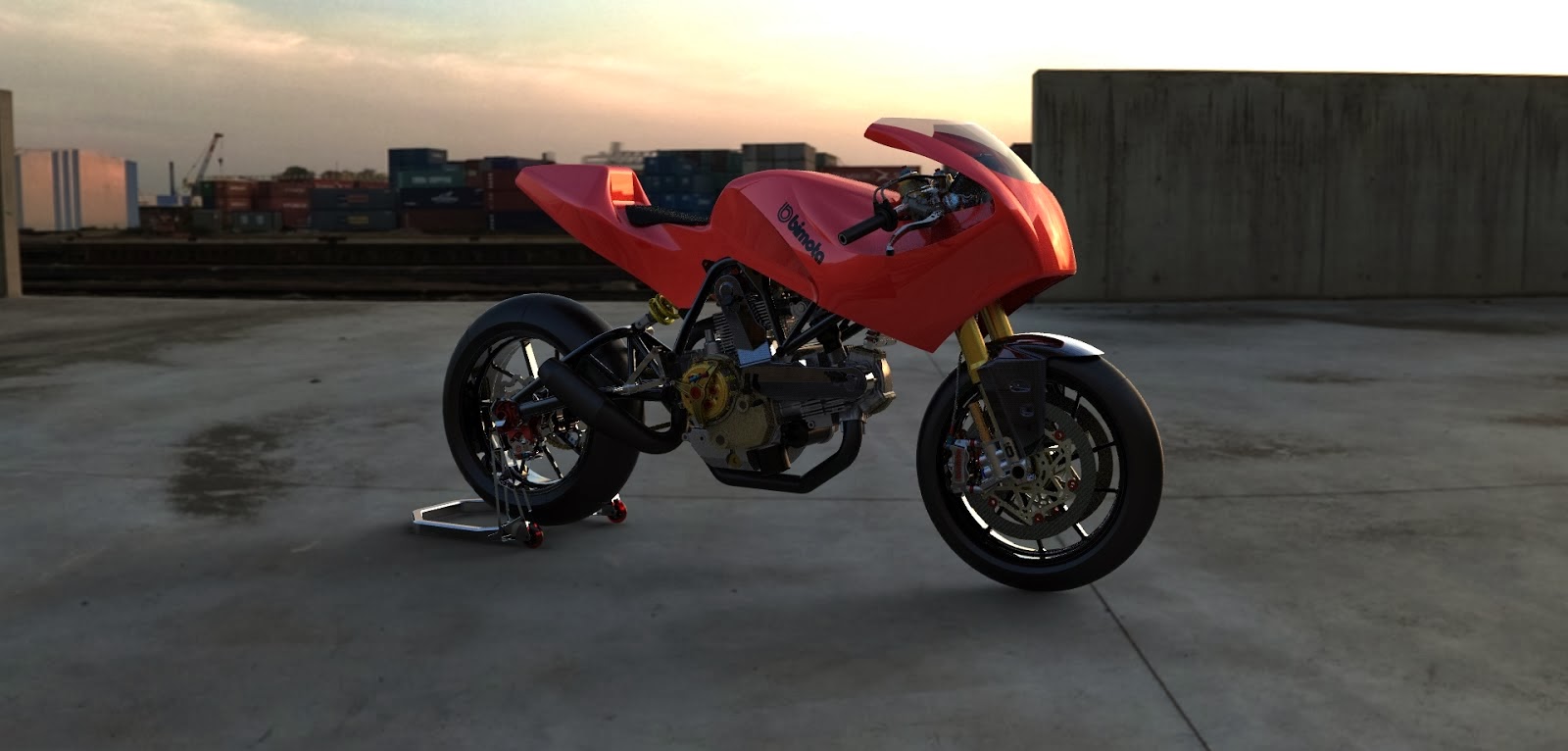
Desmo Design
Desmo Design started in 2010 and since then made an impressive collection of 3d designs
Check the blog here

Check the blog here

Labels:
3d,
Bimota,
Concept,
desmo design,
Ducati,
hd,
radical ducati
3 Jan 2014
Ford C-MAX Solar Energi Concept is first-of-its-kind sun-powered vehicle.
- Ford C-MAX Solar Energi Concept is first-of-its-kind sun-powered vehicle with the potential to deliver the best of a plug-in hybrid without depending on the electric grid for fuel
- C-MAX Solar Energi Concept with a solar panel roof draws power from a special solar concentrator lens similar to a magnifying glass
- By using renewable power, Ford C-MAX Solar Energi Concept is estimated to reduce the annual greenhouse gas emissions a typical owner would produce by four metric tons
- C-MAX Solar Energi Concept, which will be on display at the 2014 International CES in Las Vegas, Jan. 7-10, debuts as Ford’s strong electrified vehicle lineup is expected to post a record 85,000-plus sales for 2013
Ford Motor Company announced today the C-MAX Solar Energi Concept, a first-of-its-kind sun-powered vehicle with the potential to deliver the best of what a plug-in hybrid offers – without depending on the electric grid for fuel.
Instead of powering its battery from an electrical outlet, Ford C-MAX Solar Energi Concept harnesses the power of the sun by using a special concentrator that acts like a magnifying glass, directing intense rays to solar panels on the vehicle roof.
The result is a concept vehicle that takes a day’s worth of sunlight to deliver the same performance as the conventional C-MAX Energi plug-in hybrid, which draws its power from the electric grid. Ford C-MAX Energi gets a combined best miles per gallon equivalent in its class, with EPA-estimated 108 MPGe city and 92 MPGe highway, for a combined 100 MPGe. By using renewable power, Ford C-MAX Solar Energi Concept is estimated to reduce the annual greenhouse gas emissions a typical owner would produce by four metric tons.
“Ford C-MAX Solar Energi Concept shines a new light on electric transportation and renewable energy,” said Mike Tinskey, Ford global director of vehicle electrification and infrastructure. “As an innovation leader, we want to further the public dialog about the art of the possible in moving the world toward a cleaner future.”
C-MAX Solar Energi Concept, which will be shown at the 2014 International CES in Las Vegas, is a collaborative project of Ford, San Jose, Calif.-based SunPower Corp. and Atlanta-based Georgia Institute of Technology.
Strong electrified vehicle sales
The C-MAX Solar Energi Concept debuts as Ford caps a record year of electrified vehicle sales.
Ford expects to sell 85,000 hybrids, plug-in hybrids and all-electric vehicles for 2013 – the first full year its six new electrified vehicles were available in dealer showrooms.
C-MAX Energi is Ford’s plug-in sales leader, with sales of more than 6,300 through November. Ford sold more plug-in vehicles in October and November than both Toyota and Tesla, and it outsold Toyota through the first 11 months of 2013. Plug-in hybrids continue to grow in sales as more customers discover the benefits of using electricity to extend their driving range.
C-MAX Hybrid over the last year has been a key driver in helping Ford sell more hybrids than any other automaker in the United States, second only to Toyota. C-MAX Hybrid continues to bring new customers to the Ford brand, with a conquest rate of 64 percent and drawing nearly half of its sales from import brands. Conquest rates are even higher in key hybrid growth markets like San Francisco, Los Angeles and Washington, D.C.
Breakthrough clean technology
SunPower, which has been Ford’s solar technology partner since 2011, is providing high-efficiency solar cells for the roof of Ford C-MAX Solar Energi Concept. Because of the extended time it takes to absorb enough energy to fully charge the vehicle, Ford turned to Georgia Institute of Technology for a way to amplify the sunlight in order to make a solar-powered hybrid feasible for daily use.
Researchers developed an off-vehicle solar concentrator that uses a special Fresnel lens to direct sunlight to the solar cells while boosting the impact of the sunlight by a factor of eight. Fresnel is a compact lens originally developed for use in lighthouses. Similar in concept to a magnifying glass, the patent-pending system tracks the sun as it moves from east to west, drawing enough power from the sun through the concentrator each day to equal a four-hour battery charge (8 kilowatts).
With a full charge, Ford C-MAX Solar Energi Concept is estimated to have the same total range as a conventional C-MAX Energi of up to 620 miles, including up to 21 electric-only miles. Additionally, the vehicle still has a charge port, and can be charged by connecting to a charging station via cord and plug so that drivers retain the option to power up via the grid, if desired.
After C-MAX Solar Energi Concept is shown at CES, Ford and Georgia Tech will begin testing the vehicle in numerous real-world scenarios. The outcome of those tests will help to determine if the concept is feasible as a production car.
Off-the-grid car
By tapping renewable solar energy with a rooftop solar panel system, C-MAX Solar Energi Concept is not dependent on the traditional electric grid for its battery power. Internal Ford data suggest the sun could power up to 75 percent of all trips made by an average driver in a solar hybrid vehicle. This could be especially important in places where the electric grid is underdeveloped, unreliable or expensive to use.
The vehicle also reinforces MyEnergi Lifestyle, a concept revealed by Ford and several partners at 2013 CES. MyEnergi Lifestyle uses math, science and computer modeling to help homeowners understand how they can take advantage of energy-efficient home appliances, solar power systems and plug-in hybrid vehicles to significantly reduce monthly expenses while also reducing their overall carbon footprint.
The positive environmental impact from Ford C-MAX Solar Energi could be significant. It would reduce yearly CO2 and other greenhouse gas emissions from the average U.S. car owner by as much as four metric tons – the equivalent of what a U.S. house produces in four months.
If all light-duty vehicles in the United States were to adopt Ford C-MAX Solar Energi Concept technology, annual greenhouse gas emissions could be reduced by approximately 1 billion metric tons.
Laser lights to appear on AUDI Sport quattro Coupe Concept.
- Dynamic coupe has powerful plug-in hybrid drive
- Prof. Dr. Ulrich Hackenberg, Member of the Board of AUDI AG, Technical Development: “This show car embodies our engineering competence and shows cutting-edge electronic features such as high-performance laser-light headlights.”
Dynamic design, immense power and new electronic features: Audi is presenting a fascinating technology concept car at the Consumer Electronics Show (CES) from January 6 to 10, 2014 in Las Vegas, USA. The Audi Sport quattro laserlight concept is reminiscent of the classic Sport quattro of 1983 while pointing towards the future – with the latest of the brand's technologies in plug-in hybrid drives, user control and display interfaces and lighting technology.
“The new show car demonstrates technical ‘Vorsprung’ on many levels,” says Prof. Dr. Ulrich Hackenberg. “On-board this car we have e-tron technology with 515 kW of power and 2.5 l/100 km (94.09 US mpg) fuel economy; laser headlights that leave all previous systems in the dark with its higher performance as well as new display and operating systems with cutting-edge electronic performance. We are showing the future of Audi here.”
The coupe, a new evolutionary stage of the Sport quattro concept, painted in the color Plasma Red, combines the power of the historic Sport quattro with emotional elegance. Its body is tautly set over its large wheels. The overhangs are short, and the car's proportions show a sporty balance. With a wheelbase of 2,784 mm (109.61 in), it is 4,602 mm (181.18 in) long. At a width of 1,964 mm (77.32 in), the two-door model is very wide, and it is just 1,386 mm (54.57 in) tall, which is exceptionally low.
In the dual headlights, a typical quattro feature, Audi is demonstrating the future of lighting technology by combining matrix LED and laser light technologies. Two low-profile trapezoidal elements are visible within the headlights – the outer one generates the low beam light using matrix LEDs and an aperture mask, while the inner element produces laser light for high-beam functionality.
The powerful laser diodes are significantly smaller than LED diodes; they are only a few microns in diameter. Illuminating the road for a distance of nearly 500 meters (1,640 ft), the laser high-beam light has approximately twice the lighting range and three times the luminosity of LED high beam lights. In this future technology, Audi is once again demonstrating its leadership role in automotive lighting technology with a system that will also be used on the race track in the 2014 R18 e-tron quattro.
The angular, swept-back C pillars of the Audi Sport quattro laserlight concept car and the blisters above the fenders are other design elements reminiscent of the classic Sport quattro. The broad shoulders of the body were reinterpreted and intensively sculpted to convey even greater dynamism. Throughout the car, sharp contours frame muscular surfaces – the interplay between convex and concave curvatures defines the athletic character of the coupe.
The hexagonal single-frame grille also offers an outlook on future design of the sporty production models. The lower section is nearly vertical, while the upper follows the contour of the hood; the screen insert is a typical solution from car racing. The low grille emphasizes the show car's width. Two large, vertical blades divide each of the large air inlets; their form is repeated in the creases of the hood. The splitter, which is made of carbon fiber reinforced polymer (CFRP), is shifted far to the front, as on a race car.
The combination of a swept-back glass cabin and broad shoulders defines the proportions at the rear. Another defining element at the rear of the show car is the CFRP diffuser, which extends upward significantly. Its upper section is honeycombed, while its lower section houses two large, oval tailpipes. The tail lights, which are backed by a black CFRP panel, are rectangular in form – another quattro reference. The luggage space, which is reinforced by a large cross bar stiffener, offers 300 liters (10.59 cu ft) of cargo capacity.
Precise design details round out the dynamic look of the Audi Sport quattro laserlight concept. The sill extensions are made of CFRP, the door handles electrically extend from the door when they detect the approach of a hand. The center locking wheels have a five twin-spoke design.
Lightweight design made visible: the interior
In its generously cut interior, the elegant sporty styling of the show car is continued with dark gray colors and clean lines. The interior design and material selections demonstrate the Audi philosophy of lightweight design. The slender instrument panel is reminiscent of the wing of a sailplane. The supporting structure of the interior is a carbon shell that also serves as a storage compartment in the doors.
A line of trim beneath the windshield wraps around the driver and front passenger and integrates functions such as the inside door handles. The folding race car shell seats with their high lateral supports and integrated head restraints, together with the two rear seats, provide space for four persons. The climate controls are integrated in the air nozzles; a single element is used to control the intensity, temperature and volume of the air stream. In addition to showing climate control settings, the slim display at the centers of the air nozzles also shows media data.
New solutions: displays and controls
The interior of the Audi Sport quattro laserlight concept focuses very much on the driver. Even the multifunction sport steering wheel points the way towards future sporty production solutions. It has two buttons which the driver can use to control the hybrid drive, a red start-stop button, a button for the Audi drive select vehicle handling system and a "View" button to control the Audi virtual cockpit.
All key information is shown on the large Audi TFT display in high-resolution, three-dimensional graphics; a cutting-edge Tegra 30 processor from Audi partner Nvidia processes the graphics. The driver can switch between different modes. For example, in the MMI mode the dominant display elements include the navigation map and media lists, while in the Classic view the speedometer appears in the foreground.
Nearly all functions of the Audi Sport quattro laserlight concept can be controlled from the further developed MMI terminal that is mounted on the center console over the tunnel. Its large rotary pushbutton, which also serves as a touchpad, can be pushed in four directions, and it is surrounded on three sides by four buttons – for the main menu, submenus, options and a back function.
The new user interface has a menu structure whose intuitive layout is similar to that of a smart phone. All frequently used functions can be accessed lightning fast. For most inputs, just a few steps are needed thanks to a new free text search feature; generally just four characters suffice for a navigation address. The driver can quickly scroll through lists or zoom the map image using multitouch gestures on the touchpad. Voice control functionality has also been intensively further developed.
Powerful and highly efficient: the drive system
The plug-in hybrid drive gives the Audi Sport quattro laserlight concept fascinating dynamic performance. Its system output is 515 kW (700 hp), and its system torque is 800 Nm (590.05 lb-ft). Power flows via a modified eight-speed tiptronic to the quattro drivetrain, which features a sport differential at the rear axle. The show car's combined fuel consumption, based on the applicable fuel economy standard, is just 2.5 liters of fuel per 100 km (94.09 US mpg) – which equates to CO2 emissions of 59 g/km (94.95 g/mile).
The combustion engine is a four-liter V8 with biturbo charging; it produces 412 kW (560 hp) of power and 700 Nm (516.29 lb-ft) of torque. The cylinder on demand (COD) system, which deactivates four cylinders under part load and a start-stop system make the sonorous eight-cylinder engine very efficient. Located between the 4.0 TFSI and the transmission is a disc-shaped electric motor that produces 110 kW and 400 Nm (295.02 lb-ft). It draws its drive energy from a lithium-ion battery at the rear, which stores 14.1 kWh of energy – enough for up to 50 km (31.07 miles) of all-electric driving. An Audi wallbox that is used for charging provides for optimal energy transfer.
An intelligent management system controls the interplay of engine and motor on demand. The driver can switch between three different modes. In EV mode, just the electric motor operates; its high torque propels the show car with plenty of power – even outside of the city. The active accelerator pedal indicates the transition to Hybrid mode to the driver – by a change in pedal resistance; this is done so that the driver can intentionally influence the mode selection.
The Hybrid mode aims at optimal fuel-savings in the interplay between the TFSI and the electric motor, and environmental and route data are utilized here. The driver can choose the Hold and Charge modes in the MMI to influence the operating strategy, e.g. if the driver wants to ensure that sufficient electrical energy is available for the final kilometers to the destination. The Audi drive select dynamic vehicle handling system offers even more control options – individual driving profiles are set up for different levels of regenerative braking.
In Sport mode, the operating strategy configures the drive system for maximum power. When the V8 and electric motor are boosting, the Audi Sport quattro laserlight concept accelerates from a standstill to 100 km/h (62.14 mph) in 3.7 seconds and can reach a top speed of 305 km/h (189.52 mph).
Body and chassis
A lightweight design strategy also plays a major role in the car's dynamic performance. A combination of ultra high-strength steel sheet and structural elements of cast aluminum is used in the occupant cell. The doors and fenders are made of aluminum, and the roof, engine hood and rear hatch are made of CFRP. This results in an unladen weight of just 1,850 kilograms (4,078.55 lb), including the large battery pack.
The front suspension is comprised of five links per wheel, while the rear suspension is based on the self-tracking trapezoidal link principle of Audi, which guarantees dynamic performance and stability. Stiff tuning of the springs and shock absorbers make the Audi Sport quattro laserlight concept hold tightly to the road, while Audi drive select makes the driving experience even more multifaceted. The dynamic steering system varies the steering ratio as a function of driving speed. The brake calipers grip large, carbon fiber-ceramic brake discs, and the tire size is 285/30 R 21.
Labels:
Audi,
CES,
Concept,
consumer electronics show,
coupe,
headlights,
laser light,
Quattro,
sport,
USA,
vegas
Nissan to show new Sports Sedan Concept at Detroit.
- Nissan Sport Sedan Concept offers an advanced look at a future production sports sedan
- Embodies next-generation Nissan design signatures
- Nissan IDx Freeflow and IDx NISMO concepts make first North American appearances
- Press conference set for January 13, 2014 at 3:50 p.m. EST
Nissan continues its rollout of show-stopping advanced concept vehicles with the world debut of the stunning Sport Sedan Concept at the 2014 North American International Auto Show. The Sport Sedan Concept will be joined by the North America debuts of the Nissan IDx Freeflow and IDx NISMO concepts, which were among the most popular vehicles at the recent Tokyo Motor Show.
The Sport Sedan Concept previews a new energetic design direction that amplifies Nissan's legendary approach of applying sports car principles to a sedan. The IDx Freeflow and IDx NISMO's innovative, eye-catching designs offer two different approaches to a next-generation compact vehicle - one expressing a casual, lifestyle-focused vision and the other an ultra-sporty design that looks as if it came directly from a driving video game.
The trio of concepts will be revealed at a press conference on Monday, January 13, 2014 at 3:50 p.m. EST and displayed throughout the public days of the show, which runs at Detroit's Cobo Hall from January 18th through 26th.
Labels:
2014,
Concept,
detroit motor show,
IDx freeflow,
IDx Nismo,
naias,
Nissan,
sedan,
sports
22 Dec 2013
Kia to launch new concept at Detroit.
- First image of new concept car
- Designed by Kia team in Irvine, California
- 2+2 sports concept to star at NAIAS
Kia is set to unveil a stunning sports car concept at the North American International Auto Show in Detroit in January.
Conceived and designed by Kia’s California-based team at Irvine, the 2+2 sports car is aimed at delivering head-turning looks whilst providing superb driving enjoyment whether on the road or at the track.
The concept will be unveiled at Kia’s stand at the NAIAS on Monday 13 January.
Aston Martin expands into Mexico from 2014.
- First representation for brand in Mexican market to open in 2014
- Expands Aston Martin presence across the Americas to 41 retail sites
- New dedicated six-car showroom in Polanco, Mexico City
Aston Martin is set to add to the company’s dealership reach across the Americas by opening a new dedicated showroom in Mexico City, marking the British brand’s first foray in the country.
Opening for business in quarter one 2014, Aston Martin Mexico City will launch with a new 4,500 sq.ft showroom capable of housing six Aston Martin sports cars. In addition to a customer reception area and new car gallery - all finished in distinctive corporate identity - the new dealership partner will also cater for the servicing needs of Aston Martin owners throughout the country.
Julian Jenkins, Regional Director, Aston Martin The Americas said: “In the continued development of our retail network across the Americas, we have carefully considered the right locations and appropriate partners to support our growth plans.
“Consequently I am delighted that in this new appointment we have found the fitting partners who share our passion for the Aston Martin brand and are well placed to help us grow our presence in the emerging Mexican market.”
The new dealership will be led by entrepreneurs and experienced automotive specialists, Martin Josephi and Fernando Macias. Located in the upscale Polanco area of northwest Mexico City, the new showroom is perfectly situated to help grow Aston Martin’s presence in the region.
Aston Martin Mexico City Dealer Principal, Martin Josephi commented: “We are extremely proud to bring to Mexico one of the most iconic and sought after automotive brands in the world.
“We are confident that Aston Martin will be very well received by the sophisticated luxury automobile clients in our market; customers that will truly appreciate the power, beauty and soul of each Aston Martin.”
The new Aston Martin Mexico City appointment brings the company’s total dealerships to 41 across the Americas and is the first retail site in Mexico.
Aston Martin is a modern, exclusive sports car brand with a unique heritage instantly recognised around the world. In distinctively fusing the latest technology, time-honoured craftsmanship and graceful styling to produce a range of critically acclaimed performance sports cars, Aston Martin has been elevated to a position as one of the world’s most revered brands.
In 2013 Aston Martin has been marking its first 100 years with a series of international celebrations highlighting the unique success of the brand worldwide. The globally-renowned British luxury sports car maker currently offers its strongest product line-up, with the introductions of three new cars in 2013 – the Vanquish Volante, V12 Vantage S and four-door Rapide S as well as the stunning CC100 Speedster Concept.
Aston Martin Mexico City will launch in quarter one 2014 with details of the official opening to follow in the coming weeks.
15 Dec 2013
USA - Kia Soul "Red Zone" limited edition, latest LE by Kia for 2014
“Red Zone” Edition Soul Inspired by the Wild Track’ster Concept is First Special Edition Based on All-new 2014 Soul
Kia Motors America (KMA) announces its first special edition Soul of 2014 with the “Red Zone” edition. Inspired by the ultra-popular Track’ster concept previously unveiled at the 2012 Chicago Auto Show, the “Red Zone” edition Soul is the first special-edition based on the all-new second-generation Soul and is scheduled to go on sale during the first quarter of 2014.
“The Soul has always appealed to those who choose to express their individuality through their vehicle, and special editions have been a part of the lineup since the first-generation Soul went on sale in 2009,” said Michael Sprague, executive vice president, marketing & communications, KMA. “The Red Zone Soul underscores that independent spirit and brings to life many styling features from our wild Track’ster concept.”
Based on the 2014 Soul Plus, the “Red Zone” Soul exudes its own extroverted personality with White exterior paint and an aggressively styled body kit featuring red accents throughout, including treatment on the front grille, front and rear fascias, and side skirts. Custom 18-inch alloy wheels fill the wheel wells and keep the “Red Zone” Soul firmly planted on the tarmac. Power comes from Kia’s efficient 2.0-liter gasoline direct injected (GDI) four-cylinder engine which puts 164 horsepower to the ground via a six-speed automatic transmission.
The interior makeover is equally impressive with black cloth seats featuring red stitching, leather steering wheel, black-leather dash hood with red stitching, black carpeted floor mats with red piping, and sport pedals. The shift knob ring, air vent ring, dash speakers and console tray trim have all been dipped in red paint, continuing the “Red Zone” theme.
As with all previous special-edition Souls, the “Red Zone” will be offered in limited quanities. Just 2,000 examples will be available.
- Limited production of 2,000 “Red Zone” edition Souls to arrive in dealers in first quarter of 2014
- Based on the Soul Plus, the “Red Zone” Soul features a white exterior paint with sporty red accents and unique interior trim
Kia Motors America (KMA) announces its first special edition Soul of 2014 with the “Red Zone” edition. Inspired by the ultra-popular Track’ster concept previously unveiled at the 2012 Chicago Auto Show, the “Red Zone” edition Soul is the first special-edition based on the all-new second-generation Soul and is scheduled to go on sale during the first quarter of 2014.
“The Soul has always appealed to those who choose to express their individuality through their vehicle, and special editions have been a part of the lineup since the first-generation Soul went on sale in 2009,” said Michael Sprague, executive vice president, marketing & communications, KMA. “The Red Zone Soul underscores that independent spirit and brings to life many styling features from our wild Track’ster concept.”
Based on the 2014 Soul Plus, the “Red Zone” Soul exudes its own extroverted personality with White exterior paint and an aggressively styled body kit featuring red accents throughout, including treatment on the front grille, front and rear fascias, and side skirts. Custom 18-inch alloy wheels fill the wheel wells and keep the “Red Zone” Soul firmly planted on the tarmac. Power comes from Kia’s efficient 2.0-liter gasoline direct injected (GDI) four-cylinder engine which puts 164 horsepower to the ground via a six-speed automatic transmission.
The interior makeover is equally impressive with black cloth seats featuring red stitching, leather steering wheel, black-leather dash hood with red stitching, black carpeted floor mats with red piping, and sport pedals. The shift knob ring, air vent ring, dash speakers and console tray trim have all been dipped in red paint, continuing the “Red Zone” theme.
As with all previous special-edition Souls, the “Red Zone” will be offered in limited quanities. Just 2,000 examples will be available.
Labels:
164hp,
2.0 litre,
2000 units,
2014,
Concept,
gdi,
Kia,
limited edition,
red accents,
red zone,
SOUL,
wild track'ster
Subscribe to:
Posts (Atom)