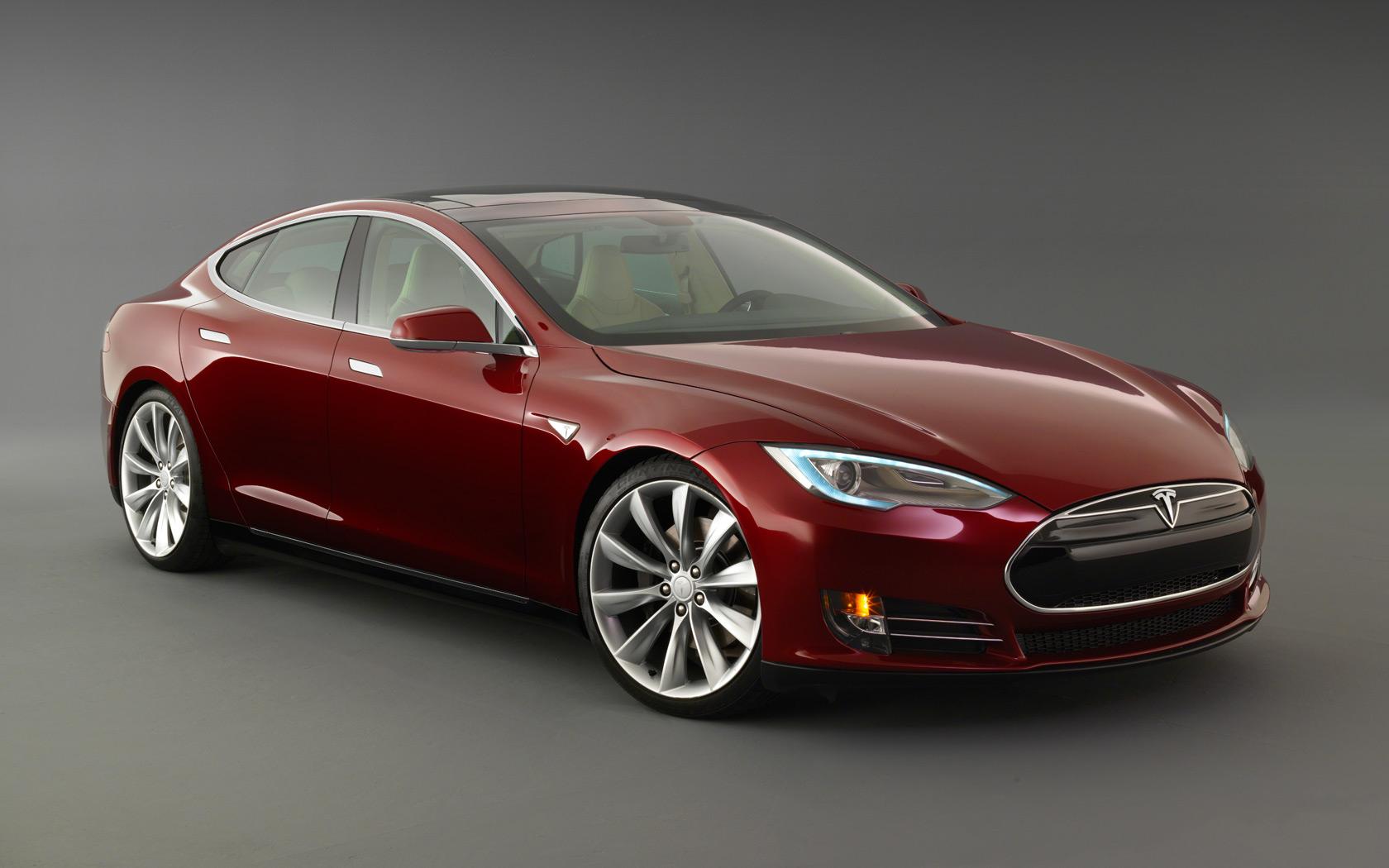
Tesla sales in the fourth quarter of 2013 were the highest in company history by a significant margin. With almost 6,900 vehicles sold and delivered, Tesla exceeded prior guidance by approximately 20%. A higher than expected number of cars was manufactured as a result of an excellent effort by the Tesla production team and key suppliers, particularly Panasonic.
The two key drivers of demand were the superlative safety record of the Model S and great performance under extremely cold conditions.
Safety Record
Tesla remains the only manufacturer with a perfect safety record of zero deaths or serious, permanent injuries ever. Including the Roadster, Tesla vehicles have now been on the road for almost six years in 31 countries with almost 200 million miles driven to date. Despite dozens of high speed collisions, the driver and passengers have always been protected. This is Tesla’s proudest achievement.
Independent testing by the National Highway Traffic Safety Administration (NHTSA) awarded the Tesla Model S a 5 star safety rating overall and in every subcategory without exception. Of all vehicles tested, including every major make and model approved for sale in the United States, the Model S set a new record for the lowest likelihood of injury to occupants. While the Model S is a sedan, it also exceeded the safety score of all SUV’s and minivans.
Excellent Cold Weather Performance
Due to the precision of its electric powertrain, the Model S has outstanding traction control relative to the much higher latency and inertia of a gasoline powertrain. As a result, it is able to perform better on snow and ice than many all-wheel drive gasoline cars, as shown in this Tesla produced video:
Showing posts with label hybrid. Show all posts
19 Jan 2014
15 Jan 2014
Toyota passes the six million mark for hybrid sales, all in just 16 years.
The progress of Toyota’s hybrid power technology has reached another landmark with cumulative global sales of Toyota hybrid vehicles reaching 6.072 million units at the end of December. Notably the latest million-milestone has been reached in the fastest time yet, just nine months since the figure moved past five million.
Toyota recognises that its cleaner, efficient technologies can only truly make a positive impact if they are widely used, hence its on-going efforts to encourage the mass-market take-up of its hybrid vehicles.
As of this month, Toyota Motor Corporation sells 24 hybrid passenger car models and one plug-in hybrid in approximately 80 countries and regions around the world. In the UK, home to production of the hybrid versions of Auris and Auris Touring Sports, the range extends to 10 Toyota and Lexus hybrids, plus Prius Plug-in.
Within the next two years, Toyota will launch 15 new hybrids. It will continue to develop its product range and the number of markets where its hybrid models are available.
Toyota calculates that, as of 31 December 2013, Toyota hybrid vehicles have reduced the amount of CO2 entering the atmosphere – believed to be a cause of global warming – by approximately 41 million tonnes, compared to the impact the same number of equivalent petrol-powered vehicles would have. On the same basis, it also estimates its hybrids have saved around 15,000 million litres of petrol.
Toyota entered hybrid vehicle production in August 1997 with the launch in Japan of the Coast Hybrid EV bus, followed in December by the first generation Prius, the world’s first mass-produced hybrid car. Since then Toyota’s hybrids have enjoyed increasing support from customers around the world.
Toyota’s hybrid system is designed as a core technology that can be used in different forms to create environmentally efficient vehicles for different customer requirements. The company will continue to work to raise performance, reduce costs and expand its product line-up – including the introduction of environmentally efficient non-hybrid vehicles.
Toyota hybrid vehicle sales – all brands
(1 = 1,000 units)
Cumulative sales of Toyota hybrid passenger vehicles
(1 = 1,000 units) * Including Prius Plug-in; ** including Auris Hybrid Touring Sports.
Toyota recognises that its cleaner, efficient technologies can only truly make a positive impact if they are widely used, hence its on-going efforts to encourage the mass-market take-up of its hybrid vehicles.
As of this month, Toyota Motor Corporation sells 24 hybrid passenger car models and one plug-in hybrid in approximately 80 countries and regions around the world. In the UK, home to production of the hybrid versions of Auris and Auris Touring Sports, the range extends to 10 Toyota and Lexus hybrids, plus Prius Plug-in.
Within the next two years, Toyota will launch 15 new hybrids. It will continue to develop its product range and the number of markets where its hybrid models are available.
Toyota calculates that, as of 31 December 2013, Toyota hybrid vehicles have reduced the amount of CO2 entering the atmosphere – believed to be a cause of global warming – by approximately 41 million tonnes, compared to the impact the same number of equivalent petrol-powered vehicles would have. On the same basis, it also estimates its hybrids have saved around 15,000 million litres of petrol.
Toyota entered hybrid vehicle production in August 1997 with the launch in Japan of the Coast Hybrid EV bus, followed in December by the first generation Prius, the world’s first mass-produced hybrid car. Since then Toyota’s hybrids have enjoyed increasing support from customers around the world.
Toyota’s hybrid system is designed as a core technology that can be used in different forms to create environmentally efficient vehicles for different customer requirements. The company will continue to work to raise performance, reduce costs and expand its product line-up – including the introduction of environmentally efficient non-hybrid vehicles.
Toyota hybrid vehicle sales – all brands
(1 = 1,000 units)
Cumulative sales of Toyota hybrid passenger vehicles
(1 = 1,000 units) * Including Prius Plug-in; ** including Auris Hybrid Touring Sports.
14 Jan 2014
CHINA - BYD launches Qin model, with advanced hybrid and remote control technology
BYD has officially launched its Qin model in China, a new and high tech, performance-based hybrid car intended to target key world markets. European availability of a similar but probably renamed model is planned for early 2015.
The dual mode Qin can accelerate from 0 to 100kph (62 mph) in just 5.9 seconds and has a top speed of 185kph (115 mph) with a claimed overall fuel consumption of up to 1.6 L/100km (177mpg). The Qin can be driven in pure electric mode for up to 70km (44 miles), a distance which BYD research indicates will satisfy most daily travel needs and is believed to be by far the longest achieved by a PHEV (at least twice the range of competitor models). For long distance journeys the car uses its BYD 1.5TID petrol engine thus eliminating any ‘range anxiety’ associated with battery power vehicles.
When the first 100 Qin cars were put on sale on line in China, BYD set a record for new car sales anywhere. All 100 cars were snapped up by eager buyers in just two seconds – thought to be a record in the car industry. About 95,000 people had visited the BYD e-shopping mall, 6,000 actually registered and 23,405 were online when the sale began. An incredible 4,155 of them rushed to purchase the innovative new model from BYD.
The new car utilises the technology pioneered and fully proven in the original BYD F3DM model, of which many tens of thousands have been sold. As a PHEV (Plug-in Hybrid Electric Vehicle) the Qin can be recharged at any normal household socket. When power is low or there is an on-demand need for ultimate acceleration the HEV mode is activated; this can be programmed either automatically or manually. The Qin also generates electric recharging power during deceleration – either by means of engine braking or via the foot brake – typically contributing 2.5 to 3 kWh every 100km (62 miles).
The Qin offers four fully matched driving functions – EV+ECO, EV+SPORT, HEV+ECO and HEV+SPORT modes. These can be selected by the driver, commanding the appropriate blend of economy and performance for any driving condition.
All models in the Qin family feature a 12.1-inch TFT instrument panel, smart key system and BYD’s unique remote driving facility, which allows the car to be manoeuvred remotely at very low speed from the outside of the vehicle where permissible.
Standard safety features include Tyre Pressure Monitoring System (TPMS), Electric Park Brake, ISO-FIX mounting points for child safety seats, Electronic Stability Programme (ESP), Control Deceleration Parking and 12 air bags.
The Qin family includes advanced internet connectivity encompassing a Cloud-based services system, currently available only in China, which brings together the intelligence technology and interactive experiences into one driver-friendly control unit.
The BYD Qin, spearheading a range of BYD petrol, hybrid and pure electric cars for the consumer market, is expected to be launched in Europe in early 2015. Initial prices in China prior to any EV subsidies range from €23,725 to €26,225 (£19,645 to £21,715).
The dual mode Qin can accelerate from 0 to 100kph (62 mph) in just 5.9 seconds and has a top speed of 185kph (115 mph) with a claimed overall fuel consumption of up to 1.6 L/100km (177mpg). The Qin can be driven in pure electric mode for up to 70km (44 miles), a distance which BYD research indicates will satisfy most daily travel needs and is believed to be by far the longest achieved by a PHEV (at least twice the range of competitor models). For long distance journeys the car uses its BYD 1.5TID petrol engine thus eliminating any ‘range anxiety’ associated with battery power vehicles.
When the first 100 Qin cars were put on sale on line in China, BYD set a record for new car sales anywhere. All 100 cars were snapped up by eager buyers in just two seconds – thought to be a record in the car industry. About 95,000 people had visited the BYD e-shopping mall, 6,000 actually registered and 23,405 were online when the sale began. An incredible 4,155 of them rushed to purchase the innovative new model from BYD.
The new car utilises the technology pioneered and fully proven in the original BYD F3DM model, of which many tens of thousands have been sold. As a PHEV (Plug-in Hybrid Electric Vehicle) the Qin can be recharged at any normal household socket. When power is low or there is an on-demand need for ultimate acceleration the HEV mode is activated; this can be programmed either automatically or manually. The Qin also generates electric recharging power during deceleration – either by means of engine braking or via the foot brake – typically contributing 2.5 to 3 kWh every 100km (62 miles).
The Qin offers four fully matched driving functions – EV+ECO, EV+SPORT, HEV+ECO and HEV+SPORT modes. These can be selected by the driver, commanding the appropriate blend of economy and performance for any driving condition.
All models in the Qin family feature a 12.1-inch TFT instrument panel, smart key system and BYD’s unique remote driving facility, which allows the car to be manoeuvred remotely at very low speed from the outside of the vehicle where permissible.
Standard safety features include Tyre Pressure Monitoring System (TPMS), Electric Park Brake, ISO-FIX mounting points for child safety seats, Electronic Stability Programme (ESP), Control Deceleration Parking and 12 air bags.
The Qin family includes advanced internet connectivity encompassing a Cloud-based services system, currently available only in China, which brings together the intelligence technology and interactive experiences into one driver-friendly control unit.
The BYD Qin, spearheading a range of BYD petrol, hybrid and pure electric cars for the consumer market, is expected to be launched in Europe in early 2015. Initial prices in China prior to any EV subsidies range from €23,725 to €26,225 (£19,645 to £21,715).
3 Jan 2014
USA - Fisker seeks rejection of Chinese suitor it blames for its bankruptcy.
Fisker Automotive Inc., the bankrupt maker of a plug-in hybrid sports car, asked a federal judge to approve its proposed sale to a Hong Kong tycoon rather than a Chinese suitor that Fisker alleged was to blame for its failure.
A courtroom showdown is set for Friday that will determine the future of the defunct car maker that was launched with a controversial U.S. government loan. U.S. Bankruptcy Court Judge Kevin Gross must decide if Fisker's business will be put to open auction or sold to an affiliate of Richard Li as the company has proposed.
The company's plans were thrown into doubt on Monday, when the official creditors' committee proposed auctioning the business and presented an initial $24.725 million bid from the U.S. unit of Wanxiang Group, China's largest auto supplier.
Fisker today attacked the creditors' proposal in a series of court filings in U.S. Bankruptcy Court in Wilmington, Del., noting that after Wanxiang bought A123 Systems Inc, a battery maker, it cut supplies to Fisker.
"Wanxiang now seeks to profit from a bankruptcy that it helped cause," Fisker said in a court filing.
An attorney for the creditors' committee disputed that, noting that Wanxiang acquired A123 months after Fisker idled its production to save cash. "Fisker was no longer producing cars at that time," said Sunni Beville of Brown Rudnick.
The creditors' committee have called the Wanxiang bid proposal the best option and they also asked the bankruptcy court to allow them to sue to former Fisker director David Manion and others for improperly pushing the sale to Li.
Hanging in the balance are the assets of a company once touted as America's "green" rival to prestigious brands such as Maserati, but which has not made its signature Karma in more than a year.
The company obtained a $529 million loan from the Department of Energy that was meant to promote fuel efficient cars, which in turn helped to lure private backing.
Fisker raised more than $1.4 billion in public and private funds after its founding in 2007, but lavish spending, quality and engineering blunders and other mistakes drained the company's coffers and delayed the launch of the Karma, several people close to the company told Reuters earlier this year.
An entity affiliated with Li planned to buy Fisker after he paid $25 million for Fisker's government loan, outbidding Wanxiang. Instead of using cash, the Li affiliate planned to buy Fisker's assets using a "credit bid" of a portion of what Fisker owed on that loan, leaving other creditors with next to nothing.
Court records show that a majority of unsecured creditors such as design consultants and suppliers voted to reject the plan to sell Fisker to Li.
MORE HERE
A courtroom showdown is set for Friday that will determine the future of the defunct car maker that was launched with a controversial U.S. government loan. U.S. Bankruptcy Court Judge Kevin Gross must decide if Fisker's business will be put to open auction or sold to an affiliate of Richard Li as the company has proposed.
The company's plans were thrown into doubt on Monday, when the official creditors' committee proposed auctioning the business and presented an initial $24.725 million bid from the U.S. unit of Wanxiang Group, China's largest auto supplier.
Fisker today attacked the creditors' proposal in a series of court filings in U.S. Bankruptcy Court in Wilmington, Del., noting that after Wanxiang bought A123 Systems Inc, a battery maker, it cut supplies to Fisker.
"Wanxiang now seeks to profit from a bankruptcy that it helped cause," Fisker said in a court filing.
An attorney for the creditors' committee disputed that, noting that Wanxiang acquired A123 months after Fisker idled its production to save cash. "Fisker was no longer producing cars at that time," said Sunni Beville of Brown Rudnick.
The creditors' committee have called the Wanxiang bid proposal the best option and they also asked the bankruptcy court to allow them to sue to former Fisker director David Manion and others for improperly pushing the sale to Li.
Hanging in the balance are the assets of a company once touted as America's "green" rival to prestigious brands such as Maserati, but which has not made its signature Karma in more than a year.
The company obtained a $529 million loan from the Department of Energy that was meant to promote fuel efficient cars, which in turn helped to lure private backing.
Fisker raised more than $1.4 billion in public and private funds after its founding in 2007, but lavish spending, quality and engineering blunders and other mistakes drained the company's coffers and delayed the launch of the Karma, several people close to the company told Reuters earlier this year.
An entity affiliated with Li planned to buy Fisker after he paid $25 million for Fisker's government loan, outbidding Wanxiang. Instead of using cash, the Li affiliate planned to buy Fisker's assets using a "credit bid" of a portion of what Fisker owed on that loan, leaving other creditors with next to nothing.
Court records show that a majority of unsecured creditors such as design consultants and suppliers voted to reject the plan to sell Fisker to Li.
MORE HERE
Labels:
automotive,
buyer,
Chinese,
court case,
fisker,
hong kong,
hybrid,
inc,
karma,
news,
plug-in,
us grant
23 Dec 2013
TMW - What to look forward to in 2014
2013 was a great year for The Motoring World, Our first year, The return of Datsun and SAAB, brand new niche cars from Rolls Royce, Bentley and its return to motorsport and the Bentley Boys, the ever increasing sight of SUV's on the roads of the world, and a world that is slowly but surely creeping out of its financial situation that started nearly 5 years ago.
So what do we have to look forward to next year, an huge amount, some truly stunning supercars, more SUV's in varying sizes and engines, some famous hatchbacks, small and fun mini cars and a whole host of sports cars, below are just a small sample of some the cars that we expect to see the light of day either to buy or launched to conceptual stage.
Have a great 2014.
Info courtesy of CAR MAGAZINE
Jon Mower
So what do we have to look forward to next year, an huge amount, some truly stunning supercars, more SUV's in varying sizes and engines, some famous hatchbacks, small and fun mini cars and a whole host of sports cars, below are just a small sample of some the cars that we expect to see the light of day either to buy or launched to conceptual stage.
Family cars
Audi A3 E-tron (summer 2014)
Hybrid model of our 2013 Car of the Year blends hot hatch pace with CO2 emissions of 35g/km.
Hyundai i10 (early 2014)
City car gets the latest family look and greater refinement.
Kia Soul (early 2014)
Promises improvements to refinement and driving dynamics.
Mazda 3 (January 2014)
Will be lighter than today’s 3, thanks to Skyactiv technology.
MINI (early 2014)
New model gets revised dashboard and engines and bodywork.
Peugeot 308 (January 2014)
Lighter than current car, with a much classier cabin.
Renault Megane (early 2014)
Face-lifted range gets Renault family look and new petrol engine.
Skoda Rapid Spaceback (January 2014)
Shorter version of Rapid, but has more boot space than a VW Golf.
Smart Forfour (autumn 2014)
Next-generation city car will be available with either conventional engines or electric powertrains.
Vauxhall Corsa (autumn 2014)
Revamp of current car will introduce three-cylinder engines.
Volkswagen e-Golf (summer 2014)
Golf gets a 113bhp electric motor with 118-mile zero-emission range.
Volkswagen e-Up (early 2014)
Electric Up is the quickest model in the range; 100-mile range on one charge.
Estate cars
Honda Civic Tourer (early 2014)
Swish-looking estate gets a bigger boot than rivals from Ford, Skoda and Volkswagen.
Peugeot 308 SW (autumn 2014)
Estate will get the same three-cylinder engines that are due in the hatch next year.
Seat Leon ST (January 2014)
New model will beat Astra and Focus Estates on boot space.
Executives
Audi S3 Saloon (early 2014)
Hot version of Audi’s new 3 Series rival gets 296bhp, four-wheel drive and does 0-62mph in 4.9 seconds.
Infiniti Q50 (January 2014)
G Series replacement gets new name and engines, including a V6 petrol-electric hybrid.
Mercedes-Benz C-Class (spring 2014)
All-new executive car will be offered with a hybrid powertrain.
Luxury
Audi A8 (January 2014)
Updated model gets styling tweaks and changes to engine line-up.
Bentley Continental GT V8 S (early 2014)
More powerful versions of the GT have re-tuned suspension and steering.
Tesla Model S (early 2014)
Luxury electric car will go up to 300 miles on one charge.
MPVs
Citroën Grand C4 Picasso (January 2014)
Seven-seat MPV gets more practicality and efficiency.
Small SUVs
Audi RS Q3 (January 2014)
Evoque rival gets 306bhp engine and four-wheel drive.
Ford Ecosport (spring 2014)
Fiesta-based SUV will get a 1.0-litre three-cylinder petrol engine.
Jeep Cherokee (early 2014)
Freelander rival will borrow Fiat diesel engine to boost UK sales.
MG CS (Late 2014 Concept)
Based on MG5 underpinnings too little, too late.
Mercedes GLA (December 2013)
A new rival for the BMW X1, Audi Q3 and Range Rover Evoque.
Porsche Macan (spring 2014)
Cayenne’s baby brother will share underpinnings with the Audi Q5.
Skoda Yeti (January 2014)
Family favourite gets a face-lift, plus more standard equipment.
Ssangyong Korando (early 2014)
Bigger than the current model, but likely to get same engine line-up and two- or four-wheel drive.
Large SUVs
BMW X4 (spring 2014)
Expect ‘son of X6’ to cost around £3k more than equivalent X3s.
Land Rover Discovery (November 2013)
Face-lifted model gets better fuel economy and more equipment.
Nissan X-Trail (July 2014)
More stylish than current car; available as five- or seven-seater with two- or four-wheel drive.
Ssangyong Rexton W (December 2013)
Budget seven-seat off-roader gets 2.0-litre diesel engine.
Toyota Land Cruiser (December 2013)
Seven-seat SUV gets a face-lift and revised dashboard design.
Coupes
Peugeot RCZ R (early 2014)
The company’s most powerful production car ever gets 270bhp.
Open-tops
Audi A3 Cabriolet (winter 2013)
Longer, lower and lighter than the current car. S3 version will follow.
BMW 4 Series Convertible (early 2014)
New 4 Series loses its roof; keeps same range of engines.
Hot hatches
Seat Leon Cupra (autumn 2014)
Promises understated looks, but more power than the VW Golf GTI.
Volkswagen Golf R (spring 2014)
Choice of three- or five-door 296bhp hatch; 0-62mph in 4.9secs
Sports cars
BMW M4 (autumn 2014)
New range-topping coupé follows M4 Concept revealed in Frankfurt.
So, there you go, a taster of what is to come next year, from the small and cheap to the outlandish and uber expensive, and everything in between, but one thing for sure is that the automotive world will be a force again next year, and not just from the usual suspects, expect the Chinese to pick up momentum and make small inroads into the world auto market, but rest assured they are coming, like the Japanese in the 60's and the Koreans in the 80's with big brands behind the Chinese names and extremely healthy bank balances they can compete and will get better and will be, before long, names that trip of our tongues like Ford, Rolls Royce and Mercedes do now.New range-topping coupé follows M4 Concept revealed in Frankfurt.
Have a great 2014.
Info courtesy of CAR MAGAZINE
Jon Mower
15 Dec 2013
USA - 2014 Toyota Highlander starts production in Indiana after $430 Million investment
- Popular SUV responsible for $430 million investment and more than 600 jobs by 2014 end
Hoosier pride was felt deep and wide on the plant floor of Toyota Motor Manufacturing, Indiana this morning as the company celebrated the start of production of the all-new 2014 Highlander.
TMMI team members and area citizens have much to celebrate, as the popular midsize SUV is responsible for $430 million additional investment and more than 600 jobs at the Princeton automotive plant.
“Automotive manufacturers and suppliers around Indiana are putting their expansion plans into gear, creating jobs and more opportunities in every corner of the state,” said Indiana Lieutenant Governor Sue Ellspermann. “With Toyota’s launch of production for the new Highlander right here in the Hoosier State, we are witnessing an economy driving forward. From our world-class workforce to our low cost of doing business, Indiana proves daily that it is a state that works for automotive manufacturing.”
The Princeton plant builds a gas version of the Highlander and will begin producing the hybrid version early next year. Highlanders born in Indiana will find new homes with drivers in the Russian and Australian regions as TMMI expands its export reach.
Highlander export business allows for better utilization of the Indiana plant, and helps capitalize on the improving North American and global auto market. In addition to the new jobs created at the Indiana plant, this project increases opportunities and jobs for Toyota’s North American supply base.
2014 new Highlander features
- All-new exterior with three-row seating for up to eight,
- Increased cargo capacity,
- Three power train choices: a fuel-efficient four-cylinder engine, a powerful V-6 with a new six-speed transmission, and a V-6-powered Hybrid Synergy Drive,
- Entune Audio with Bluetooth phone and streaming music and touch-screen display,
- Integrated backup camera,
- STAR Safety System, includes Enhanced Vehicle Stability Control, Traction Control, Anti-Lock Brake System, Electronic Brake-Force Distribution, Brake assist and Smart Stop Technology,
- Adjustable height power rear liftgate and flip-up rear hatch window, and
- Eight-way power driver seat.
“The all-new Highlander is a dynamic, stylish SUV and its quality craftsmanship and the fact that it will be exported to the Russian and Australian markets is a testament to the hard work and dedication of our team members.” Bafunno said. “This really is a milestone for our entire team,”
Sheila Showalter, Quality Assurance team leader, couldn’t agree more. “When I started here 16 years ago, I was one of 1,300 team members in the West Plant and we were only building the Tundra. It is exciting to be a part of something this big.”
Representing a $4.2 billion investment, TMMI currently employs about 4,500. By the end of 2014, Toyota will directly employ 4,700 team members. The Princeton plant also produces the Sequoia full-size SUV and Sienna minivan.
Labels:
$430 million,
2014,
highlander,
hybrid,
indiana,
investment,
suv,
Toyota,
v6. synergy system
11 Dec 2013
7th generation Golf hits half million sales already.
The Golf’s success story enters the seventh generation as the car continues to inspire both customers and the specialist media. The Golf has been honoured with two dozen prestigious awards over the last twelve months. It was voted European “Car of the Year” and crowned “World Car of the Year 2013”. The new Golf also recently beat the competition in Japan, becoming the first imported car in the 34-year history of the country’s top award to claim the accolade and be named “Car of the Year 2013/2014 Japan” with a score that was streaks ahead of the field. Other awards include the “Golden Steering Wheel 2013”, the “Auto Trophy”, “Auto der Vernunft” (Car of Reason) and “Best cars of 2013”. Prof. Dr. Martin Winterkorn, CEO of Volkswagen Aktiengesellschaft, commented: “The Golf will remain the most important model and a powerful engine for the Volkswagen brand.”
The 500,000th latest-generation Golf will be delivered in a few days’ time just one year after the car was launched. And the bestseller has yet to make its debut in key countries such as China and the United States. Moreover, important derivatives in the Golf family are waiting in the wings: The new Golf Estate has just arrived in showrooms and will be followed next year by the Golf Sportsvan which Volkswagen premiered at the IAA in Frankfurt. There will also be innovative versions such as the e-Golf and the Golf Plug-in Hybrid. “We are delighted the Golf has got off to such a brilliant start and is enjoying such a positive reception from customers. That is first and foremost due to a committed team. Our people very definitely went the extra mile for the Golf and have done a great job,” Winterkorn added.
For years now, the Golf has been the best-selling car in Europe, enjoying this status in several individual countries and taking pole position, for example, in Belgium, Finland, Ireland, Croatia, Luxemburg, Norway, Austria, Switzerland and, of course, its home market of Germany.
The first generation of the Volkswagen Golf went on display at dealers in May 1974 as the successor to the legendary Beetle and has continued its predecessor’s success story for almost 40 years. The Golf has lent its name to an entire vehicle class and has always been available in a range of variants. From the ultra-economical Golf TDI BlueMotion to the sporty GTI, from the three-door model to the estate version, Volkswagen has a Golf to suit every taste and need. That has convinced customers: Volkswagen celebrated the 30 millionth Golf in June 2013.
The 500,000th latest-generation Golf will be delivered in a few days’ time just one year after the car was launched. And the bestseller has yet to make its debut in key countries such as China and the United States. Moreover, important derivatives in the Golf family are waiting in the wings: The new Golf Estate has just arrived in showrooms and will be followed next year by the Golf Sportsvan which Volkswagen premiered at the IAA in Frankfurt. There will also be innovative versions such as the e-Golf and the Golf Plug-in Hybrid. “We are delighted the Golf has got off to such a brilliant start and is enjoying such a positive reception from customers. That is first and foremost due to a committed team. Our people very definitely went the extra mile for the Golf and have done a great job,” Winterkorn added.
For years now, the Golf has been the best-selling car in Europe, enjoying this status in several individual countries and taking pole position, for example, in Belgium, Finland, Ireland, Croatia, Luxemburg, Norway, Austria, Switzerland and, of course, its home market of Germany.
The first generation of the Volkswagen Golf went on display at dealers in May 1974 as the successor to the legendary Beetle and has continued its predecessor’s success story for almost 40 years. The Golf has lent its name to an entire vehicle class and has always been available in a range of variants. From the ultra-economical Golf TDI BlueMotion to the sporty GTI, from the three-door model to the estate version, Volkswagen has a Golf to suit every taste and need. That has convinced customers: Volkswagen celebrated the 30 millionth Golf in June 2013.
1 Dec 2013
USA - 2014 Honda Accord names green car of the year.
- 2014 Accord environmental leadership highlighted by all-new EPA-rated 50 mpg city Accord Hybrid and EPA-rated 115 MPGe combined Accord Plug-In
- Accord joins Civic Natural Gas as the second Honda vehicle to earn "Green Car of the Year" award in past three years
The 2014 Honda Accord, America's top-selling car with retail car customers (1), has been named the "2014 Green Car of the Year®" by Green Car Journal. The award recognizes the class-leading environmental performance of the Accord family of vehicles, including the fuel-efficient and low emissions Accord 4-cylinder and V-6 Coupe and Sedan, the EPA-rated 50 mpg city Accord Hybrid and the EPA-rated 115 MPGe combined Accord Plug-in Hybrid.
"Led by the 2014 Accord Hybrid, the entire Accord lineup really embodies the promise of the Honda brand to deliver both fun-to-drive enjoyment and outstanding fuel efficiency at the highest level," said Mike Accavitti, senior vice president of Automobile Operations at American Honda. "I want to say thank you to Green Car Journal, not just for honoring Accord, but for shining a spotlight on the environment and our shared vision for an ultra-low carbon future."
2014 Green Car of the Year® jurorsselected the Accord as the winning model for many reasons, not the least of which is its ability to offer an efficient choice for a wide range of buyers, from those seeking better fuel efficiency in a conventionally powered model to those desiring the milestone efficiency of a world-class hybrid or plug-in hybrid. In addition to the "Green Car of the Year" honor, the Accord was earlier honored as one of Green Car Journal's 'Top 5 Green Cars for 2014' and additionally earned the magazine's 'Green Car Product of Excellence' distinction.
"With its efficient internal combustion, hybrid, and plug-in choices, the 2014 Honda Accord delivers exactly what consumers are looking for today," said Ron Cogan, editor and publisher of Green Car Journal and CarsOfChange.com. "It all comes together this year for the Accord in ways that speak to significant environmental performance built into a mainstream, volume model that's a joy to drive. The Accord is a deserving winner of Green Car Journal's 2014 Green Car of the Year."
The 2014 Accord is the second Honda brand vehicle named as "Green Car of the Year" in the past three years, joining the 2012 Civic Natural Gas, which netted the distinction in 2011.
2014 Honda Accord
The 2014 Accord lineup features Honda's innovative Earth Dreams™ Technology powertrains, including Honda's next-generation 2.4-liter, direct-injected 4-cylinder engine with continuously variable transmission or 6-speed manual transmission. The Accord Plug-In, with an 115 MPGe combined EPA fuel-economy rating, and the Accord Hybrid Sedan, with a class-leading 50 mpg EPA city fuel-economy rating, are powered an all-new highly efficient Atkinson cycle engine and two-motor hybrid system2. Fuel efficiency is the best ever for Accord in the EPA Midsize class, with 4-cylinder models earning a 36 mpg highway EPA rating2 and the V-6 models garnering a 34 mpg highway EPA rating (2).
In addition to fuel economy ratings leadership, the Accord has continually led the industry in meeting strict emissions standards. The Accord Plug-In is the first vehicle to achieve SULEV 20 emissions standards, with the lowest tailpipe emissions of any ICE vehicle currently available. Additionally the Accord was the first vehicle to meet ULEV (1998) and SULEV (2000) emissions standards.
Accord was the most popular midsize passenger car in America through September of 2013, based on sales to individual (non-fleet) car buyers, according to new vehicle registration data from R.L. Polk.
About Green Car of the Year®
The Green Car of the Year award is an important part of Green Car Journal's mission to showcase environmental progress in the auto industry. Since 1992, Green Car Journal has focused on the intersection of automobiles, energy, and environment. Today, the magazine is considered the premier source of information on high fuel efficiency, low emission, advanced technology, and alternative fuel vehicles. CarsOfChange.com presents 'green car' articles online along with a focus on infotainment and connectivity. Green Car of the Year® is a registered trademark of Green Car Journal and RJ Cogan Specialty Publications Group, Inc.
The 2014 Green Car of the Year® jurors include leaders of many of the nation's most notable environmental and energy efficiency organizations including Jean-Michel Cousteau, president of Ocean Futures Society; Kateri Callahan, president of the Alliance to Save Energy; Matt Petersen, board member of Global Green USA; Frances Beinecke, president of the Natural Resources Defense Council; and Dr. Alan Lloyd, president of the International Council on Clean Transportation and former head of the California Air Resources Board and Cal/EPA. Auto enthusiast and Tonight Show host Jay Leno and Green Car Journal editors round out the jury.
Honda Environmental Leadership
Honda is committed to further advancements in fuel efficiency, with a focus on the broad application of technologies such as VTEC™ and Variable Cylinder Management™ (VCM™), and the expanded application of Honda hybrid technology. In October 2011, Honda debuted a new lineup of advanced gasoline engines using new 'Earth Dreams' powertrain technology, which will serve as the foundational technology to advance the fuel efficiency of Honda and Acura vehicles. Honda has also led the Union of Concerned Scientists (UCS) rankings of overall vehicle environmental performance since 2000, and a Honda vehicle has topped the list of America's greenest vehicles from the America Council for an Energy-Efficient Economy (ACEEE) for 15 consecutive years.
1 Based on sales to individual (non-fleet) car buyers, according to new vehicle registration data from R.L. Polk through September 2013.
2 Based on 2014 EPA mileage ratings. Use for comparison purposes only. Your actual mileage will vary depending on how you drive and maintain your vehicle.
28 Nov 2013
Mitsubishi's new Outlander PHEV gets into London for free.
Mitsubishi Motors in the UK is pleased to announce the new Outlander PHEV will be exempt from the London Congestion Charge.
In spring 2014 Mitsubishi will be launching the Plug-in Hybrid Electric Vehicle (PHEV) version of its all new Outlander. Outlander PHEV is a 4x4 SUV built without compromise to interior space. The green credentials for the car are particularly impressive. Outlander PHEV can achieve up to 148mpg and only emits 44g/km CO2. This means that customers will benefit from tiny fuel bills, no vehicle excise duty (VED) and, for company car drivers, a benefit in kind (BIK) rate of just 5%. To add to this list of benefits Outlander has also just qualified to be London Congestion Charge exempt.
Before 1st July 2013 all hybrid vehicles qualified to be Congestion Charge exempt. After this date Transport for London (TfL) tightened the rules meaning hybrid vehicles had to be able to travel more than 10 miles using electric power alone and emit less than 75g/km CO2 in order to qualify. The result was that most of the hybrid vehicles in the market, which generally have an electric vehicle range of less than 10 miles and emissions above 75g/km, no longer qualified.
Outlander PHEV is totally different to current generation hybrids. The car can cover a significant distance and reach impressive speeds using just its electric motors (EV mode). In pure EV mode it can cover 32 miles (using both the combustion engine and electric motors range increases to 514 miles) and, where allowed, it can reach 75 mph (using the combustion engine in addition to the electric motors pushes this top speed up).
Outlander easily meets TfL’s new Congestion Charge exemption criteria and once launched will become one of the largest vehicles to get in and out of London for free.
Toby Marshall, Sales & Marketing Director of Mitsubishi Motors in the UK, said:
‘Everyone at Mitsubishi is incredibly excited about the arrival of the PHEV version of Outlander. Not only is it extremely clean and green, but it is fantastic to drive. Power from the car is delivered quietly and smoothly. It certainly doesn’t hang around either!
With so much already going for it, the fact that it now qualifies for Congestion Charge exemption is great news.’
In spring 2014 Mitsubishi will be launching the Plug-in Hybrid Electric Vehicle (PHEV) version of its all new Outlander. Outlander PHEV is a 4x4 SUV built without compromise to interior space. The green credentials for the car are particularly impressive. Outlander PHEV can achieve up to 148mpg and only emits 44g/km CO2. This means that customers will benefit from tiny fuel bills, no vehicle excise duty (VED) and, for company car drivers, a benefit in kind (BIK) rate of just 5%. To add to this list of benefits Outlander has also just qualified to be London Congestion Charge exempt.
Before 1st July 2013 all hybrid vehicles qualified to be Congestion Charge exempt. After this date Transport for London (TfL) tightened the rules meaning hybrid vehicles had to be able to travel more than 10 miles using electric power alone and emit less than 75g/km CO2 in order to qualify. The result was that most of the hybrid vehicles in the market, which generally have an electric vehicle range of less than 10 miles and emissions above 75g/km, no longer qualified.
Outlander PHEV is totally different to current generation hybrids. The car can cover a significant distance and reach impressive speeds using just its electric motors (EV mode). In pure EV mode it can cover 32 miles (using both the combustion engine and electric motors range increases to 514 miles) and, where allowed, it can reach 75 mph (using the combustion engine in addition to the electric motors pushes this top speed up).
Outlander easily meets TfL’s new Congestion Charge exemption criteria and once launched will become one of the largest vehicles to get in and out of London for free.
Toby Marshall, Sales & Marketing Director of Mitsubishi Motors in the UK, said:
‘Everyone at Mitsubishi is incredibly excited about the arrival of the PHEV version of Outlander. Not only is it extremely clean and green, but it is fantastic to drive. Power from the car is delivered quietly and smoothly. It certainly doesn’t hang around either!
With so much already going for it, the fact that it now qualifies for Congestion Charge exemption is great news.’
21 Nov 2013
Yamaha and Gordon Murray design a compact microcar.
In the current era of urban traffic and environmental problems there is increasing demand for downsizing and fuel efficient cars. MOTIV.e satisfies these demands by utilising ground breaking manufacturing and materials technology while delivering a new level of driver experience which emanates from the Yamaha Motor Company DNA.
The MOTIV.e is created from Yamaha Motor's multi-wheel history and experience (2 wheel - 3 wheel and 4 wheel technology). Yamaha Motor Company has always been dedicated to craftsmanship with a focus on 'quality mobility'. The MOTIV.e builds on this philosophy and incorporates Formula One heritage, inspiration from motorcycle design and the latest technology to deliver an exciting and high quality driving experience. The MOTIV.e delivers a new level of personal mobility.
Yamaha Motor Company chose Gordon Murray Design to cooperate in the design and development of the MOTIV.e which utilises Gordon Murray Design's revolutionary iStream® manufacturing technology. Yamaha Motor Company and Gordon Murray Design are a perfect fit as a partnership with both company's Formula One and technology backgrounds.
The iStream® manufacturing system which incorporates Formula One composite technology delivers new levels of lightweight, safety, vehicle dynamics and manufacturing flexibility alongside low environmental impact.
The MOTIV.e design reflects Yamaha's rich heritage in high quality lifestyle products while introducing a technical and dynamic shape which is inspired by Yamaha Motor's Motorcycle products. The iStream® design is centred on a steel frame incorporating bonded composite monocoque panels to produce a lightweight, rigid safety cell. All independent suspension and low unsprung weight delivers new levels of ride and handling. The all-new electric powertrain has been designed using 'state of the art' materials and technology.
The MOTIV.e represents a new starting point for urban mobility vehicles and sets new standards in the ultra compact 4 wheeler segment.
Editors Notes:
The MOTIV.e is created from Yamaha Motor's multi-wheel history and experience (2 wheel - 3 wheel and 4 wheel technology). Yamaha Motor Company has always been dedicated to craftsmanship with a focus on 'quality mobility'. The MOTIV.e builds on this philosophy and incorporates Formula One heritage, inspiration from motorcycle design and the latest technology to deliver an exciting and high quality driving experience. The MOTIV.e delivers a new level of personal mobility.
Yamaha Motor Company chose Gordon Murray Design to cooperate in the design and development of the MOTIV.e which utilises Gordon Murray Design's revolutionary iStream® manufacturing technology. Yamaha Motor Company and Gordon Murray Design are a perfect fit as a partnership with both company's Formula One and technology backgrounds.
The iStream® manufacturing system which incorporates Formula One composite technology delivers new levels of lightweight, safety, vehicle dynamics and manufacturing flexibility alongside low environmental impact.
The MOTIV.e design reflects Yamaha's rich heritage in high quality lifestyle products while introducing a technical and dynamic shape which is inspired by Yamaha Motor's Motorcycle products. The iStream® design is centred on a steel frame incorporating bonded composite monocoque panels to produce a lightweight, rigid safety cell. All independent suspension and low unsprung weight delivers new levels of ride and handling. The all-new electric powertrain has been designed using 'state of the art' materials and technology.
The MOTIV.e represents a new starting point for urban mobility vehicles and sets new standards in the ultra compact 4 wheeler segment.
Editors Notes:
- Yamaha Motor Company Limited is a Japanese motorized vehicle-producing company. Yamaha Motor Company (headquarters is located in Iwata, Shizuoka) is a sister company of Yamaha Corporation who shares its brands and corporate philosophy. Along with expanding Yamaha Corporation into the world's biggest piano maker, then Yamaha CEO Genichi Kawakami took Yamaha into the field of motorized vehicles on July 1, 1955. The company's intensive research into metal alloys for use in acoustic pianos had given Yamaha wide knowledge of the making of lightweight, yet sturdy and reliable metal constructions. This knowledge was easily applied to the making of metal frames and motor parts for motorcycles. Yamaha Motor produces motorcycles, all-terrain vehicles, boats, marine engines including outboards, automobile engines, personal watercraft and snowmobiles. For more information please visit www.yamaha-motor.eu/eu/index.aspx.
- Gordon Murray Design Limited is a British company operating from Shalford in Surrey. The Company is recognised as a world leader in automotive design and reverses the current industry trend for sub-contracting by having a complete in-house capability for design, prototyping and development. The Company is compact and focused and undertakes automotive and other engineering programmes in an efficient and innovative way. For more information please visit www.gordonmurraydesign.com.
- The iStream® assembly process is a complete rethink and redesign of the traditional automotive manufacturing process and could potentially be the biggest revolution in high volume manufacture since the Model T. Development of the process began over 15 years ago and it has already won the prestigious ‘Idea of the Year’ award from Autocar who were given privileged access in order to make their assessment. The simplified assembly process means that the manufacturing plant can be designed to be 20% of the size of a conventional factory. This could reduce capital investment in the assembly plant by approximately 80%. Yet the flexibility of this assembly process means that the same factory could be used to manufacture different variants. The iStream® design process is a complete re-think on high volume materials, as well as the manufacturing process and will lead to a significant reduction in full lifecycle CO2. For more information please visit www.gordonmurraydesign.com.
Labels:
design,
Electric,
Formula One,
gordon murray,
hybrid,
istream,
motiv.e,
yamaha
20 Nov 2013
VW launches hybrid up! citycar in Tokyo
Volkswagen has unveiled a hybrid version of its up! city car at the Tokyo Motor Show. The twin up! concept car uses a 0.8-litre two-cylinder turbodiesel engine in series with a 27 kW electric motor and a seven-speed DSG gearbox – a version of the drivetrain found in the pioneering XL1 – and offers combined fuel consumption of 256.8 mpg.
All new Volkswagen vehicles are deigned to accept alternative power trains as well as conventional ones, so only minor modifications (such as lengthening the front overhang by 30 mm) were necessary to fit the plug-in hybrid drivetrain into the four-seat twin up!.
The twin up!’s diesel engine and electric motor each produce up to 35 kW, while the maximum system power output of the twin up!’s front-mounted drivetrain is 55 kW. The 8.6 kWh lithium-ion battery pack, 12 V battery and 33-litre fuel tank are all located between the rear seats and the boot.
Good aerodynamics (0.30 Cd), a low unladen weight (1,205 kg) despite the addition of the lithium-ion batteries and 165/65 R15 tyres optimised for low rolling resistance all help to maximise the twin up!’s efficiency, and to achieve the 256.8 mpg combined fuel consumption figure and 27 g/km CO2 emissions.
A decoupling clutch between the diesel and electric motors allows the electric motor to operate independently. Provided that there is sufficient battery charge, the driver can press the e-mode button for emissions-free driving.
On electric power alone the twin up! can operate at speeds of 77 mph, and accelerate from zero to 37 mph in 8.8 seconds. The range on batteries alone is up to 31 miles. Using diesel and electric motors together, the car can accelerate from zero to 62 mph in 15.7 seconds, and on to a top speed of 87 mph. Combined torque peaks at 215 Nm.
When braking, the electric motor acts as a generator, and the braking energy is used to charge the battery. Under appropriate conditions the TDI engine can be used to charge the main traction battery.
Externally, the twin up! follows design cues familiar from the all-electric e-up! model, and also includes flowing blue double stripes above the sills. The main paint colour is ‘Sparkling White’, which includes blue flakes that create a spectacular changing pattern. The interior is dominated by an off-white ‘Ceramic’ colour, with a fabric and leather combination upholstery featuring blue piping and reflective strips on the seats’ centre panels.
The instrument panel is bespoke, and all instrumentation is digital. The visual image and content of the instruments change according to the vehicle’s driving mode (hybrid or all-electric). In hybrid mode the accents are white, while in pure electric mode they are blue.
The central infotainment screen is configurable by the user, while for the first time in a Volkswagen the automatic climate controls below are exclusively digital. This innovative concept uses Active Matrix Organic LED (AMOLED) displays.
All new Volkswagen vehicles are deigned to accept alternative power trains as well as conventional ones, so only minor modifications (such as lengthening the front overhang by 30 mm) were necessary to fit the plug-in hybrid drivetrain into the four-seat twin up!.
The twin up!’s diesel engine and electric motor each produce up to 35 kW, while the maximum system power output of the twin up!’s front-mounted drivetrain is 55 kW. The 8.6 kWh lithium-ion battery pack, 12 V battery and 33-litre fuel tank are all located between the rear seats and the boot.
Good aerodynamics (0.30 Cd), a low unladen weight (1,205 kg) despite the addition of the lithium-ion batteries and 165/65 R15 tyres optimised for low rolling resistance all help to maximise the twin up!’s efficiency, and to achieve the 256.8 mpg combined fuel consumption figure and 27 g/km CO2 emissions.
A decoupling clutch between the diesel and electric motors allows the electric motor to operate independently. Provided that there is sufficient battery charge, the driver can press the e-mode button for emissions-free driving.
On electric power alone the twin up! can operate at speeds of 77 mph, and accelerate from zero to 37 mph in 8.8 seconds. The range on batteries alone is up to 31 miles. Using diesel and electric motors together, the car can accelerate from zero to 62 mph in 15.7 seconds, and on to a top speed of 87 mph. Combined torque peaks at 215 Nm.
When braking, the electric motor acts as a generator, and the braking energy is used to charge the battery. Under appropriate conditions the TDI engine can be used to charge the main traction battery.
Externally, the twin up! follows design cues familiar from the all-electric e-up! model, and also includes flowing blue double stripes above the sills. The main paint colour is ‘Sparkling White’, which includes blue flakes that create a spectacular changing pattern. The interior is dominated by an off-white ‘Ceramic’ colour, with a fabric and leather combination upholstery featuring blue piping and reflective strips on the seats’ centre panels.
The instrument panel is bespoke, and all instrumentation is digital. The visual image and content of the instruments change according to the vehicle’s driving mode (hybrid or all-electric). In hybrid mode the accents are white, while in pure electric mode they are blue.
The central infotainment screen is configurable by the user, while for the first time in a Volkswagen the automatic climate controls below are exclusively digital. This innovative concept uses Active Matrix Organic LED (AMOLED) displays.
Labels:
0.8 litre,
256.8mpg,
27g/km,
77mph,
all electric,
hybrid,
seven speed dsg,
turbo diesel,
twin up,
UP,
volkswagen,
VW
18 Nov 2013
Three world premieres at Motor Shows in Los Angeles, Tokyo and Guangzhou for Porsche
- Three world premieres at Motor Shows in Los Angeles, Tokyo and Guangzhou
- All-new Porsche Macan headlines at Los Angeles Auto Show – bringing Porsche performance to the compact sports utility segment of the market for the first time
- 570 hp Panamera Turbo S Gran Turismo debuts at the Tokyo Show
- Los Angeles also sees the 911 Turbo Cabriolet and Turbo S Cabriolet unveiled
- 918 Spyder plug-in hybrid super sports car makes first formal public appearance in Los Angeles and Guangzhou
From November 20, Porsche will unveil a total of three new models at Motor Shows in Los Angeles (USA), Tokyo (Japan) and Guangzhou (China). The highlight of this cavalcade of trade fair appearances will be the global unveiling of the new Porsche Macan at the Los Angeles Auto Show, which brings Porsche performance to a completely new segment of the market. The world premiere of the Macan signals the official start of communications for this exciting new member of the Porsche family.
The new 911 Turbo Cabriolet will also be making its début in Los Angeles, while the Panamera Turbo S will be unveiled at the Tokyo Motor Show. Almost simultaneously, the 918 Spyder super sports car will be premiered to the Chinese and US public in Guangzhou and Los Angeles.
The new Macan will be showcased for the first time at the Los Angeles Auto Show on the Porsche stand in the Petree Hall. The model will be unveiled on the eve of the Show on 19 November, at 19:55 (20 November, 3:55 CET). The premiere of the Porsche Macan will be broadcast live at the following link: www.porsche.com/macan.
The Porsche press conference on 20 November will take place at 11:35 (20 November, 21:35 CET) at the Los Angeles Auto Show. The press conference from the Tokyo Motor Show, at which the Panamera Turbo S will be unveiled for the first time, will take place on 20 November at 13:15 (20 November, 4:10 CET).
The new 911 Turbo Cabriolet and 911 Turbo S Cabriolet will also make their first public appearances in Los Angeles. The open-roofed 911 Turbo models deliver the same blend of dynamism, performance and efficiency as the Coupé introduced a few months ago. The twin-turbocharged 3.8-litre six-cylinder engine delivers 520 hp (383 kW) in the 911 Turbo and 560 hp (412 kW) in the Turbo S, with the capability to reach a top speed of up to 197 mph. Both the new Cabriolet models balance this outstanding performance with fuel economy of 28.5 mpg on the New European Driving Cycle (NEDC), equivalent to 231 g/km CO2.
In Tokyo, Porsche is presenting a new addition to the Panamera range that epitomises the Gran Turismo attributes of performance and luxury: the Turbo S is the fastest, most powerful and most luxurious Panamera yet. With a power output of 570 hp and a top speed of 192 mph, plus a breadth of dynamic and comfort features, the Panamera Turbo S is guaranteed special status at the top of the range.
The 918 Spyder will be making its formal public débuts in China and the USA. The super sports car with plug-in hybrid drive represents the ultimate extension of the traditional Porsche DNA in a ground-breaking manner. Designed from the outset to be a high-performance hybrid sports car, the 918 Spyder boasts an unprecedented combination of performance courtesy of its 887 hp combined output and the virtually silent propulsion of an electric vehicle. The vehicle is able to accelerate from 0 - 62 mph in 2.6 seconds and offers a standard level of fuel consumption of between 91 mpg and 94 mpg.
8 Nov 2013
Lexus RX 450h has new "Advance" model, more luxury and style.
When it comes to the RX 450h, Lexus has gone beyond “Luxury” to add a new Advance model to its prestige full hybrid SUV range.
Advance takes the established Luxury grade features and adds a full complement of styling features that introduce an extra dimension to the RX’s impactful contemporary appearance. A new, deep front bumper increases the sense of the car being firmly planted on the road, with LED headlight units amplifying the effect and reinforcing Lexus’s reputation for harnessing innovative technology features. The lights further benefit from Lexus’s I-AFS auto-adaptive system, moving in line with the steering to give better illumination at junctions and through bends.
The specification also includes new seven-spoke 19-inch alloy wheels and the choice of either a fixed panoramic roof or an electric sunroof.
In other respects the new model delivers the same high quality, innovation and supremely refined and efficient performance that define the RX. The standard equipment list presents an impressive array of features, including Smart Entry and Start; dual-zone climate control; leather upholstery; heated, eight-way adjustable front seats; heated, auto-diming and folding door mirrors, automatic windscreen wipers; and rear privacy glass.
On-board connectivity and infotainment are fully covered by the Lexus Premium Navigation system, 12-speaker audio pack, DVD player (single disc) and DAB tuner. The system also provides a rear-view camera and Bluetooth for hands-free calls and audio streaming, and is operated using Lexus’s intuitive computer mouse-like Remote Touch Interface.
The essential functionality of a family-size SUV is addressed in details such as the 40:20:40 individual sliding and folding rear seats and a power-operated rear door.
The RX 450h’s full hybrid powertrain delivers a strong combination of performance and efficiency: deploying a 3.5-litre V6 petrol engine and a powerful electric motor, it produces a maximum 295bhp, enabling nought to 62mph acceleration in less than eight seconds. Thanks to a second electric motor on the rear axle, the system can automatically deliver all-wheel drive performance when conditions require extra grip.
Lexus’s continuous improvement of its hybrid technology has secured impressive fuel economy and low emissions: official combined cycle figures are 44.8mpg and 145g/km.
In perfect time to prepare for the rigours of winter driving, a Protection Pack can be specified for the Advance, adding a boot liner, bumper protection plate, cargo net and rubber floor mats.
The RX 450h Advance is available now, priced £48,495; the Protection Pack adds £445 to the price tag. Lexus offers a choice of six exterior colours: Velvet Black, Arctic Pearl, Mercury Grey, Satin Silver, Celestial Black and Burgundy Red. These can be matched with ivory, light grey, black and saddle tan perforated leather in the cabin, all matched with a dark grey gloss inlay.
Advance takes the established Luxury grade features and adds a full complement of styling features that introduce an extra dimension to the RX’s impactful contemporary appearance. A new, deep front bumper increases the sense of the car being firmly planted on the road, with LED headlight units amplifying the effect and reinforcing Lexus’s reputation for harnessing innovative technology features. The lights further benefit from Lexus’s I-AFS auto-adaptive system, moving in line with the steering to give better illumination at junctions and through bends.
The specification also includes new seven-spoke 19-inch alloy wheels and the choice of either a fixed panoramic roof or an electric sunroof.
In other respects the new model delivers the same high quality, innovation and supremely refined and efficient performance that define the RX. The standard equipment list presents an impressive array of features, including Smart Entry and Start; dual-zone climate control; leather upholstery; heated, eight-way adjustable front seats; heated, auto-diming and folding door mirrors, automatic windscreen wipers; and rear privacy glass.
On-board connectivity and infotainment are fully covered by the Lexus Premium Navigation system, 12-speaker audio pack, DVD player (single disc) and DAB tuner. The system also provides a rear-view camera and Bluetooth for hands-free calls and audio streaming, and is operated using Lexus’s intuitive computer mouse-like Remote Touch Interface.
The essential functionality of a family-size SUV is addressed in details such as the 40:20:40 individual sliding and folding rear seats and a power-operated rear door.
The RX 450h’s full hybrid powertrain delivers a strong combination of performance and efficiency: deploying a 3.5-litre V6 petrol engine and a powerful electric motor, it produces a maximum 295bhp, enabling nought to 62mph acceleration in less than eight seconds. Thanks to a second electric motor on the rear axle, the system can automatically deliver all-wheel drive performance when conditions require extra grip.
Lexus’s continuous improvement of its hybrid technology has secured impressive fuel economy and low emissions: official combined cycle figures are 44.8mpg and 145g/km.
In perfect time to prepare for the rigours of winter driving, a Protection Pack can be specified for the Advance, adding a boot liner, bumper protection plate, cargo net and rubber floor mats.
The RX 450h Advance is available now, priced £48,495; the Protection Pack adds £445 to the price tag. Lexus offers a choice of six exterior colours: Velvet Black, Arctic Pearl, Mercury Grey, Satin Silver, Celestial Black and Burgundy Red. These can be matched with ivory, light grey, black and saddle tan perforated leather in the cabin, all matched with a dark grey gloss inlay.
Renault group increases 46% in ten months to October.
Renault UK group car sales, including Renault and Dacia brands, for the 10-month period of January to October increased a record 46.1 per cent to 49,154 units, up from last year’s total of 33,640, according to SMMT figures released today. In the peak month of September and in October, the first peak period with the new Clio and all-new Captur crossover, retail car sales for the Renault brand increased by a record 32.1 per cent and a record 97.1 per cent for the group versus 2012; outpacing the retail car market growth of 14.9 per cent in the same period. In these two months, with the launch of Captur, the Renault brand increased its volume in the growing B-segment by a record 76.0 per cent.
Total group sales for October year-to-date, including vans, were 59,058 units, surpassing the 2012 Renault full-year total registrations of 55,685 units. Commenting on the results, Ken Ramirez, Renault UK Managing Director, said, “The milestone signals a clear turning point for the Renault group in the UK market and demonstrates the increased value of the franchise. The launch of Dacia this year certainly contributes significantly to this growth along with a renewed range of Renault models that have re-energised the brand. We owe our impressive growth to customers, both loyal and new to our brands, who continue to recognise the quality, appeal and value of our products.”
GROUP HIGHLIGHTS
RENAULT HIGHLIGHTS
DACIA HIGHLIGHTS
Expanding sales and more profitable business channels are reinforcing the Group’s upward trend, with the icing on the cake being multiple award wins and media recognition for both brands. A selection of plaudits throughout the year have included:
Most recently, a record seven Group models featured in The Sunday Times driving supplement ‘Top 100 Cars’ (Captur wasn’t listed, most likely as there was no Crossover category). Among the editorial comments were highlights such as:
Total group sales for October year-to-date, including vans, were 59,058 units, surpassing the 2012 Renault full-year total registrations of 55,685 units. Commenting on the results, Ken Ramirez, Renault UK Managing Director, said, “The milestone signals a clear turning point for the Renault group in the UK market and demonstrates the increased value of the franchise. The launch of Dacia this year certainly contributes significantly to this growth along with a renewed range of Renault models that have re-energised the brand. We owe our impressive growth to customers, both loyal and new to our brands, who continue to recognise the quality, appeal and value of our products.”
GROUP HIGHLIGHTS
- Renault Group posts a car sales increase of 46.1 per cent for October year-to-date with a market share of 2.5 per cent compared to the same period last year (49,154 in volume compared to 1.9 per cent share and 33,640 units last year)
- Group car sales for the 10-month period have now exceeded the full year 2012 volume
- Retail car sales for the Renault Group for the same period jump a record 75.7 per cent to 3.4 per cent share (35,341 units compared to 2.3% share and 20,104 units last year)
- For the peak month of September and in October, retail car sales for the Group increased by 97.0 per cent compared to the same period last year (12,314 units compared to 6,248 units last year)
RENAULT HIGHLIGHTS
- Renault car sales for the first 10-month period reach 36,081 and a share of 1.8 per cent, an increase of 7.3% compared to the same period last year
- In the peak month of September and in October, retail car sales for the Renault brand increased by a record 32.1 per cent versus the same period last year
- In the same two months, with Clio, Captur and ZOE, Renault’s volume in the B segment increased by a record 76.0% against a segment increase of 7.7%
- Clio sales in the peak month of September and in October rank it in sixth place in the five-door retail B-segment
- Captur sales for the same peak month of September and in October put it in third place in the B-SUV segment, behind the Nissan Juke and Mini Countryman. It outsells Peugeot’s 2008 by more than two and a half times-to one. (3,085 sales compared to 1,225). 72.5 per cent of Captur sales are in the retail market
DACIA HIGHLIGHTS
- Dacia sales reach 13,073 to date from the brand’s launch in January this year
- The brand launched with Duster and Sandero initially, with Sandero Stepway arriving in May and Logan MCV in September. It is the fastest growing brand to date this year.
- 96.8 per cent of Dacia sales are in the retail market where it has a share of 1.2 per cent year-to-date. It is also the fastest growing retail brand this year
- Duster sales total 6,677 to date. In the retail C-SUV segment, Duster is ranked in sixth position
- Sandero sales reach 4,507. Sandero Stepway launched in May and has totalled 1,738 sales to date
Expanding sales and more profitable business channels are reinforcing the Group’s upward trend, with the icing on the cake being multiple award wins and media recognition for both brands. A selection of plaudits throughout the year have included:
- Record quadruple haul at Scottish Car of the Year Awards: Small Car (Clio), Crossover (Captur), Electric Car (ZOE) and Budget Car (Dacia Sandero)
- Dacia Duster: Caravan Club Awards 2014 ‘Special Award’ and Towcar of the Year’s ‘Best Budget 4x4’
- Twin What Car? Awards ‘Best Buy’ category wins for Mégane Renaultsport 265 Cup – ‘Best Hot Hatch over £22,000‘ and Dacia Sandero – ‘Best Supermini under £12,000’
- BusinessCar “Techies” - ZOE – ‘Green Category’ winner and Captur – ‘Best Crossover’ - in the Next Green Car Awards
- Renault also scored twice at 2013 Fleet World Honours: Best Small Car and Technology Award
Most recently, a record seven Group models featured in The Sunday Times driving supplement ‘Top 100 Cars’ (Captur wasn’t listed, most likely as there was no Crossover category). Among the editorial comments were highlights such as:
- Clio and Sandero in Top 10 Superminis - “Choose the TCe and you’ll be reminded that Renault once made the best small cars in the world… it’s still the most fun standard French hatchback to go on sale for a decade or more.”
- ZOE in Top 10 Electric Cars & Hybrids - “…the car has much to recommend it. It’s the cutest hatchback powered by electricity.” Twizy also made the cut in the same category.
- Clio Renaultsport 200 Turbo EDC raced into Top 10 Hot Hatches & Coupes, with Grand Scénic earning a place in Top 10 MPVs.
- Duster – Top 10 4x4s - “Its greatest strength is that it shows up the many other soft-roaders for the over-priced, under-achievers that they are.”
4 Nov 2013
Lexus RC coupe to get world debut at Tokyo
- Concept-to-reality coupe that takes Lexus into new territory
- High-performance V6 petrol and hybrid powertrains that accentuate the RC’s sporting nature
- New Lexus styling direction in a dedicated coupe, including the strongest interpretation yet of the trademark Lexus spindle grille
- Driver’s cockpit design, with dedicated trim and high-contrast colours, emphasises the RC’s fun-to-drive character
- The all-new Lexus RC will make it world debut at the Tokyo motor show in 20 November.
Two versions will be unveiled: the RC 350, with a 3.5-litre V6 engine; and the RC 300h hybrid, with a 2.5-litre unit.
The new RC brings to life Lexus’s focus on giving its cars emotional appeal. A desirable two-door coupe, it is designed to raise the brand’s profile with a wider audience and customers who are new to Lexus. At the same time it displays elements that are fundamental to Lexus: build quality, refinement and reliability.
Exterior design
The designers have endowed the RC with deeply contoured lines of a kind never before seen on a Lexus and crafted the widest and lowest-set interpretation yet of the Lexus spindle grille.
Triangular headlamps capture the sporty characteristics of the earlier LF-LC concept, along with the novel three-lamp LED configuration that was part of the show car’s design.
At the rear, the sharp, thin appearance of the rear combination lamps follows the shape of the Lexus L motif.
The aluminium wheels further express the concept-to-production design philosophy, with two designs: a deeply sculpted, 10-spoke 19-inch wheel and a muscular, five-spoke 18-inch version. Both are precision-machined and finished with elegant black and platinum caps.
The hero colour for the RC is red, with a new Lexus painting process giving brighter and stronger contrasts through using multiple layers of clear and deeper-coloured coating.
The RC measures 4,695mm long, 1,840mm wide and 1,395mm high, with a 2,730mm wheelbase.
Interior design
The four-seat interior of the RC is also strongly influenced by Lexus’s sports concepts, reflected in the extensive use of contrasting colours, materials and lighting.
The purpose-designed lighting package gives a sense of occasion, with illumination that reflects upwards rather than down to envelop the cabin.
The high-contrast trim, including a striking new colour called Clove, emphasises the elegant lines around the interior, together with shimamoku highlights – a genuine wood finish created using an intense layering technique refined by Lexus.
The driver’s cockpit follows the established Lexus design principle of an upper operation zone and lower display zone. The upper zone houses the instrument panel and seven-inch navigation screen; lower down the layered centre console integrates the Remote Touch Interface controller.
The seats are made using an integrated foaming construction, similar to the moulding technique used for racing seats, to provide excellent comfort and support.
Labels:
2.5 litre,
3.5 litre,
300h,
350,
coupe,
hybrid,
Lexus,
rc,
shimamoku highlights,
tokyo motor show,
v6
Subscribe to:
Posts (Atom)