Showing posts with label Nurburgring. Show all posts

15 Jan 2014

Aston Martin: 100 Years of Sports Car Excellence

  • Millions witness exceptional centenary events around the world
  • New models celebrate brand’s success; a concept car looks to its future
  • The most valuable collection of Aston Martins ever assembled is created for one day only in London
  • The Aston Martin Yearbook is available at www.astonmartinyearbook.com  


The Aston Martin centenary celebrations throughout 2013 were a glamorous global showcase of all that makes the luxury British sports car maker one of the world’s most admired, and desired, brands.

As the centenary year draws to a close, the exclusive band of owners past and present, along with many of the brand’s enthusiasts worldwide can look back on an unrivalled 12 months of activity.
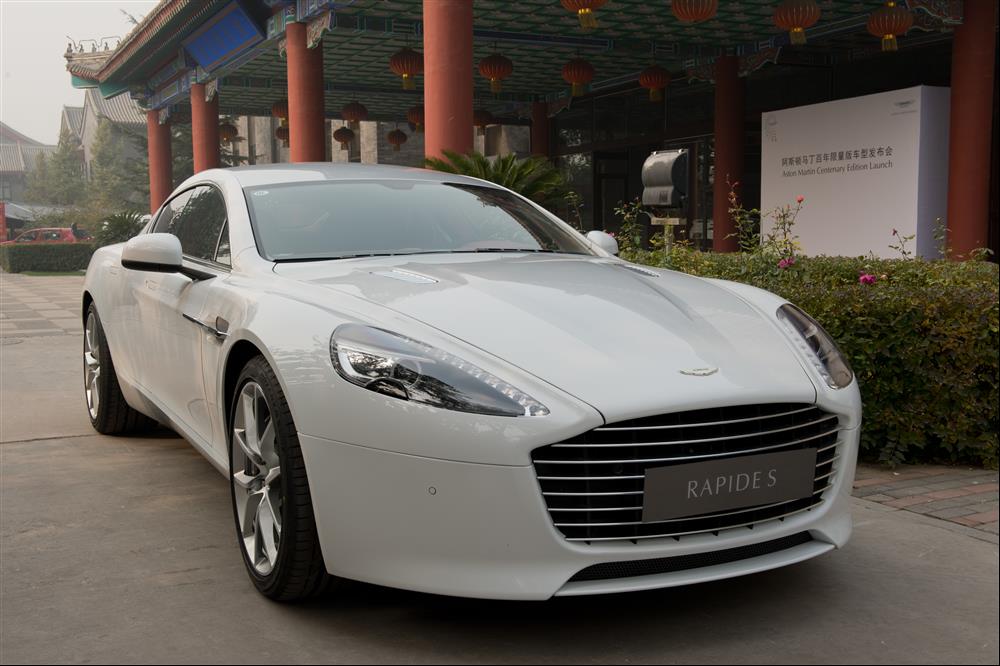

The marque has compiled a digest of its centenary year highlights and is creating a special section on its website: www.astonmartin.com/100 – that acts as a digital store for its centenary memories.

Events to celebrate the brand’s 100th birthday started in London’s Henniker Mews on 15 January 2013. A ceremony was held outside the premises in Chelsea where Lionel Martin and Robert Bamford took the momentous decision to found what was to become one of the world’s most renowned sports car companies. A plaque now hangs at the site of the firm’s first premises in Chelsea.
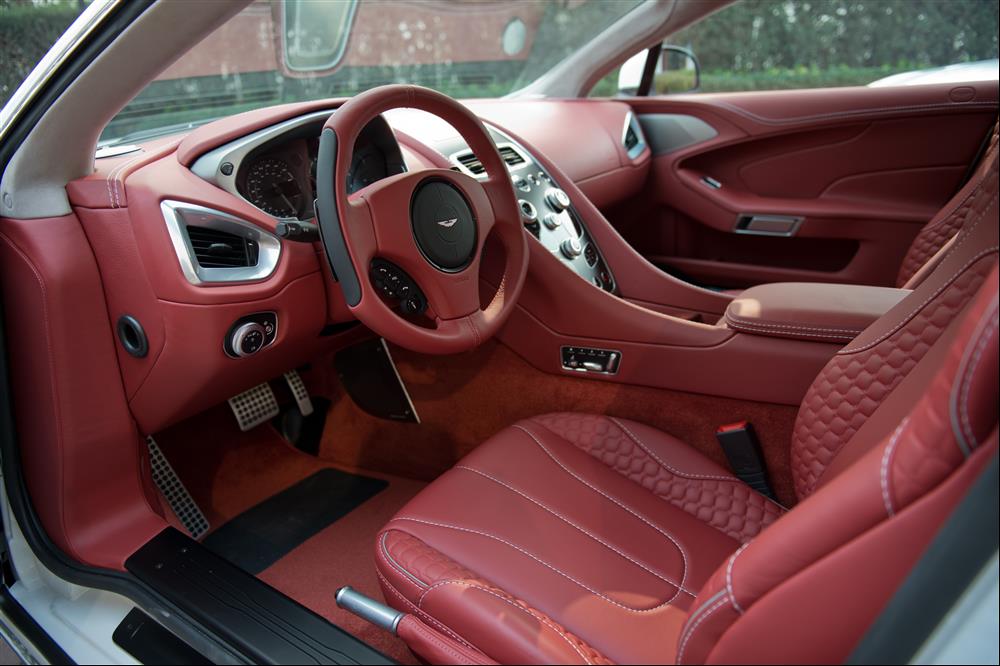

Just a few days later the centenary focus moved to Dubai where the ultimate GT, the Vanquish, made history by becoming the first car to be airlifted onto the helipad of the iconic Burj Al Arab hotel. The sports car was placed precisely 1,000ft above the ground, in front of some of the region’s most important dignitaries, media and enthusiasts. The video of that exceptional feat has since gone on to receive more than half a million views on YouTube.

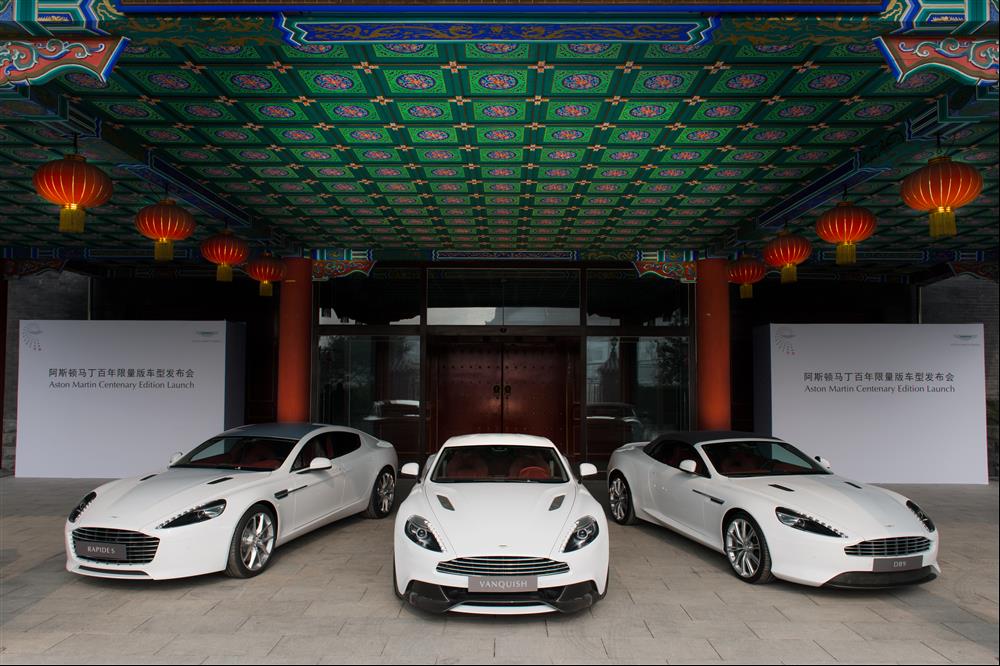
In March, came celebrations in Switzerland as the brand unveiled perhaps the most tangible, and exclusive, of its centenary activities: the Centenary Edition sports cars at the Geneva International Motor Show. Limited to just 100 of each model – Vantage, DB9, Rapide S and Vanquish, these cars feature details carefully created to honour Aston Martin’s 100 years of craftsmanship.
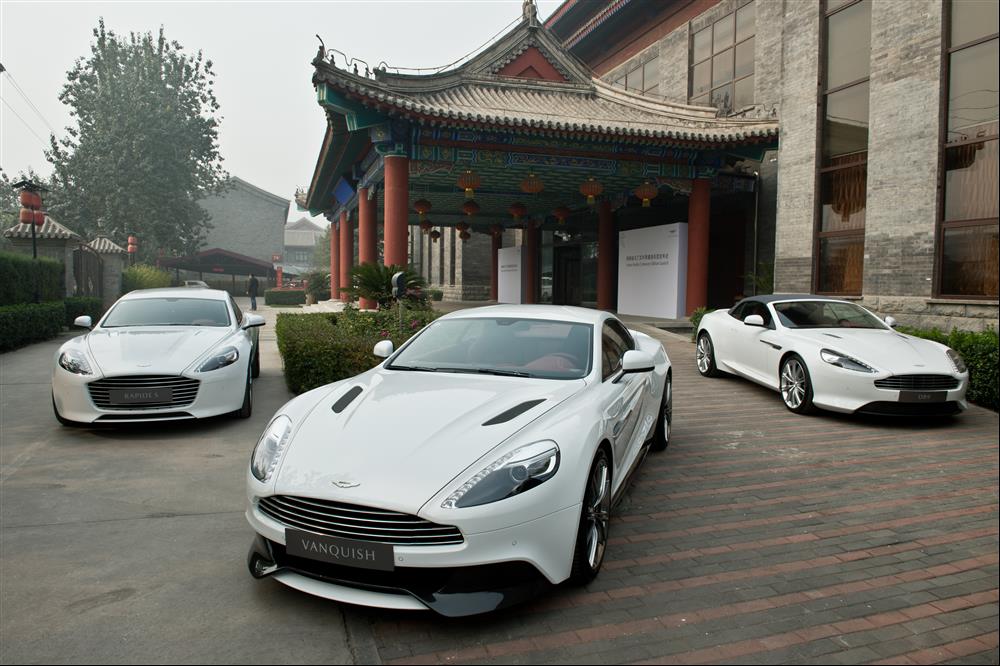

At the Nürburgring 24 Hours in Germany in May, the 200,000-strong crowd of spectators at what is one of the most gruelling races in the world witnessed a number of centenary-themed occasions.

First came the global public debut of the exceptional CC100 Speedster Concept. Created as a stunning celebration of 100 years of sports car excellence, the CC100 looks both to the past and the DBR1 – Aston Martin’s 1959 Le Mans and World Sportscar Championship winning car – and to the future with its teasing glimpses of potential future design direction.

Just ahead of the start of the 41st Nürburgring 24 Hours, a cavalcade of more than 100 Aston Martins took to the infamous road circuit for a celebratory parade lap.

Led by the CC100, the parade comprised cars from the marque’s glittering past and stylish present with numerous VIP drivers and scores of enthusiast owners who had travelled across Europe to take part in the iconic gathering.

Among the 100 models making the 22 km lap were the DB5 used in the James Bond film, Skyfall, a One-77, the 1959 Nürburgring 1000 km-winning DBR1 with its original driver Sir Stirling Moss at the wheel, and a Centenary Edition Vanquish bearing the number plate ‘100 YRS’.

Also in May the focus returned to the UK, and to the historic home of the marque at Newport Pagnell, where Aston Martin Works hosted the Aston Martin Centenary Sale. The annual Bonhams auction of Aston Martin and Lagonda cars, the 14th to be held at Works, celebrated 100 years of the marque and saw the unique Bertone Jet DB4GT achieve a world record price of £3,249,500, the highest price ever paid at auction for an Aston Martin.

June witnessed Aston Martin’s annual pilgrimage to the world’s most famous 24 hour race at Le Mans, with Aston Martin Racing fielding a strong team for the endurance classic.

On Friday prior to the race, members of the Aston Martin Owners Club from around the world journeyed to the Hotel de France in La Chartre-sur-le-Loir, their traditional pre-event meeting spot and home to numerous Aston Martin racers over the years including the race-winning team of 1959. On race day itself a selection of rare and historic Aston Martin sports cars from across the years paraded around the circuit ahead of the start in front of hundreds of thousands of spectators.

It was back to the track in July as the Aston Martin Centenary Festival brought race cars ranging from classics such as the DB4 Lightweight up to the DBR9 and the latest Vantage GT3 onto the Brands Hatch GP circuit. In the same month the brand took the starring role at the Silverstone Classic, a long-weekend of amazing motorsport memories billed as “the world’s biggest classic motor racing festival”.

Meanwhile, the exceptional CC100 Speedster Concept was running demonstration laps throughout the quintessentially British Goodwood Festival of Speed. The 6.0-litre V12-powered concept car made its UK dynamic debut in West Sussex as a special centenary treat for the fans of the famous event.

Completing the British brand’s participation at Goodwood was Aston Martin Racing’s World Endurance Championship car – the Vantage GTE – piloted by AMR Works drivers, Darren Turner and Bruno Senna.

July also witnessed what was, perhaps, the highest profile activity in its centenary year with a public celebration in Kensington Palace Gardens, London.

The ambitious event, jointly organised by Aston Martin, the Aston Martin Owners Club and the Aston Martin Heritage Trust – and staged in partnership with The Royal Parks and The Royal Household – saw rare and historic cars exhibited, together worth more than £1 billion.

A Centenary Timeline display took visitors to the event on a 100-year journey from the origins of the marque in Henniker Mews, Chelsea, to the current global headquarters in Gaydon, Warwickshire. Every iconic Aston Martin road car was represented from ‘A3’, the oldest surviving car, to the most current models.

A Centenary Selection display comprised a diverse collection of cars rarely seen outside private collections including a brace of bespoke Zagatos and the trio of Bertone Jets. Aston Martin’s 50-year ‘love affair’ with James Bond was celebrated in fine style as seven of the movie cars were on display, including the iconic DB5 from Skyfall.

Aston Martin owners from across Europe got their chance to participate in the centenary festivities by joining an epic 1,000-mile rally. Travelling through seven countries in just five days the route took in some of the most scenic drives in Italy, Switzerland, Germany, Belgium, Luxembourg and France before arriving at July's Aston Martin centenary celebrations in London.

July also saw a special Centenary Week of activities at the brand’s global headquarters in Gaydon. Conceived for owners and enthusiasts to be involved as never before, events included factory visits, design master classes, exhibitions and an unprecedented “Dine on the Line” pop-up restaurant delivering Michelin star-standard cuisine at the very heart of the production line.

In August, the brand’s American fans had their chance to witness centenary celebrations at the 2013 Pebble Beach Automotive Week, where Aston Martin had the honour of being a featured marque.

CC100 made its North American debut and shared the limelight in California with two of Aston Martin’s newest models – the extreme V12 Vantage S and luxurious Vanquish Volante.

Also that month, the brand’s Chinese dealers offered their own take on 100 years of sports car success. China’s first Aston Martin rally set off for Hong Kong from the marque’s impressive showroom in Pudong, Shanghai.

Participants travelled through nine cities over the course of nine days finishing in Hong Kong with a dramatic closing ceremony held with the amazing view of Victoria Harbour as its backdrop.

Into September, and the centenary focus once again turned to Europe, with the eyes of the automotive world on the Frankfurt Motor Show. Aston Martin chose to emphasise both the historic, and the modern, with the DBR1-inspired CC100 Speedster Concept sitting alongside examples of the Vanquish Volante and V12 Vantage S in Germany.

Meanwhile, back in Britain and back on the track, the marque was stealing the show at the Goodwood Revival where the Aston Martin Project 212 car was driven to victory in the Revival’s blue riband event, the Royal Automobile Club Tourist Trophy Celebration race.

In November Aston Martin was once again in the news, this time courtesy of its place at the historic pageant, the Lord Mayor’s Show. No fewer than six of the brand’s sports cars – including a unique Vanquish dressed in the livery of the British Government’s ‘GREAT’ campaign – made their way through the city’s streets as tens of thousands of admiring spectators looked on.

Aston Martin’s centenary artist-in-residence, James Hart Dyke, encapsulated the spirit of the centenary by unveiling the exceptional works he created over the course of the year to record the celebrations for posterity.

Hart Dyke’s works were previewed by luminaries from the world of art in W-One, the exclusive Aston Martin brand centre in London’s Mayfair.

Of course there have been a myriad of other celebration activities around the world during 2013 as owners, enthusiasts and dealer partners have taken every opportunity to display their affection for this great British luxury sports car maker.

Summarising the highlights, Aston Martin Global Brand Communications Director, Janette Green, said: “Condensing 100 years of achievement into 12 months of celebration brought many planning and logistical challenges as we organised a multitude of events and activities around the globe. However as the centenary year draws to a close everyone associated with the brand can reflect proudly on the fun, commitment and passion displayed by Aston Martin staff, owners and enthusiasts worldwide.”

The Aston Martin Yearbook includes exclusive content of some of the most iconic Aston Martins from the past 100 years, as well as full pictorial coverage of the celebrations throughout 2013. The centenary souvenir is available to order at www.astonmartinyearbook.com

14 Jan 2014

UK - At last Subaru sees sense and the WRX STi is BACK and cheaper than before.


  • Iconic model returns in summer
  • Improvements to driveability, safety and packaging
  • Priced at £28,995 OTR

It seems like only yesterday when the last WRX STI was sold in the UK amid an outcry of sentiment on the sad loss of this iconic model. Less than one year on, Subaru UK confirms the new WRX STI is coming to these shores in summer.

The good news for performance car fans around the country is that as a result of the recent movements in exchange rates, the new model will be priced at a highly competitive £28,995 when it hits showrooms in May, some £4,000 cheaper than its predecessor.


Unveiled at the Detroit motor show earlier today (14 January) the new WRX STI is based on the WRX saloon car launched at the LA show in November, but with some significant enhancements.

During development, Subaru honed the driveability of the new WRX STI to perfection, testing it under a wide variety of conditions around the world. As with past generations of the model, extensive testing also took place on Germany's Nürburgring circuit to ensure the WRX STI is the pinnacle of Subaru AWD sports performance.

At its heart is a 2.5 litre turbo-charged Subaru Boxer four-pot engine, which in STI guise, produces 305hp and 290lb/ft of torque. The six-speed gearbox has been reinforced and now adopts even shorter throw and slicker, sportier shift feel.

Subaru’s trademark Symmetrical All-Wheel Drive employs the latest vehicle dynamics control (VDC) and Active Torque Vectoring for maximum control and driver engagement. Spring and damper rates have been meticulously re-tuned to provide a more compliant ride while retaining body composure, and the electronic power steering is now mounted on a more rigid steering gearbox mount for improved fuel efficiency and more ‘direct’ feel and response.

An increase in wheelbase of 25mm gives the new WRX STI greater rear leg room as well as more shoulder and elbow room inside the cabin, without increasing the exterior dimensions. By moving the bottom of the A-pillars forward by 200mm and adding a quarter light to the front window, drivers have better visibility all round. Boot space is increased and ingress and egress are improved with larger door apertures.  

A lot of work has also gone into improving the perceived quality of the WRX STI interior. For the new model, highlights include a new D-shaped steering wheel of smaller diameter and designed to give the driver maximum feel. Soft touch materials are used in key areas while new dials and carbon effect and metal trim is also employed to give the STI both a suitably sporty feel and more upmarket ambience.

UK buyers can expect a comprehensive standard spec, in addition to changes over the WRX on the exterior design including the large signature rear wing and larger diameter wheels. At the rear, the diffuser integrated bumper and twin dual mufflers are unmistakably Subaru while new 18in. alloy wheels are designed to be both lighter and more rigid. LED lighting is employed for the headlights, tail and brake lights while ‘STI’ badges are found on the front grille and wings.

This week Subaru UK will be launching a dedicated area of its website (www.subaru.co.uk)  where prospective owners can register their interest. Subaru in Japan has confirmed that a Fuji Heavy Industries entered STI will compete in this year’s Nurburgring 24hr race in June, where the team will be attempting to win its class for a third year in succession.

Paul Tunnicliffe, Subaru UK Managing Director commented: “We wanted to acknowledge the following the WRX STI has, and while both the market and the Brand in the UK has changed in recent years, the WRX STI remains a demonstration of Subaru’s technical know-how.

“The new model will only be available in limited numbers when it goes on sale in summer nevertheless we were keen to give our performance car fans the opportunity to try it here for  themselves.”

Major specifications:

Length / width / height: 4,595 x 1,795 x 1,475 mm*3

Wheelbase: 2,650 mm

Engine: 2.5 litre Horizontally-Opposed turbo

Displacement: 2,457 cc

Transmission: six-speed manual

Maximum output: 305 hp / 6,000 rpm

Maximum torque: 290 lb.-ft. / 4,000 rpm

Tyre size: 245/40 R18

Seating capacity: 5

Further details of the new WRX STI will be announced in coming weeks.

11 Dec 2013

Mclaren P1™ posts sub seven minute Nurburgring lap time.


  • The McLaren P1™ achieves  its one remaining performance target
  • An average speed in excess of 178 km/h (111 mph) necessary to achieve the required lap time around the 20.8km (13 mile) circuit
  • Short film celebrating the team’s achievement at the Nürburgring is available to view at you tube or below

The McLaren name was born on the racetrack and, 50 years on, is the most successful name in global motorsport. That desire and determination to push for every extra tenth of a second, and obsessive focus on perfection, has seen the final development objective for the now sold out McLaren P1™ achieved: a sub-seven minute lap time of the Nürburgring circuit.


From the outset, the McLaren P1™ has been developed with one clear goal: to be the best driver’s car on both road and track. To achieve this, the development programme has focussed on ensuring the McLaren P1™ pushes the boundaries in terms of sheer performance, with testing carried out in some of the harshest conditions around the world. But one challenge remained, and that was arguably the toughest of them all.


20.8 kilometres driven at an average speed in excess of 178 km/h. Sounds easy, until you add in more than 150 corners, 300 metres of elevation changes and cornering forces of up to 2g. All in less than seven minutes…

Commenting on the sub-seven achievement by the McLaren P1™, McLaren Formula 1™ driver and 2009 world champion Jenson Button said: ‘The fact that the McLaren P1™ has posted a sub-seven-minute lap at the Nürburgring is unbelievably impressive.


‘I’ve been an F1 driver for 14 years, and I’ve driven more than 240 Grands Prix and, although I’ve never raced an F1 car on the Nürburgring-Nordschleife circuit, because the last time the German Grand Prix was held there was before I was born, I know exactly how challenging, and daunting, a racetrack it is.

‘Over the past dozen-or-so years I’ve owned a lot of ultra-high-performance road cars. I’ve driven the McLaren P1™ on a number of occasions – including up the hill at the Goodwood Festival of Speed, where it was sensational – and I think it’s a truly superb machine: unbelievably refined yet unbelievably quick.


‘But, as I say, for it to have recorded a sub-seven minute lap time around the Nürburgring is the icing on the cake: proof positive, backed by hard data, on the greatest racetrack of them all, that McLaren has created a genuine game-changer.’

The challenge: an average in excess of 178 km/h over 20.8 km

The Nürburgring-Nordschleife is the toughest test track to measure the all-round performance of any car.  And among the McLaren P1™’s performance targets, which included accelerating to 300kph (186mph) in less than 17 seconds onto a limited top speed of 350kph (217mph), was to achieve a sub-seven minute time around the German circuit.

No mean feat for a stripped out, track-focussed racing car, let alone a production car on standard road tyres, that offers superior levels of ride comfort and all round ability on road.


Sub-seven minutes – that calculates as an average speed of at least 178 km/h (111 mph) around the 20.8 kilometre (13 miles) circuit. And not just any circuit. One that includes some of the longest straights, tightest bends, steepest inclines, and more changes in road surface than any other circuit.

Location: the fearsome Nürburgring-Nordschleife

The Nürburgring, or the Nürburgring-Nordschleife to give it its full name, is one of the most fearsome circuits in the world. The 20.8 kilometre ribbon of tarmac through Germany’s Eifel Forest was a date on the Formula 1™ calendar up until 1976, when it was dropped from the championship on safety grounds after the crash that nearly cost Niki Lauda his life. That race, as depicted in the recent Hollywood blockbuster Rush, saw James Hunt claim pole position and overall race victory for McLaren, on his way to becoming world champion. The stage was set 37 years ago – McLaren: P1 at the Nürburgring.

A challenging mixture of off-camber corners and tight, technical sections finished with the 3.5 kilometre long Döttinger Höhe straight means a compromise between high downforce for optimised cornering and low drag for improved top speed for the ultimate lap.


Every lap, with its 154 corners and dramatic elevation and direction changes, is the ultimate challenge to both car and driver, and demands an optimised set up and full commitment and concentration. This is the place dubbed the ‘Green Hell’ by three-time Formula 1™ world champion Jackie Stewart, and the list of accidents and casualties is almost as long as the track itself – when it bites, it bites hard.

The lap: a driver’s eye view of sub seven minutes

The Supernova Silver example of the McLaren P1™, codenamed XP2R, was driven the 390 miles from Woking, England across to the Nürburgring ahead of this final development test phase, underlining the car’s unique road-to-race ability. On arrival at the track, ‘Race’ mode extended the active rear wing by 300mm, dropped the ride height by 50mm and saw the RaceActive Chassis Control suspension system stiffen by 300 percent – a fully-focussed track car at the push of a button.

The McLaren P1™ generates up to 600kgs of downforce through the use of advanced active aerodynamics which, in conjunction with the bespoke tyres, provides unprecedented levels of grip and superior balance and handling. This allows the McLaren P1™ to carry greater levels of speed through the corners, and achieve higher apex speeds, and the optimised traction enables the driver to get on the power earlier.

‘The track is like the rollercoaster from hell. However, the car feels balanced and poised throughout, and inspires you to push on with the levels of grip and all-round ability,’explains Goodwin.

‘The acceleration from the Aremberg right hander down the Fuchsröhre is absolutely amazing. I have only experienced acceleration like this before in a Formula 1 car. This downhill snaking section of the track is taken flat, using DRS, shifting gear all the way down to the base of the valley, and the compression that follows applies the maximum vertical g-forces to the car. The forces really load the tyres, chassis and wing, but it is taken with only a slight lift of the throttle.’


‘The numerous jumps that make the Nordschleife famous are an even bigger challenge than normal with the massive speeds we approach them. Flugplatz and Pflanzgarten are both taken at very high speed, but the levels of downforce generated combats these approach speeds, and keep the car really stable on 'landing'. They are both quite scary corners in any car, but I’ve never felt as confident. It’s just sensational.

‘Through Bergwerk [the corner at which Niki Lauda had his infamous accident in the 1976 German GP], you have to turn in late in order to carry as much speed as you can onto the following straight without running wide. Here, the awesome braking and pin-sharp steering of the McLaren P1™ were crucial, enabling me to get back on the throttle smoothly and quickly. That is a quick section, and one that feels fantastic when you get it just right.’

Immediately back on the pace on the exit of Bergwerk, the groundbreaking RaceActive Chassis Control (RCC) ensures the McLaren P1™ remains planted and balanced through a particularly bumpy section of track. Goodwin continues: ‘With a car this fast, stability is just as important as ultimate grip, and some of the bumpiest sections of the track are also the fastest. The relentless climb towards the Karussell is dealt with in a few spectacular moments as the full combined power of the powertrain punches the car up this long incline. At the top of the hill is one of the fastest corners on the lap, with a approach speed around 300 km/h, The track is really bumpy here, but the corner is dispatched with a light dab of the brakes in fifth gear.’

Cornering forces peak as the McLaren P1™ drops onto the banked concrete surface at the Karussell, and swings round more than 180 degrees. In terms of pure lateral g-forces, the driver is subjected to 3.9g.


From here, the McLaren P1™ enters the final stages of the lap, and the sprint to the finish. Running on road-legal Pirelli tyres specially developed for the McLaren P1™, the production-specification model set a relentless pace, peaking at the electronically limited 330 km/h (205 mph) available in ‘Race’ mode on the Döttinger Höhe straight.

Throughout the course of a single lap, a gear change was made, on average, every six seconds and, unlike in Formula 1™ when DRS is limited to one or maybe two designated zones to aid overtaking, the system was used for nine percent of the entire lap on seven separate occasions as Goodwin made his way towards the finish line.  The system is operated through the steering wheel-mounted button, and trims the twin element rear wing from 29° to 0°. When engaged, the use of DRS reduces downforce on the car by 60 percent.

‘The Döttinger Höhe straight disappears in no time,’ explains Goodwin. ‘From Galgenkopf the acceleration is brutal, but when you press the DRS button, it ramps up even further as the car slips through the air, and you arrive at the limited top speed of 330 kph in no time. And then, the car just sits there – ‘cruising’ – at this surreal speed, with the rough tarmac and Eifel mountain scenery flying by as if it’s a movie on fast forward.’


Having driven the full range of McLaren road and race cars, Goodwin is in a unique position to comment on the performance characteristics and abilities, and how the McLaren P1™ compares. Following his sub-420 second sprint around the fearsome Nürburgring circuit, he concludes: ‘Driving the McLaren P1™ at this pace, on this circuit, is the most impressive driving experience I've ever had in any road or race McLaren, on any road or track in the world.’

The result: worthy of the McLaren badge

For the team at McLaren, good is simply not good enough. This mentality has seen the McLaren name on the top step of the podiums in Formula 1™, Indianapolis 500, Can Am and at the 24 Hours of Le Mans – an achievement no other team can lay claim to. In Formula 1 alone, the team has won a quarter of all Grands Prix ever held, claiming 155 pole positions and 182 victories.

This list of achievements highlights the team’s desire to succeed, and the constant push for improvement. This mentality resonates through the entire McLaren Group, and achieving the sub-seven minute target time was just another objective on the list that the team within Automotive were determined to beat.


Goodwin concludes: ‘The sub-seven minute lap time of the Nürburgring was set as part of a list of targets the McLaren P1™ had to meet and, as with other objectives within the programme, the team has more than achieved what we set out to do. It is a fitting tribute to the company in its 50th year, and to Bruce, the founder, whose ideals we live every day.’

The car

The groundbreaking McLaren P1™ is equipped with a dual powerplant drivetrain generating 916PS (903 bhp). A highly efficient 3.8-litre twin turbo V8 petrol engine produces 737PS (727 bhp) which is coupled to a 179PS (176 bhp) lightweight electric motor to offer optimised performance. The efficient drivetrain offers instant torque and throttle response, with performance figures to match – 0-100 km/h (62 mph) in 2.8 seconds, 0-200 km/h (124 mph) in 6.8 seconds and 0-300 km/h (186 mph) in 16.5 seconds.

The combination of optimised aerodynamics, cutting-edge bespoke systems developed with technical partners and never-before-used technologies, have ensured the McLaren P1™ has achieved, and in many cases exceeded, all objectives during development. It is the culmination of five decades of race-winning knowledge and expertise which has been transferred to the track with the motivating factors that have driven the McLaren name to be one of the most successful in motorsport – belief and a desire to achieve.

Mike Flewitt, Chief Executive Officer of McLaren Automotive explained: ‘This final challenge for the McLaren P1™ was very publicly set out earlier this year, and the result is true testament to the team in Woking. Not only in terms of what has been achieved in Germany, but in what has been achieved with this project. The McLaren P1™ is a technical tour de force, and is truly a car that we at McLaren are very proud of. The desire to push the envelope of performance, and achieve the sub-seven minute lap time, shows the spirit of Bruce McLaren lives in the company 50 years on.’


‘The Nürburgring is one of the most daunting and challenging stretches of road anywhere in the world, and is the perfect final test for the McLaren P1™, as it brings together all of the elements of the development programme we have worked through, and subjects the systems and technologies to the ultimate seven minute punishment.

‘We set a series of challenging targets throughout the development of the McLaren P1™, with the most significant one being the fact that the car would be the best driver’s car on both road and track. I am extremely proud of the fact that we have achieved everything we originally set out to do, and in such a convincing manner.’

A sub-seven minute lap time of the Nürburgring-Nordschleife was the final objective in the development programme for the most technologically advanced car ever produced in the UK. This latest achievement for the team at McLaren was made possible through close collaboration with world-leading Partners, providing specialist expertise and technical support throughout the duration of the project.


A unique and highly efficient braking system from Akebono, providing stopping ability akin to a fully-focused racing car; a specially-formulated lightweight paint system by AkzoNobel offering optimised performance and aerodynamics; advanced performance and cooling characteristics of Mobil 1 lubricants in the engine and gearbox; bespoke high performance tyres created by Pirelli designed and developed specifically to manage the unprecedented downforce and cornering forces generated; and the use of highly accurate TAG Heuer timing technology and equipment for the continual verification of performance characteristics during the development programme.

20 Nov 2013

Latest Type-R undergoes testing.

Ahead of the 2013 Tokyo Motor Show, Honda has showcased the latest Civic Type R development car at its in-house test track in Tochigi, Japan. The currently camouflaged car is being put through its paces as part of an extensive testing process taking place in Europe and Japan, ahead of its much anticipated launch in 2015.


The Civic Type R will be the first model in Europe to have one of Honda’s all-new VTEC TURBO engines from Honda’s Earth Dreams Technology range. This 2 litre, direct injection, 4-cyclinder turbo engine is expected to have class-leading output in excess of 280PS and will be EURO 6 compliant.


Speaking during recent testing at the Nurburgring, Germany, Honda’s WTCC driver Gabriele Tarquini, gave his first driving impressions ‘The car and the characteristics of the car were fantastic. I was really impressed by the power and the torque of the engine but also by the set-up they achieved…The car is very pointed on the front and very fast to change direction’. ‘This car is very close to my racing car and you can feel very well the DNA of Type R.’


To hear Gabriele Tarquini’s comments in full, please go to the following link - www.myjourneys.com/typer


20 Oct 2013

Alfa Romeo breaks Nurburgring record with stunning 4C Supercar

  • New Alfa Romeo 4C supercar completes a lap of the Nordschleife in just 8 minutes 04 seconds
  • The lap time represents a new all-time record for all cars with engines producing less than 250hp
  • Performance is in line with times set by sports cars with much higher prices and more powerful engines
  • More than 250hp/tonne, 4.5 seconds from 0 to 62mph, 137hp/litre and 1.2g of deceleration: Alfa Romeo 4C guarantees even the most expert driver extraordinary performance and sensations
  • The supercar was shod with special Pirelli Zero Trofeo tyres, the most sporty version in the Pirelli P Zero line, also type‐approved for road use on the German track
The new Alfa Romeo 4C has lapped the legendary Nordschleife at the historic Nürburgring circuit in Germany in a record-breaking time of 8 minutes 04 seconds, the fastest time of cars with engines under 250 HP and in line with times set by sports cars with much higher prices and more powerful engines. Driver, journalist and Nordschleife expert Horst von Saurma was behind the wheel when the record lap-time was set on September 12, 2013.

The test conducted at the ‘Green Hell’ in Germany is one of the countless tests that the Alfa Romeo supercar had to face in every part of the world, from the ‐35°in Sweden to the +40°of Abu Dhabi; from the Arizona (USA) deserts to the slopes of Mt. Etna in Sicily and from the Balocco test track in Italy track, where all Alfa Romeos have been developed, perfected and tested since 1962, to the one at the Nürburgring.
Used by car manufacturers the world over as a test and development track, the Nordschleife offers a unique configuration that alternates slow and fast curves, as well as straight stretches and undulations, to make it an outstanding testing ground for determining the soundness of a project.

In short, the 'Green Hell' proved to be the ideal place to put the performance features of the Alfa Romeo 4C to the test. This true, uncompromised driving machine delivers its best on the track, where speed, short braking distances and transverse acceleration are essential to get first‐rate lap times:  0 to 62mph in 4.5 seconds; 160mph of top speed; deceleration peaks in the range of 1.2 g; lateral acceleration peaks of over 1.1g and optimum weight distribution ‐40% over the front axle and 60% over the rear, not to mention a power-to-weight ratio of over 250hp per tonne, values worthy of true supercar.

In addition to its superb agility and phenomenal grip, credit must also be apportioned to the new 240hp 1750 Turbo Petrol engine, the latest‐generation 'ALFA TCT' dry twin clutch gearbox and the advanced Alfa D.N.A. selector with its newly-introduced “Race” mode. The new four-cylinder 1750 Turbo Petrol - with direct injection at 200 bar and an aluminium block - sets new records for torque and specific power for this size of engine, at over 200 Nm/litre (147.5 lb ft/litre) and 137hp/litre respectively, while maximum power of 240hp is reached at 6,000 rpm. The maximum torque of 350Nm (258 lb ft) ensures extraordinary elasticity and sportiness since it is maintained constant between 2,100 and 4,000 rpm with 80% of the torque already available from just 1,800 rpm.

Also contributing to the Alfa Romeo 4C's performance at the Nürburgring were the special Pirelli P Zero Trofeo tyres, the sportiest version in the Pirelli P Zero line. A record was set not only on the track, but also in the development of the tyres: It took less than one year of collaboration between Pirelli and Alfa Romeo engineers to develop of the best solution for guaranteeing grip and precision while driving of the Alfa Romeo 4C. These special 'AR' P Zero tyres, available in two sizes, 17" front and 18" rear or 18" front and 19" rear, ensure grip, performance, sportiness and precision. The 'AR Racing' tyres, offered only in 18" front and 19" rear sizes, have been developed not only with road driving in mind, but also for use on the track.

22 Sept 2013

New European Test Centre officially opened at iconic Nürburgring location for Hyundai


  • New European Test Centre officially opened at iconic Nürburgring location
  • Hyundai Motor invests more than €6,6 million in its new facility
  • Purpose-built site to conduct more accelerated durability tests

Hyundai Motor has officially opened its brand new European Test Centre at the Nürburgring in Germany, the company’s latest investment in its regional infrastructure. An opening ceremony marked the completion of the €6,62 million purpose-built vehicle testing facility, boosting the brand’s R&D operations in Europe.

The company’s new test centre provides it with a full-time presence at the iconic Nürburgring circuit, allowing it to further evaluate and develop the durability and driving dynamics of its vehicles more effectively and more often.

Construction of the striking 3,622m2 Hyundai European Test Centre began in June 2012 and was completed in less than 15 months. The unique glass and steel building houses workshops, office spaces and hospitality areas over four floors. The Nürburgring facility is an extension of Hyundai’s European R&D centre in Rüsselsheim, Germany, where the brand’s European design and engineering teams have been based since 2003.

Hyundai’s accelerated durability tests are conducted from the European Test Centre. Each car taking part in the tests laps the Nürburgring 480 times in both dry and wet conditions, simulating over 100,000 miles of rigorous driving in less than six weeks.

Throughout each lap, data parameters are continually monitored, assessing steering input and vehicle course, suspension movement and ride and handling characteristics. The results are given directly to the vehicle development team based at the circuit, enabling Hyundai’s engineers to quickly make changes and tailor cars’ characteristics to the demands of European drivers.

Allan Rushforth, Senior Vice President and COO of Hyundai Motor Europe commented: “The Nürburgring is a unique challenge for any vehicle, so it is the perfect location for our new facility.  The new European Test Centre is a natural extension of our Technical Centre in Rüsselsheim, and enables Hyundai Motor to more quickly and more accurately test the reliability and drivability of our vehicles. The emotional appeal of being ‘tested at Nürburgring’ will also help to further build the brand’s reputation across Europe.”

The Nürburgring is widely recognised as one of the most challenging tracks in the world, with 73 corners – 33 left and 40 right –spread across 12.8 miles of tarmac. With a difference in height of almost 300 metres between the lowest and the highest points, it features uphill and downhill gradients of 11 and 17 per cent respectively.

13 Sept 2013

New Corvette Stingray Coupe testing at the Nurburgring

Nürburgring is a name that evokes strong feelings in any motorsports aficionado and a place where racing history has been made and re-written time and again. It also is the location where the European model of the new Chevrolet Corvette Stingray coupe is currently being tested, a few months prior to the start of sales in Europe.

"Nürburgring is renowned for its demanding race track and it is perfectly suited for our purpose, which is to fine-tune the ride and handling characteristics of the European Corvette Stingray," said Jim Mero, vehicle dynamics engineer at General Motors. "We are paying particular attention to the suspension set-up and the steering at Nürburgring. European roads are quite distinct and different from those in the U.S., and so are driving habits."
Chevrolet's technical experts are currently assessing two Corvette Stingrays in Europe, both of which are driven on a wide variety of roads. The testing procedures are part of the GM standard quality control program which is conducted for each new Chevrolet model before it goes on sale in Europe.