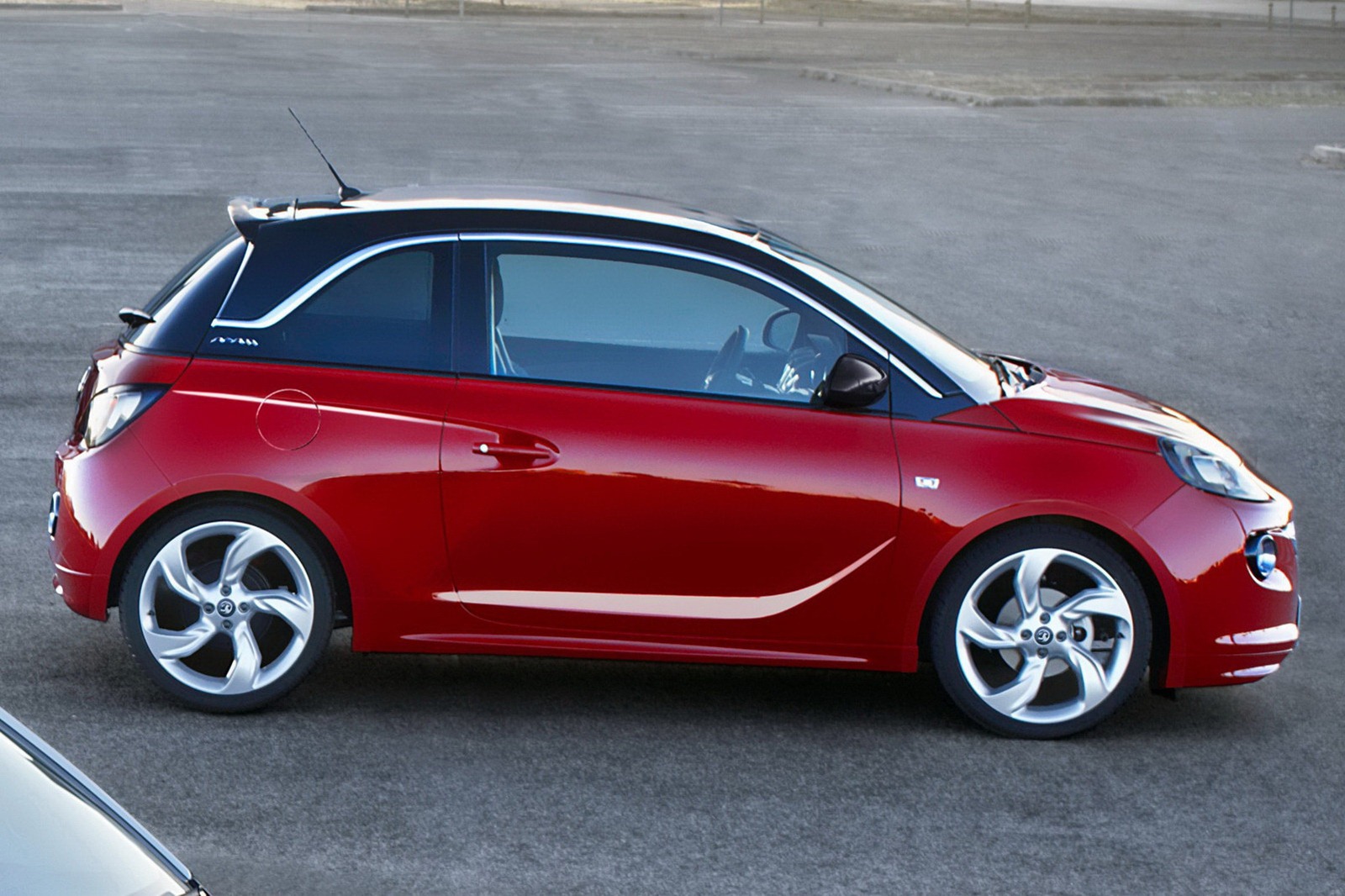
General Motors Co. is sticking to plans for its Opel unit to build an all-new vehicle at the brand's main plant in Germany as part of an effort to restore earnings in Europe, CEO Mary Barra said.
Opel is "clearly a vital part of the company," Barra, 52, told journalists today at the division's headquarters in the Frankfurt suburb of Ruesselsheim.
Barra said the company will not release details about the new model yet for competitive reasons.
Opel said on Dec. 12 that the Ruesselsheim plant, which makes the Insignia mid-sized car and is scheduled to start building the Zafira Tourer van in 2015, will be assigned a new model whose details will be disclosed later.
Production of the new vehicle will "go hand-in-hand" with additional spending in Germany, Barra said, adding that she's "very pleased with Opel's progress so far."
Barra, the first female CEO of a global automaker, is making her first trip outside the U.S. since succeeding Dan Akerson as head of GM on Jan. 15. Barra was head of product development under Akerson.
"I thought it was very important to reinforce in person my commitment, and GM's commitment, to Opel. I'm confident that we can achieve our goal to break-even in Europe by mid-decade," Barra said in a statement.
In April 2013, GM said it would invest 4 billion euros ($5.5 billion) to fund 23 new models and 13 new engines by 2016 to overhaul Opel's aging product range.
Opel CEO Karl-Thomas Neumann said Barra's decision to choose Opel as the first GM location to visit outside the company's Detroit headquarters reinforced the importance of the unit to GM.
Barra today met with Opel employees, toured the assembly plant and visited Opel's technical development center.
European sales by Opel and sister brand Vauxhall last year fell 1.5 percent to 825,000 vehicles, according to industry group ACEA. Their market share remained steady at 6.7 percent, making them together the third-biggest automotive marque in Europe, after the namesake brand of Volkswagen AG and Ford Motor Co.
GM decided in December to pull Chevrolet out of Europe, reversing a decade-old sales effort to promote the U.S. nameplate in the region, to give Opel more scope to expand. Opel will shut its car plant in Bochum, Germany, by the end of this year, the first automotive assembly plant to close in the country since World War I.
Barra visited Ruesselsheim with GM's new president, Dan Ammann, who has been nominated to succeed Steve Girsky as chairman Opel's supervisory board. Girsky, GM's former vice chairman, has led the supervisory board since November 2011.
Bloomberg and Reuters contributed to this report
REPORT HERE
Showing posts with label Opel. Show all posts
27 Jan 2014
14 Jan 2014
GM Motors to near 10 million sales for 2013, with the help of China and Europe.
General Motors Co. (NYSE: GM) dealers delivered 9,714,652 vehicles around the world in the 2013, up 4 percent compared with 2012. Among GM’s top five global markets by volume, China and the United Kingdom posted the largest year-over-year sales increases on a percentage basis, with each up 11 percent. GM’s China sales set a new full-year record. Sales in the United States increased 7 percent.
“A healthy auto market in the United States and China, and very successful product launches at all of our brands worldwide drove GM’s growth in 2013 and helped us navigate difficult conditions in Europe and parts of South America and Asia,” said Dan Ammann, GM executive vice president and chief financial officer.
Ammann, who has been named president of General Motors, will discuss the company’s outlook and strategy at the 2014 Global Auto Industry Conference hosted by Deutsche Bank on Wednesday, January 15, in Detroit. GM’s presentation will begin at approximately 7:30 a.m. EST followed by a Q&A session.
A live webcast of the presentation will be available here. Presentation materials will be posted in the Investor section of gm.com shortly before the webcast.
Going forward, GM plans to announce its global sales on a quarterly basis using this new template as part of the company’s effort to provide insightful and easily accessible information about its global growth strategy.
Highlights (vs. 2012)
“A healthy auto market in the United States and China, and very successful product launches at all of our brands worldwide drove GM’s growth in 2013 and helped us navigate difficult conditions in Europe and parts of South America and Asia,” said Dan Ammann, GM executive vice president and chief financial officer.
Ammann, who has been named president of General Motors, will discuss the company’s outlook and strategy at the 2014 Global Auto Industry Conference hosted by Deutsche Bank on Wednesday, January 15, in Detroit. GM’s presentation will begin at approximately 7:30 a.m. EST followed by a Q&A session.
A live webcast of the presentation will be available here. Presentation materials will be posted in the Investor section of gm.com shortly before the webcast.
Going forward, GM plans to announce its global sales on a quarterly basis using this new template as part of the company’s effort to provide insightful and easily accessible information about its global growth strategy.
Highlights (vs. 2012)
- Chevrolet sold a record 4,984,126 vehicles in 2013, an increase of 19,304 from the previous record set in 2012. Key product launches included the Silverado, named the 2014 North American Truck of the Year, and the Corvette Stingray, named the 2014 North American Car of the Year.
- Cadillac’s global sales were up 28 percent. The brand ended 2013 as the fastest-growing full-line luxury brand in the United States, with sales up 22 percent following the introductions of the all-new XTS and ATS. In China, Cadillac’s sales grew 67 percent to a record 50,005 vehicles. Cadillac broke ground on a new assembly plant in China last year and plans to add one new model per year in the country through 2016.
- Buick’s global sales were up 15 percent as it introduced redesigns of the LaCrosse and Regal in all of its major markets and added new models in North America, including the Encore crossover. Dealers delivered 1,032,331 vehicles for the best year in the brand’s 110-year history. The previous record of 1,003,345 vehicles sold was set in 1984, before the brand entered the China market.
- Opel/Vauxhall sold more than 1 million vehicles globally and delivered a slight increase in European market share to the mid-5 percent range, its first in 14 years, following the successful launches of the Mokka and ADAM.
5 Dec 2013
BREAKING NEWS - GM announces that CHEVROLET will pull out of Europe in 2015
General Motors will drop its Chevrolet brand in Europe by the end of 2015, GM Vice Chairman Steve Girsky said today.
The move is the latest effort by GM to turn around its European operations and to focus its resources on reviving the Opel brand.
Chevrolet will no longer have a mainstream presence in western and eastern Europe due to a challenging business model and the difficult economic situation in Europe, GM said in a statement.
"We believe this is a win for all of our brands here in Europe and around the globe as GM will benefit from a stronger Opel/Vauxhall," Girsky said. To pull Chevrolet out of Europe "will help us to accelerate progress in the region," he said.
Some of the brand's iconic models, such as the Corvette, will remain on sale in Europe, and the upmarket Cadillac marque is working on an expansion in the region in the next three years, GM said. Chevrolet sales will continue in Russia, where the brand ranks No. 5 in sales behind Lada, Renault, Kia and Hyundai.
Low sales
Chevrolet's annual sales in Europe have remained low at about 200,000 since GM relaunched the brand in the region in 2005. Chevrolet focused on selling small cars in Europe such as the Aveo subcompact and Spark minicar built by GM Daewoo in Korea.
Chevrolets were supposed to compete at the budget end of the market with the likes of Hyundai, Skoda and Renault's Dacia. But the brand failed to make much headway as its largely rebadged Korean-made Daewoo cars struggled against rivals, whose models are customized for European markets.
GM Daewoo exported 186,000 vehicles to Europe last year, accounting for over 20 percent of the unit's total vehicle output. "We will phase out exports to Europe by the end of 2015. We will discuss with the union how to enhance the operating efficiency of our plants," Park Hae-ho, a spokesman at GM Korea, said.
Chevrolet's deliveries in the EU and EFTA markets dropped 17 percent to 152,260 vehicles through October, giving the nameplate 1.2 percent of the market. Opel and its sister UK division, Vauxhall, posted a 3 percent decline to 718,829 units over that period for a 6.7 percent market share.
Hurt by a brutal downturn in European demand, Chevrolet has responded by slashing prices and introducing more upmarket models -- putting it on a collision course with Opel.
Thomas Sedran, Chevrolet Europe president, said: "Chevrolet's business results have been impacted by the unfavorable economic environment in Europe."
Dealer network
The Chevrolet distribution network in Europe totals about 1,900 dealers, and the company will “work with individual dealers” to determine their future, Sedran said. More than half of the outlets also handle Opel models.
Girsky said that by shutting Chevrolet GM expects to record net special charges of $700 million to $1 billion primarily in the fourth quarter of 2013 and continuing in the first half of 2014.
Of this amount, $300 million of net special charges will be non-cash expenses. These charges include asset impairments, dealer restructuring and severance related costs. In addition, GM said it expects to incur restructuring costs that will not be treated as special charges, but will impact GM's international operations earnings in 2014.
The decision to drop the Chevrolet brand is not influenced by GM's partnership with PSA/Peugeot-Citroen, Girsky said. "This is done independent of the PSA relationship," he said.
Opel may not benefit
The revamp “eliminates some competition from one of their own brands,” said Juergen Pieper, a Frankfurt-based analyst at Bankhaus Metzler. “But we need to keep a sense of proportion: Chevrolet has never been very successful in Europe and there’s no guarantee Opel will automatically get its market share.”
NordLB analyst Frank Schwope said the decision to drop the Chevrolet brand will likely to ease some of the pressure on a European market suffering from overcapacity. "GM hopes Chevy customers will now migrate to Opel. But will they instead go off and buy other value brands like Dacia and the Koreans?" Schwope said, referring particularly to strong European demand for Hyundai cars.
Abandoning Chevy shows that GM, unlike Volkswagen, is unable to manage several brands in Europe, Schwope said.
As part of its efforts to push Chevrolet globally, GM signed a $559 million, seven-year sponsorship deal with English soccer champions Manchester United in July 2012, which is due to put the Chevrolet brand on the club's famous red shirts in 2014-2015.
Chevrolet introduced a dozen vehicles in Europe in 2011 and 2012, including a wagon version of the mid-sized Cruze that was designed specifically for the region.
Susan Docherty, a GM marketing veteran, became head of Chevrolet's European operations in January 2012. She left in the middle of that year and was replaced by Sedran, Opel's strategy chief.
GM’s losses in Europe since 1999 have exceeded $18 billion, including a $214 million deficit in the third quarter.
Reuters and Bloomberg contributed to this report
Labels:
2015,
Chevrolet,
Chevy,
Europe,
general motors,
Opel,
steve girsky,
Vauxhall,
withdraw
27 Oct 2013
2014 Buick Regal continues great Dynasty
The addition of the Regal nameplate to the Buick family goes back 40 years, but even today, the Regal’s heritage as a sporty, mid-size luxury vehicle is strong as ever.
Introduced in 1973, the Century Regal, as it was originally called, served as an upmarket model in the Century line and one of GM's first “personal luxury” cars. Designed with sporty suspension characteristics and luxuries aimed primarily at the driver, the ‘73 Regal coupe sold 91,557 units helping Buick surpass its 1955 all-time sales record.
Launched with a standard 350 cu. in. V-8 engine, the Regal would soon carve a niche as a powertrain innovator. Among one of the first to react to the initial Arab oil embargo, the 1975 Buick Regal was the only mid-size vehicle in the United States to forego a standard V-8 engine in favor of a V-6.
“The Buick team was on the leading edge and reacted to the need of more fuel-efficient engines,” said General Motors Heritage Center manager Greg Wallace. “Engineers worked around the clock to get the V-6 program up and running in a fraction of the time it typically took, while making sure to retain Buick’s reputation for reliability.”
Just a few years later, beginning with the 1978 Regal, Buick would lead a vanguard on turbocharging for better fuel economy. This expertise would later be used in creating Regals that would be recognized as some of the most powerful and significant cars of the 1980s.
Throughout four decades, and now in its fifth generation, the Regal carries on its sweeping design, dynamic driving experience and powertrain leadership. Today’s Regal is equipped with its most-powerful standard engine, a 2.0L turbocharged four-cylinder producing 259 horsepower and 295 lb-ft of toque. To help make the most of traction in all driving conditions, it is also available with advanced all-wheel-drive system that incorporates an electronic limited-slip differential and HiPer Strut front suspension.
A 2.4L engine with eAssist light electrification technology is also available, delivering EPA-estimated ratings of 25 mpg city and 36 mpg highway.
With today’s focus on all-passenger comfort, safety and technology, the latest Regal comes standard with an eight-inch color touch display featuring IntelliLink in-vehicle connectivity. Leather-appointed seating surfaces, heated front seats and dual-zone automatic climate control are all standard. A host of new radar- and camera-based safety features are available, including Rear Cross Traffic Alert, Lane Change Alert, Side Blind Zone Alert, Lane Departure Warning, Forward Collision Alert and Collision Mitigation Braking.
Generation 1 – 1973-1977
Large swooping body lines and opera windows were among Regal’s fashion cues at the start of the personal luxury era. The 1975 Regal was the only mid-size car in the United States to come standard with an efficient V-6 engine while maintaining comparable V-8 performance.
Generation 2 – 1978-1987
Downsized from the previous generation, the 1978 Regal offered a 3.8-liter turbocharged V-6, making Buick the first mainstream brand to offer a turbocharged engine. This ingenuity would pave the way for iconic Buick’s of the 80s including the highly desired Grand National and legendary GNX.
Generation 3 – 1988-1996
Continuing the trend of scaled down cars in the U.S., the Regal’s third generation was again smaller and would usher in front wheel drive. Power would come from an all six-cylinder engine lineup including the award-winning 3800 V-6 engine.
Generation 4 – 1997-2004
Back to its roots, the 1997 Regal again became an upmarket version of the Buick Century. The ‘97 Buick Regal GS debuted with the brand’s first supercharged V-6, rated at 240 hp and 280 lb-ft of torque.
Generation 5 – 2009-2014
After a brief hiatus, the Regal would first return to the Chinese market for 2009, following a year later in the U.S. A high-output, dynamically optimized GS model would return for 2012. Introduced in 2013, the 2014 model is the first Regal to offer all-wheel-drive. Combining sport sedan handling with some of the most power-dense and technically advanced engines in the brand’s history, the Regal is helping to attract younger, new buyers to Buick.
Introduced in 1973, the Century Regal, as it was originally called, served as an upmarket model in the Century line and one of GM's first “personal luxury” cars. Designed with sporty suspension characteristics and luxuries aimed primarily at the driver, the ‘73 Regal coupe sold 91,557 units helping Buick surpass its 1955 all-time sales record.
Launched with a standard 350 cu. in. V-8 engine, the Regal would soon carve a niche as a powertrain innovator. Among one of the first to react to the initial Arab oil embargo, the 1975 Buick Regal was the only mid-size vehicle in the United States to forego a standard V-8 engine in favor of a V-6.
“The Buick team was on the leading edge and reacted to the need of more fuel-efficient engines,” said General Motors Heritage Center manager Greg Wallace. “Engineers worked around the clock to get the V-6 program up and running in a fraction of the time it typically took, while making sure to retain Buick’s reputation for reliability.”
Just a few years later, beginning with the 1978 Regal, Buick would lead a vanguard on turbocharging for better fuel economy. This expertise would later be used in creating Regals that would be recognized as some of the most powerful and significant cars of the 1980s.
Throughout four decades, and now in its fifth generation, the Regal carries on its sweeping design, dynamic driving experience and powertrain leadership. Today’s Regal is equipped with its most-powerful standard engine, a 2.0L turbocharged four-cylinder producing 259 horsepower and 295 lb-ft of toque. To help make the most of traction in all driving conditions, it is also available with advanced all-wheel-drive system that incorporates an electronic limited-slip differential and HiPer Strut front suspension.
A 2.4L engine with eAssist light electrification technology is also available, delivering EPA-estimated ratings of 25 mpg city and 36 mpg highway.
With today’s focus on all-passenger comfort, safety and technology, the latest Regal comes standard with an eight-inch color touch display featuring IntelliLink in-vehicle connectivity. Leather-appointed seating surfaces, heated front seats and dual-zone automatic climate control are all standard. A host of new radar- and camera-based safety features are available, including Rear Cross Traffic Alert, Lane Change Alert, Side Blind Zone Alert, Lane Departure Warning, Forward Collision Alert and Collision Mitigation Braking.
Generation 1 – 1973-1977
Large swooping body lines and opera windows were among Regal’s fashion cues at the start of the personal luxury era. The 1975 Regal was the only mid-size car in the United States to come standard with an efficient V-6 engine while maintaining comparable V-8 performance.
Generation 2 – 1978-1987
Downsized from the previous generation, the 1978 Regal offered a 3.8-liter turbocharged V-6, making Buick the first mainstream brand to offer a turbocharged engine. This ingenuity would pave the way for iconic Buick’s of the 80s including the highly desired Grand National and legendary GNX.
Generation 3 – 1988-1996
Continuing the trend of scaled down cars in the U.S., the Regal’s third generation was again smaller and would usher in front wheel drive. Power would come from an all six-cylinder engine lineup including the award-winning 3800 V-6 engine.
Generation 4 – 1997-2004
Back to its roots, the 1997 Regal again became an upmarket version of the Buick Century. The ‘97 Buick Regal GS debuted with the brand’s first supercharged V-6, rated at 240 hp and 280 lb-ft of torque.
Generation 5 – 2009-2014
After a brief hiatus, the Regal would first return to the Chinese market for 2009, following a year later in the U.S. A high-output, dynamically optimized GS model would return for 2012. Introduced in 2013, the 2014 model is the first Regal to offer all-wheel-drive. Combining sport sedan handling with some of the most power-dense and technically advanced engines in the brand’s history, the Regal is helping to attract younger, new buyers to Buick.
Labels:
2.0 litre,
2.4 litre,
259hp,
5th generation,
Buick,
gs,
insignia,
intellilink,
national,
Opel,
premium 1,
premium 2,
regal,
turbocharged,
Vauxhall
9 Oct 2013
Opel to make a rugged ADAM mini SUV for 2014
Opel will launch a SUV-styled version of its Adam minicar, a person familiar with the project told Automotive News Europe.
The car will be based on the Adam Rocks concept unveiled by Opel at the Geneva auto show in March. It will have a slightly increased ride height and chunkier bumpers compared with the standard Adam hatchback.
The Adam Rocks production version will compete with models such as the Volkswagen Cross Up, which is an SUV-styled variant of VW's Up minicar, and the Fiat Panda 4x4. The Panda 4x4 is the only one of the three with four-wheel drive.
The Adam Rocks' production name has not been finalized. The car will go on sale in late 2014, helping Opel to capitalize on the growing popularity in Europe of crossover-styled vehicles.
IHS Automotive senior analyst Ian Fletcher said the Adam Rocks production car will help Opel's bottom line because it will be priced higher than the standard model. "Automakers are happy to meet demand for SUV and crossovers as the customer pays a premium," he said.
The Adam Rocks concept shown in Geneva had a fabric roof and previews a potential convertible Adam that would compete against models such as the Fiat 500C and Citroen DS3.
Opel is counting on fresh product to help reverse declining sales in Europe. Sales of Opel and sister brand Vauxhall fell 5 percent to 534,105 units in the first eight-month sales in EU and EFTA markets, according to industry association ACEA.
REPORT HERE
Vauxhall/Opel updates the Meriva with improved diesel engines.
- Vauxhall’s innovative MPV gets new engine and design flourishes
- Revolutionary FlexDoors and FlexSpace systems remain unique in sector
- On sale from next month
Vauxhall’s Meriva will come of age with a new look and class-leading Euro-6 diesel engine when the model goes on sale in the UK next month.
Launched in 2010, the second-generation Meriva turned the compact MPV class on its head, with its clever FlexDoors system – rear-hinged rear doors which allow a 20 per cent larger opening for passengers – and FlexSpace system, which allows rear passengers a variety of different seating combinations.
The Meriva now gets a new grille, chrome accents that frame the front fog lamps and newly-designed headlamps with an ‘eagle-eye’ graphic. For the first time, LED daytime running lights and LED tail lights are available as an option. Complementing the design revisions are new optional 18-inch alloy wheels.
Fresh from its launch in the Zafira Tourer, Vauxhall’s all-new 1.6 CDTi diesel engine is now available in the Meriva. The Euro-6 compliant engine, which is already setting a high benchmark in the industry for efficiency and refinement, produces 136PS and 320Nm of torque at 2,000rpm, yet achieves a remarkable 64.2mpg combined and 116g/km of CO2 emissions. This equates to a 10 per cent improvement in economy/emissions over the 1.7 CDTi, which the new unit replaces.
Diesel engine performance from the new Meriva has also been improved, the 1.6 CDTi model accelerating from 0-60mph in 9.1 seconds, nearly a second quicker than the 1.7 CDTi, thanks to its additional 6PS and 20Nm of torque. The Meriva’s petrol engine range (1.4 100PS, 1.4T 120 & 140PS) remains and is now fully Euro-6 compliant.
Like all Vauxhalls, the Meriva comes with Lifetime Warranty, which offers first owners peace of mind for as long as they own the car, up to 100,000 miles.
A separate pricing announcement will be made next month when the new Meriva goes on sale, with first customer deliveries in January 2014.
2 Oct 2013
Opel to reduce production of ADAM and Corsa.
Opel will reduce production of the Adam minicar and Corsa subcompact at its plant in Eisenach, Germany, for several days this month.
The company said media reports that suggested Adam output will be cut because of falling demand were "speculation."
Opel said the cuts were due to reduced demand for cars in the winter months and the continuing economic problems facing all automakers in southern Europe.
"We are having some down days in October, mainly because of the Corsa production, a model which is in the later stages of its life cycle," an Opel spokesman told Automotive News Europe on Wednesday.
Adam sales are "fine," the spokesman said.
Opel began Adam production in January and has built 41,000 units in the first seven months, the automaker said. In the same period, Opel sold 27,214 Adams in Europe, according to market researcher JATO Dynamics.
Key model
The Adam is a part of Opel's plans to reverse its declining sales through fresh products in growth segments. Opel recently introduced the Mokka small SUV and Cascada mid-sized convertible to help win back customers.
GM's European operations, consisting mainly of Opel and its UK sister brand Vauxhall, have lost more than $18 billion since 1999.
Sales of both brands in EU and EFTA markets fell 5 percent to 546,367 in the first eight months, according to industry organization ACEA, matching the market's overall decline during the period.
REPORT HERE
The company said media reports that suggested Adam output will be cut because of falling demand were "speculation."
Opel said the cuts were due to reduced demand for cars in the winter months and the continuing economic problems facing all automakers in southern Europe.
"We are having some down days in October, mainly because of the Corsa production, a model which is in the later stages of its life cycle," an Opel spokesman told Automotive News Europe on Wednesday.
Adam sales are "fine," the spokesman said.
Opel began Adam production in January and has built 41,000 units in the first seven months, the automaker said. In the same period, Opel sold 27,214 Adams in Europe, according to market researcher JATO Dynamics.
Key model
The Adam is a part of Opel's plans to reverse its declining sales through fresh products in growth segments. Opel recently introduced the Mokka small SUV and Cascada mid-sized convertible to help win back customers.
GM's European operations, consisting mainly of Opel and its UK sister brand Vauxhall, have lost more than $18 billion since 1999.
Sales of both brands in EU and EFTA markets fell 5 percent to 546,367 in the first eight months, according to industry organization ACEA, matching the market's overall decline during the period.
REPORT HERE
Labels:
$18 billion losses,
ADAM,
Cascada,
Convertible,
corsa,
eisenach,
Germany,
mokka,
Opel,
slowdown,
suv,
Vauxhall
19 Sept 2013
The new Insignia from Vauxhall, a better choice.
MODEL AND MARKET
DESIGN AND AERODYNAMICS
ENGINES AND CHASSIS
NEW GENERATION INFOTAINMENT
SAFETY, COMFORT AND CONTROL
RANGE AND PRICING
NEW INSIGNIA COUNTRY TOURER
NEW INSIGNIA VXR
MODEL AND MARKET
The New Insignia range made its world debut at the Frankfurt Motor Show last week before first UK deliveries start in October.
Available as a five-door Hatch, four-door Saloon and Sports Tourer estate, the new range now starts at just £16,279, nearly £2,000 less than entry into the outgoing line-up. Also available are a range-topping Country Tourer and a high performance VXR version, the fastest car available in the UK for under £30,000.
There are four new engines, including: a 99g/km 140PS 2.0 CDTi offering large cost benefits to fleet and high-mileage drivers; an all-new 1.6 SIDI 170PS Turbo petrol; and a new 250PS 2.0 SIDI Turbo petrol. Existing diesel units have also benefited from refinement improvements.
An all-new infotainment system, incorporating Bluetooth-operated internet connectivity, an 8-inch touchscreen, and 3D navigation and voice control, has full smartphone compatibility and allows drivers unrivalled communications while on the move. A DMB (Digital Media Broadcast) radio is now standard across the range.
Since its launch in 2008, the Insignia has largely dominated the mid-size sector and launched the eye-catching design philosophy that has permeated through all subsequent new Vauxhalls. The Insignia’s classic exterior lines remain for the new range, refreshed styling at the back and front of the car, but inside there are important changes to its instrument cluster and centre console design, as well as improvements to control-functionality.
The Insignia’s range has been simplified, too. There are now eight trims (down from 14 in the outgoing line-up), ranging from Design to Elite, with a mixture of new models that will appeal to both retail and fleet buyers. And like all Vauxhalls, the new Insignia range will come with Lifetime Warranty, allowing first owners peace of mind for as long as they own the car, up to 100,000 miles.
Vauxhall is raising its game in the highly competitive D-segment with the launch of the new Insignia. 167,000 Insignias have been sold since launch in the UK illustrating its popularity with both retail and fleet buyers, as well as its appeal to buyers who had only previously considered premium cars in the D-sector.
While the Insignia has increasingly found favour with retail buyers, much of its success has been in the fleet market with 80 per cent of Insignias going to business customers.
Vauxhall’s combination of more efficient engines, premium design and state-of-the-art infotainment systems will certainly prove tempting to both company car drivers and fleet decision-makers alike.
The new Insignia’s direct competitors include the VW Passat, Ford Mondeo, Toyota Avensis nd Peugeot 508. Other potential competitors include the Audi A4, BMW 3 series, and Mercedes C-class.
DESIGN AND AERODYNAMICS
The biggest change existing Insignia customers will see when they sit in the new car is a completely re-designed centre console and instrument cluster. The centre console has been simplified and now has fewer buttons for more intuitive operation of common functions, such as air conditioning and infotainment, while the instrument cluster has new dials and a fresh, high-tech look.
Optional across the range is an 8-inch screen infotainment display (up from 5-inches in the outgoing range) and a new, upgraded instrument cluster with an 8-inch, high-resolution colour display. The cluster incorporates two outer dials showing fuel and revs, while in the centre sits a speedometer that can be displayed in analogue or digital form, or changed to show functions such as smartphone or audio use, or navigation.
The 8-inch infotainment display has touch-screen functionality, allowing drivers to access all functions and sub-menus such as radio stations, song titles, smartphone connection or 3D navigation in an intuitive and safe way. Its illuminated, touch-sensitive surface reacts immediately to finger movements, with even individual letters and numbers being accessible via this method. Up to 60 favourite menus can be stored from all functions and apps, available next year, and can also be downloaded via the car’s Bluetooth-connected internet.
In addition to button, touchscreen and touchpad operation, Insignia drivers can also control the infotainment system via re-designed controls on the new-look steering wheel. The advanced voice recognition function can also be operated by a single push of a button on the steering wheel.
Stylish new leather and cloth trims are available in the New Insignia range, complemented by upgraded dashboard materials and decors.
With 40 industry awards to its name – including the coveted European Car of the Year in 2009 – the outgoing Insignia has earned respect from media and customers alike. One of the pillars of its success has been its premium design – we called it ‘sculptural artistry meets technical precision’ at launch – and with the new range this has been enhanced still further.
Starting at the front of the car, the high-gloss chrome grille is wider and lower than before. The logo-bar that cradles the Griffin badge is thinner and includes winglets that link with the re-designed headlamps. On Elite models, these feature bi-xenon lamps with AFL (Advanced Forward Lighting), which is optional on all other models.
Standard headlamps are trimmed in high-gloss black with chrome-embedded accents, with the up-level AFL lights getting a ‘wing-signature’ daytime running light with energy-saving LEDs.
The lower front fascia inserts are designed to appear slim and wide to emphasise the upper grille size. Fog lamps are combined with wide, black inserts and chrome accents, which grow in width as they near the cabin.
In profile, the New Insignia range’s Hatch and Saloon models are better defined through their unique tailgates and rear spoilers. The crease line on the C-pillar of the Hatch fades out before it reaches the spoiler’s trailing edge, giving it a classic coupe silhouette. On the Saloon, the crease line continues along the edge of the spoiler to emphasise the body’s length.
At the rear, the New Insignia range models appear wider and lower. The high-gloss chrome logo bar has been positioned lower on the tailgate. It extends into the tail-lights and incorporates the slim-look reversing lamps. The tail and stop functions of the two-piece tail-lights are illuminated by LEDs throughout the range.
The Sports Tourer’s rear styling embodies a similar wider and lower appearance. The main visual enablers are again the stretched chrome brand bar, also framing the reverse functions, and an uninterrupted body-coloured division between the tailgate glass and the longer, slimmer light units. The rear bumper moldings for all models also incorporate several black ‘cut-out’ inserts according to the powertrain choice, with or without visible exhaust tailpipes.
The New Insignia range offers a raft of technology, safety and comfort highlights. These include state-of-the-art radar and camera-based assistance systems (including adaptive cruise control and second-generation park assist), premium seats, and ‘Open & Start’, the keyless entry and start system, to name just a few.
Two new exterior colours – Emerald Green and Aurum Green – join the existing 10 colour choices.
Aerodynamics
Vauxhall’s new Insignia is not only the lowest CO2 emitting car in its sector but now also the most streamlined vehicle in the world in its class.
Thanks to clever changes to the body design of the new Insignia, Vauxhall’s engineers have reduced the vehicle’s drag coefficient to under 0.25 for the Insignia hatchback and 0.28 for the Sports Tourer. New extended underbody covers, wider front spoiler lips, tail lamp housings designed to enhance airflow separation and an integrated rear deck lid spoiler contribute to the new Insignia’s slippery shape.
Insignia 2.0 CDTi ecoFLEX (120/140PS) models with Start/Stop also feature an additional, ultra-modern aerodynamic element: an active front air shutter. Air flowing through the front grille to cool the engine usually accounts for up to eight per cent of total vehicle air drag. To reduce this effect, a shutter in the lower front grille automatically closes to prevent air entering and causing turbulence. For cold starts, an additional advantage is a faster engine warm-up, which also helps reduce fuel consumption and CO2 emissions. Whenever the engine needs air for cooling, the shutter opens automatically.
These changes help the new Insignia ecoFLEX (120/140PS) achieve class-leading CO2 emissions of 99g/km and 76.3mpg on the combined cycle.
This gives the ecoFLEX a range of up to 1175 miles, which means that an average UK driver covering 8,200 miles*, would only have to refill with diesel seven times per year. Or put another way, an ecoFLEX driver could travel from London to Budapest on one tank of fuel!
*Source: Department of Transport’s UK Travel Survey 2012 and based on a combined 76.3mpg for an ecoFLEX model fitted with 2.0 CDTi 99g/km engine.
ENGINES AND CHASSIS
The new Insignia range’s powertrain line-up has been broadened still further with the addition of an all-new petrol engine and new derivatives of the existing 2.0 CDTi unit.
Now available with a choice of three power outputs – 120PS, 140PS and 163PS – the New Insignia range’s 2.0 CDTi engine offers drivers ultra-low C02 emissions of 99g/km (76.3mpg combined) for the lower two outputs and 114g/km (65.7mpg combined) for the higher output unit (figures for Hatch models). But performance hasn’t been compromised, with even the 120 and 140PS models producing up to 320 and 370Nm of torque respectively, and the 163PS model up to 380Nm.
For company car drivers, the new diesel engines offer an even more compelling argument, with both the 120 and 140PS ecoFLEX Hatch versions emitting just 99g/km of C02 and dipping in to the 14 per cent Benefit-in-Kind category for the 2013/14 Tax Year.
Also new to the engine line-up are two direct injection petrol units: the new-generation 1.6-litre SIDI (Spark Ignition Direct Injection) producing 170PS/280Nm that recently launched in the 2013 Cascada convertible, and the 2.0-litre SIDI, producing 250PS/400Nm. Both engines provide an exceptional mix of refinement, economy and performance. They can be coupled with a six-speed manual transmission and Start/Stop function, or with a new, low-friction six-speed automatic gearbox.
Chassis
Across the New Insignia range, there have been improvements including dampers, roll-bars and steering, which result in improved noise and vibration behaviour and even higher levels of comfort. Completely new suspension control arms and carrier housings were built into the axle architecture to improve driving comfort. Electronic Power Steering (EPS) is standard in all but the VXR models and has been reprogrammed for improved feel. Noise Vibration and Harshness (NVH) levels have also been reduced for enhanced occupant comfort.
Vauxhall’s FlexRide adaptive damping chassis system, with its real-time driving style recognition, is also used in the new Insignia. This innovative chassis networks all driving dynamics systems and features electronic damper adjustment, as well as speed-dependent power steering. The driver can choose between three driving modes: Standard for driving comfort, Tour for an even softer, more comfortable drive, and Sport for a more direct, sporty driving experience.
RANGE AND PRICING
The New Insignia range comprises eight trim levels starting with Design, and going up to Elite. There are also two trims – Energy and Limited Edition – which package generous equipment levels popular with retail buyers. And a further two trims – Design and Tech Line – that package comprehensive levels of equipment for company car drivers.
All models have a long list of standard equipment, which includes:
The New Insignia range offers big savings over key competitors for company car drivers. Thanks to the new low C02 engines, the Insignia Design 2.0 CDTi (120PS) ecoFLEX with Start/Stop saves company car drivers £992 in benefit-in-kind tax over a three-year period against a Ford Mondeo Edge 1.6 TDCi (115PS) and £1,118 over a Volkswagen Passat BlueMotion Tech S 1.6 TDI (105PS).
‘The New Insignia family not only offers refreshed styling, new engines and cutting-edge infotainment, but also big savings for company car drivers,’ said James Taylor, Vauxhall’s Fleet Sales Director. ‘Against key rivals such as the Ford Mondeo and the VW Passat, company car drivers can save over £1,000 in BiK tax as well as getting more standard equipment and better fuel economy.’
Pricing for the New Insignia starts at £16,279 for the Design and goes up to £29,329 for the top-of-the-range Elite model. Full pricing and range details can be found in the price guide in this press kit.
NEW GENERATION INFOTAINMENT
The new Insignia features cutting-edge infotainment with many existing features radically simplified over the outgoing model.
Vauxhall technicians set three developmental criteria when working on the new Insignia’s infotainment offering safety, simple operation and personalisation. Most importantly, any infotainment must offer maximum safety for driver and passengers, with the lowest-possible distraction from road traffic. The system also had to be clear and simple to operate and drivers and passengers had to be able to individualise it to their personal tastes.
The centre console has a completely new look and feel. It has a host of state-of-the-art technologies and functions. The control panel was simplified and the operation of the infotainment system as well as air conditioning or the premium FlexRide chassis is now fast and intuitive.
The new infotainment generation is part of the IntelliLink family introduced in the ADAM this year. Thanks to user-friendly IntelliLink technology, smartphone functions can be optimally integrated into the car. In the Insignia, the driver can choose between four different operating possibilities. The new system Navi 900 Touch can be controlled over an 8-inch colour display with touch operation. From the starting screen the driver can access all core functions and sub-menus such as radio stations, song titles, smartphone connection or 3D navigation map via the touchscreen as well as a button on the steering wheel, voice control or the brand new touchpad.
The degree to which the system can be individualised is unique – up to 60 personal favourites can be stored. While earlier infotainment systems only enabled the selection of radio stations, driver and front passenger in the Insignia can now also choose their personal favourites in navigation, telephone and entertainment. For example, the most popular radio station is directly next to the most important telephone numbers on the display, which are just one fingertip touch away from the stored business address in the navigation directory.
The touchpad is ergonomically integrated in the centre console and offers a completely new way of quickly and intuitively accessing the infotainment system. Its touch-sensitive surface recognises handwriting and reacts immediately to finger movements, vibrating lightly to give noticeable haptic feedback and making operation of the new infotainment generation simple and without distracting the driver.
To move the cursor, just one finger is needed, followed by slight pressure on the touchpad to open the selected menu option. With a two-finger swiping motion, the driver can for example change the audio source and a three-finger swipe over the touchpad surface opens the favourites list. The navigation system map has zoom functionality which can be controlled with a pinching motion just like on a smartphone. Even individual letters – for instance when searching for a song title in the database or a city in the navigation system – can be entered by fingertip on the touchpad. When just the first letter is entered, a list of stored addresses appears in the navigation system.
Synchronisation of the infotainment system and a smartphone is easy. Drivers only have to connect their phone to the infotainment system and many smartphone contents are displayed on the colour touchscreen in the centre console. These include not only telephone and song lists but also films that are saved on the smartphone on the Insignia’s 8-inch monitor (only when the car is stationary).
Insignia drivers can control the newest generation infotainment system over newly designed, clearly laid-out steering wheel controls as well as voice commands in addition to via buttons, touchscreen and touchpad operation in the centre console. The advanced voice recognition function can be activated by the simple push of a button on the steering wheel controls. Then using voice control, the driver can enter addresses into the navigation system, play songs saved on the smartphone or make calls, all while the drivers’ hands stay safely on the steering wheel.
The newly designed instrument panel with an up to 8-inch high-resolution colour display also contributes to the driver’s optimal information overview. In addition to the classic readouts like speed, rpm and fuel tank level, further driver-defined details on navigation, smartphone use and audio options are directly in the driver’s line of sight.
Similar to the infotainment system display in the centre console, the most important functions can be called up here on the starting screen and then the sub-menus selected. To do this, the driver uses the buttons on the right side of the steering wheel. The steering wheel buttons on the left are to control safety functions such as cruise control or the speed limiter. So Insignia drivers not only benefit from a multi-functional, customisable infotainment system, but also from an instrument panel with a centrally located, colour display that can be tailored to individual needs and preferences.
A state-of-the-art Bose Sound System, with nine loudspeakers, a sub-woofer, four broadband loudspeakers, tweeters and a digital sound processor, is available as a £525 option.
SAFETY, COMFORT AND CONTROL
The new Insignia’s cabin offers access to a host of advanced driving safety and assistance features, many radar and camera-based. These include:
Adaptive Forward Lighting Plus (AFL+). Vauxhall’s innovative system improves driving safety and significantly eases driving strain at night by automatically optimising light beam patterns for different driving situations, road and weather conditions. Numerous intelligent AFL+ lighting configurations are provided, including High Beam Assist (HBA), which automatically engages high and low beam by using a forward-facing camera to detect approaching traffic or a vehicle ahead.
Adaptive Cruise Control (ACC) helps the driver keep to a selected speed, while always maintaining a safe distance to the vehicle(s) in front. In combination with automatic transmission, ACC will now also bring the car to a complete stop and automatically re-start it. The system includes Forward Collision Alert (FCA) with automatic Collision Imminent Braking (CIB) to mitigate a potential impact.
A speed limiter function allows the driver to select a maximum vehicle speed, a useful feature in town or city driving to prevent a 30 or 50mph speed limit being inadvertently exceeded.
Traffic Sign Assistant (TSA), which recognises and displays circular speed limit signs and rectangular advisory road signs as a reminder for the driver.
Lane Departure Warning (LDW), which recognises road markings and initiates an audible warning chime and tell-tale light display if the vehicle should unintentionally veer out of lane.
Other radar-based driving safety functions are: Side Blind Zone Alert (SBZA), which warns of traffic close-by within the driver’s blind spot, and Lane Change Alert (LCA), which warns the driver of traffic rapidly approaching from the rear in a parallel lane. New for Insignia is Rear Cross Traffic Alert (RCTA), which is activated when reversing and warns the driver of traffic approaching from up to 20 meters away on either side of the vehicle. LCA and RCTA are provided in combination with a Rear View Camera (RVC), also new for Insignia. This is mounted above the rear number plate, and a full colour image is displayed in the centre stack screen, together with a dynamic overlay showing the path of the vehicle when reversing.
Advanced Park Assist (APA) helps the driver detect a suitable parking slot by using multiple sensors in the front and rear bumpers. APA calculates the optimal parking path, and guides the driver with steering input displays in the centre stack screen and audible warnings.
NEW INSIGNIA COUNTRY TOURER
Known as the Insignia Country Tourer, and based on the Sports Tourer model, but with all-wheel drive, higher ground clearance and tougher styling.
DESIGN
With its signature Griffin grille, now wider and deeper, the Country Tourer’s front styling is distinctively Vauxhall. The grille’s horizontal chrome bar carries the central brand emblem and is sculpted in a wing form, with its outer tips turned upwards alongside the headlamps. A protective panel, in a gleaming silver finish, sweeps out from under the engine compartment, a prominent design theme echoed at the rear.
Another feature is the anthracite-coloured protective cladding on the side sills and lower body sections, which gives the wheel-arches a more pronounced, flared look.
A final visual flourish is provided by distinctive front and rear light units. The headlamps, with embedded chrome accents, incorporate wing-style LED daytime running lights. This theme is repeated at the rear, with LED brake and taillights.
POWERTRAINS
State-of-the-art all-wheel drive is combined with two powerful turbo-diesel engines: a 2.0-litre BiTurbo CDTi, producing 195PS and 400Nm of torque, and a 2.0-litre CDTi with 165PS and up to 380Nm torque available. A choice of six-speed manual or a low-friction, six-speed automatic transmission is available on the 2.0-litre (165PS) diesel engine. The 2.0-litre (195PS) BiTurbo diesel engine is available in automatic only.
DRIVETRAIN
The electronically controlled 4x4 drivetrain incorporates a high-quality clutch, operating on Haldex principles, and an electronic limited-slip differential to ensure superb traction on both paved and unpaved surfaces. It constantly adapts to the prevailing road conditions, and can vary torque distribution seamlessly between the front and rear axles, as well as between the rear wheels, even before a wheel begins to slip.
When necessary, the clutch controlling drive distribution immediately sends more torque to the rear axle. The 4x4 system’s sensors constantly feed individual control modules with information on yaw rate, acceleration, steering angle, wheel speed, throttle pedal position, engine speed and torque. The front/rear power distribution is constantly adapted to the driving situation based on this information.
ltimate stability and higher dynamics are ensured by the electronically-controlled rear-axle Limited Slip Differential (eLSD). The eLSD controls the distribution of torque between the rear wheels, transferring drive torque to the wheel that has the most grip. While offering better traction in slippery conditions, the sophisticated operation of this adaptive 4x4 drive system guarantees the highest levels of driver control and active safety in all situations. The Insignia Country Tourer can even provide propulsion when three wheels are on loose or slippery ground and only one rear wheel has traction.
The adaptive all-wheel system also supports drivers in non-critical situations. To reduce frictional losses and save fuel, the system automatically reverts to front-wheel drive whenever it senses that no adaptive interventions are required.
Off road, the new Insignia Country Tourer also benefits from larger tyres and a raised ride height, in addition to its four-wheel drive traction. Ground clearance is 20mm higher than on a standard model, a major advantage when encountering loose, uneven terrain. The Nav models also come with 8-inch instrument cluster as standard.
“The Insignia Country Tourer is perfect for a winter holiday, on snowy roads, or simply when the going gets tough,” said Stuart Harris, Vauxhall’s Head of Carline Brand. “Even on urban roads its robust looks give it strong stand-out appeal.”
NEW INSIGNIA VXR
With a top speed of 170mph and power output of 325PS, the new Insignia VXR SuperSport remains the UK’s fastest car you can buy under £30,000.
Now benefiting from a raft of design and chassis revisions which have been made across the entire Insignia range, the new Insignia VXR SuperSport will receive its world premiere at the Frankfurt Motor Show (September 12th -22nd).
As before, the SuperSport is available as either a Hatch or Sports Tourer, but externally both models have received a re-styled front and rear, with signature VXR design elements such as distinctive ‘saber-tooth’ detailing at the front and the tailpipe trim integrated into the rear valence.
The SuperSport’s adaptive all-wheel-drive chassis has also been improved, with around 60 per cent of the car’s rear suspension components receiving revisions, while the car’s front HiPerStruts – which prevent geometry changes during hard cornering – remain an innovative feature in this class.
Complementing this, are modifications to the ESP software for even more precise handling and control of understeer, and upgrades to the damper software as part of the SuperSport’s FlexRide adaptive damping system.
In addition, NVH (Noise Vibration Harshness) behaviour has been fine-tuned to achieve greater refinement for occupants, enhancing the SuperSport’s credentials as one of the UK’s best-value performance saloon cars.
With six-speed manual transmission and all-wheel-drive, the new Insignia VXR SuperSport reaches 60mph from zero in just 5.9 seconds (6.1 seconds for Sports Tourer) and on to a top speed of 170mph. Its drivetrain incorporates an electronically controlled 4x4 system, operating on Haldex principles and an electronic limited-slip differential. It constantly adapts to prevailing road conditions and varies torque distribution seamlessly between the front and rear axles, as well as between the rear wheels.
Other important changes to the Insignia VXR SuperSport range include an all-new instrument panel and central console design, which incorporates optional Bluetooth-operated internet connectivity, an 8-inch touchscreen, 3D navigation and voice control. DAB is standard across the SuperSport range. The Insignia VXR has both 8-inch screens as standard, Navi 900 IntelliLink and the 8-inch instrument cluster behind the steering wheel.
The Insignia VXR SuperSport is available to order now, and starts at £29,749 OTR for the Hatch and £31,049 for the Sports Tourer.
- New Insignia world premiered at Frankfurt, first deliveries October
- Prices start from £16,279, nearly £2,000 less than outgoing model
- New 2.0 CDTi engine with class-leading CO2 emissions of 99g/km
DESIGN AND AERODYNAMICS
- Refreshed exterior front and rear styling
- New interior fascia and controls
- Optional 8-inch touchscreen infotainment display
ENGINES AND CHASSIS
- Four new engine choices from 99g/km - 250PS
- Enhancements to chassis dynamics
- New Insignia is most aerodynamic car in its class – in the world
NEW GENERATION INFOTAINMENT
- New infotainment with touchpad and voice control
- Radically simplified operation with vast scope for customisation
- Infotainment system with 8-inch colour touchscreen in centre console
SAFETY, COMFORT AND CONTROL
- Range of advanced driving safety and assistance features
- Innovative Adaptive Front Lighting Plus which optimises light beams
- Adaptive Cruise Control and speed limiter function
RANGE AND PRICING
- Highly competitive pricing from just £16,279 to £29,329
- Nearly £2,000 less than outgoing model
- Undercuts outgoing range and key rivals
NEW INSIGNIA COUNTRY TOURER
- Top-of-the-range Sports Tourer with SUV characteristics
- Higher ground clearance and distinct protective body elements
- Advanced all-wheel drive with variable torque delivery
NEW INSIGNIA VXR
- Performance flagship benefits from latest revisions to new range
- Top speed of 170mph and power output of 325PS
- Insignia VXR is UK’s fastest car under £30,000
MODEL AND MARKET
The New Insignia range made its world debut at the Frankfurt Motor Show last week before first UK deliveries start in October.
Available as a five-door Hatch, four-door Saloon and Sports Tourer estate, the new range now starts at just £16,279, nearly £2,000 less than entry into the outgoing line-up. Also available are a range-topping Country Tourer and a high performance VXR version, the fastest car available in the UK for under £30,000.
There are four new engines, including: a 99g/km 140PS 2.0 CDTi offering large cost benefits to fleet and high-mileage drivers; an all-new 1.6 SIDI 170PS Turbo petrol; and a new 250PS 2.0 SIDI Turbo petrol. Existing diesel units have also benefited from refinement improvements.
An all-new infotainment system, incorporating Bluetooth-operated internet connectivity, an 8-inch touchscreen, and 3D navigation and voice control, has full smartphone compatibility and allows drivers unrivalled communications while on the move. A DMB (Digital Media Broadcast) radio is now standard across the range.
Since its launch in 2008, the Insignia has largely dominated the mid-size sector and launched the eye-catching design philosophy that has permeated through all subsequent new Vauxhalls. The Insignia’s classic exterior lines remain for the new range, refreshed styling at the back and front of the car, but inside there are important changes to its instrument cluster and centre console design, as well as improvements to control-functionality.
The Insignia’s range has been simplified, too. There are now eight trims (down from 14 in the outgoing line-up), ranging from Design to Elite, with a mixture of new models that will appeal to both retail and fleet buyers. And like all Vauxhalls, the new Insignia range will come with Lifetime Warranty, allowing first owners peace of mind for as long as they own the car, up to 100,000 miles.
Vauxhall is raising its game in the highly competitive D-segment with the launch of the new Insignia. 167,000 Insignias have been sold since launch in the UK illustrating its popularity with both retail and fleet buyers, as well as its appeal to buyers who had only previously considered premium cars in the D-sector.
While the Insignia has increasingly found favour with retail buyers, much of its success has been in the fleet market with 80 per cent of Insignias going to business customers.
Vauxhall’s combination of more efficient engines, premium design and state-of-the-art infotainment systems will certainly prove tempting to both company car drivers and fleet decision-makers alike.
The new Insignia’s direct competitors include the VW Passat, Ford Mondeo, Toyota Avensis nd Peugeot 508. Other potential competitors include the Audi A4, BMW 3 series, and Mercedes C-class.
DESIGN AND AERODYNAMICS
The biggest change existing Insignia customers will see when they sit in the new car is a completely re-designed centre console and instrument cluster. The centre console has been simplified and now has fewer buttons for more intuitive operation of common functions, such as air conditioning and infotainment, while the instrument cluster has new dials and a fresh, high-tech look.
Optional across the range is an 8-inch screen infotainment display (up from 5-inches in the outgoing range) and a new, upgraded instrument cluster with an 8-inch, high-resolution colour display. The cluster incorporates two outer dials showing fuel and revs, while in the centre sits a speedometer that can be displayed in analogue or digital form, or changed to show functions such as smartphone or audio use, or navigation.
The 8-inch infotainment display has touch-screen functionality, allowing drivers to access all functions and sub-menus such as radio stations, song titles, smartphone connection or 3D navigation in an intuitive and safe way. Its illuminated, touch-sensitive surface reacts immediately to finger movements, with even individual letters and numbers being accessible via this method. Up to 60 favourite menus can be stored from all functions and apps, available next year, and can also be downloaded via the car’s Bluetooth-connected internet.
In addition to button, touchscreen and touchpad operation, Insignia drivers can also control the infotainment system via re-designed controls on the new-look steering wheel. The advanced voice recognition function can also be operated by a single push of a button on the steering wheel.
Stylish new leather and cloth trims are available in the New Insignia range, complemented by upgraded dashboard materials and decors.
With 40 industry awards to its name – including the coveted European Car of the Year in 2009 – the outgoing Insignia has earned respect from media and customers alike. One of the pillars of its success has been its premium design – we called it ‘sculptural artistry meets technical precision’ at launch – and with the new range this has been enhanced still further.
Starting at the front of the car, the high-gloss chrome grille is wider and lower than before. The logo-bar that cradles the Griffin badge is thinner and includes winglets that link with the re-designed headlamps. On Elite models, these feature bi-xenon lamps with AFL (Advanced Forward Lighting), which is optional on all other models.
Standard headlamps are trimmed in high-gloss black with chrome-embedded accents, with the up-level AFL lights getting a ‘wing-signature’ daytime running light with energy-saving LEDs.
The lower front fascia inserts are designed to appear slim and wide to emphasise the upper grille size. Fog lamps are combined with wide, black inserts and chrome accents, which grow in width as they near the cabin.
In profile, the New Insignia range’s Hatch and Saloon models are better defined through their unique tailgates and rear spoilers. The crease line on the C-pillar of the Hatch fades out before it reaches the spoiler’s trailing edge, giving it a classic coupe silhouette. On the Saloon, the crease line continues along the edge of the spoiler to emphasise the body’s length.
At the rear, the New Insignia range models appear wider and lower. The high-gloss chrome logo bar has been positioned lower on the tailgate. It extends into the tail-lights and incorporates the slim-look reversing lamps. The tail and stop functions of the two-piece tail-lights are illuminated by LEDs throughout the range.
The Sports Tourer’s rear styling embodies a similar wider and lower appearance. The main visual enablers are again the stretched chrome brand bar, also framing the reverse functions, and an uninterrupted body-coloured division between the tailgate glass and the longer, slimmer light units. The rear bumper moldings for all models also incorporate several black ‘cut-out’ inserts according to the powertrain choice, with or without visible exhaust tailpipes.
The New Insignia range offers a raft of technology, safety and comfort highlights. These include state-of-the-art radar and camera-based assistance systems (including adaptive cruise control and second-generation park assist), premium seats, and ‘Open & Start’, the keyless entry and start system, to name just a few.
Two new exterior colours – Emerald Green and Aurum Green – join the existing 10 colour choices.
Aerodynamics
Vauxhall’s new Insignia is not only the lowest CO2 emitting car in its sector but now also the most streamlined vehicle in the world in its class.
Thanks to clever changes to the body design of the new Insignia, Vauxhall’s engineers have reduced the vehicle’s drag coefficient to under 0.25 for the Insignia hatchback and 0.28 for the Sports Tourer. New extended underbody covers, wider front spoiler lips, tail lamp housings designed to enhance airflow separation and an integrated rear deck lid spoiler contribute to the new Insignia’s slippery shape.
Insignia 2.0 CDTi ecoFLEX (120/140PS) models with Start/Stop also feature an additional, ultra-modern aerodynamic element: an active front air shutter. Air flowing through the front grille to cool the engine usually accounts for up to eight per cent of total vehicle air drag. To reduce this effect, a shutter in the lower front grille automatically closes to prevent air entering and causing turbulence. For cold starts, an additional advantage is a faster engine warm-up, which also helps reduce fuel consumption and CO2 emissions. Whenever the engine needs air for cooling, the shutter opens automatically.
These changes help the new Insignia ecoFLEX (120/140PS) achieve class-leading CO2 emissions of 99g/km and 76.3mpg on the combined cycle.
This gives the ecoFLEX a range of up to 1175 miles, which means that an average UK driver covering 8,200 miles*, would only have to refill with diesel seven times per year. Or put another way, an ecoFLEX driver could travel from London to Budapest on one tank of fuel!
*Source: Department of Transport’s UK Travel Survey 2012 and based on a combined 76.3mpg for an ecoFLEX model fitted with 2.0 CDTi 99g/km engine.
ENGINES AND CHASSIS
The new Insignia range’s powertrain line-up has been broadened still further with the addition of an all-new petrol engine and new derivatives of the existing 2.0 CDTi unit.
Now available with a choice of three power outputs – 120PS, 140PS and 163PS – the New Insignia range’s 2.0 CDTi engine offers drivers ultra-low C02 emissions of 99g/km (76.3mpg combined) for the lower two outputs and 114g/km (65.7mpg combined) for the higher output unit (figures for Hatch models). But performance hasn’t been compromised, with even the 120 and 140PS models producing up to 320 and 370Nm of torque respectively, and the 163PS model up to 380Nm.
For company car drivers, the new diesel engines offer an even more compelling argument, with both the 120 and 140PS ecoFLEX Hatch versions emitting just 99g/km of C02 and dipping in to the 14 per cent Benefit-in-Kind category for the 2013/14 Tax Year.
Also new to the engine line-up are two direct injection petrol units: the new-generation 1.6-litre SIDI (Spark Ignition Direct Injection) producing 170PS/280Nm that recently launched in the 2013 Cascada convertible, and the 2.0-litre SIDI, producing 250PS/400Nm. Both engines provide an exceptional mix of refinement, economy and performance. They can be coupled with a six-speed manual transmission and Start/Stop function, or with a new, low-friction six-speed automatic gearbox.
Chassis
Across the New Insignia range, there have been improvements including dampers, roll-bars and steering, which result in improved noise and vibration behaviour and even higher levels of comfort. Completely new suspension control arms and carrier housings were built into the axle architecture to improve driving comfort. Electronic Power Steering (EPS) is standard in all but the VXR models and has been reprogrammed for improved feel. Noise Vibration and Harshness (NVH) levels have also been reduced for enhanced occupant comfort.
Vauxhall’s FlexRide adaptive damping chassis system, with its real-time driving style recognition, is also used in the new Insignia. This innovative chassis networks all driving dynamics systems and features electronic damper adjustment, as well as speed-dependent power steering. The driver can choose between three driving modes: Standard for driving comfort, Tour for an even softer, more comfortable drive, and Sport for a more direct, sporty driving experience.
RANGE AND PRICING
The New Insignia range comprises eight trim levels starting with Design, and going up to Elite. There are also two trims – Energy and Limited Edition – which package generous equipment levels popular with retail buyers. And a further two trims – Design and Tech Line – that package comprehensive levels of equipment for company car drivers.
All models have a long list of standard equipment, which includes:
- DMB digital radio
- Bluetooth connectivity
- USB connection and aux-in socket
- CD/MP3 player & stereo radio
- LED daytime running lights
- Leather covered steering wheel
- Cruise control and trip computer
- Electric four-way lumber adjustment on driver’s seat
- Electric height adjustment on driver’s seat
- Six airbags
- Remote control security alarm and deadlock
- Electronic Stability Control
- Electric park brake
- Electronic climate control
- Automatic lighting control
- Electrically operated front windows
- Electrically adjustable/heated door mirrors
- Massive savings for company car drivers
The New Insignia range offers big savings over key competitors for company car drivers. Thanks to the new low C02 engines, the Insignia Design 2.0 CDTi (120PS) ecoFLEX with Start/Stop saves company car drivers £992 in benefit-in-kind tax over a three-year period against a Ford Mondeo Edge 1.6 TDCi (115PS) and £1,118 over a Volkswagen Passat BlueMotion Tech S 1.6 TDI (105PS).
‘The New Insignia family not only offers refreshed styling, new engines and cutting-edge infotainment, but also big savings for company car drivers,’ said James Taylor, Vauxhall’s Fleet Sales Director. ‘Against key rivals such as the Ford Mondeo and the VW Passat, company car drivers can save over £1,000 in BiK tax as well as getting more standard equipment and better fuel economy.’
Pricing for the New Insignia starts at £16,279 for the Design and goes up to £29,329 for the top-of-the-range Elite model. Full pricing and range details can be found in the price guide in this press kit.
NEW GENERATION INFOTAINMENT
The new Insignia features cutting-edge infotainment with many existing features radically simplified over the outgoing model.
Vauxhall technicians set three developmental criteria when working on the new Insignia’s infotainment offering safety, simple operation and personalisation. Most importantly, any infotainment must offer maximum safety for driver and passengers, with the lowest-possible distraction from road traffic. The system also had to be clear and simple to operate and drivers and passengers had to be able to individualise it to their personal tastes.
The centre console has a completely new look and feel. It has a host of state-of-the-art technologies and functions. The control panel was simplified and the operation of the infotainment system as well as air conditioning or the premium FlexRide chassis is now fast and intuitive.
The new infotainment generation is part of the IntelliLink family introduced in the ADAM this year. Thanks to user-friendly IntelliLink technology, smartphone functions can be optimally integrated into the car. In the Insignia, the driver can choose between four different operating possibilities. The new system Navi 900 Touch can be controlled over an 8-inch colour display with touch operation. From the starting screen the driver can access all core functions and sub-menus such as radio stations, song titles, smartphone connection or 3D navigation map via the touchscreen as well as a button on the steering wheel, voice control or the brand new touchpad.
The degree to which the system can be individualised is unique – up to 60 personal favourites can be stored. While earlier infotainment systems only enabled the selection of radio stations, driver and front passenger in the Insignia can now also choose their personal favourites in navigation, telephone and entertainment. For example, the most popular radio station is directly next to the most important telephone numbers on the display, which are just one fingertip touch away from the stored business address in the navigation directory.
The touchpad is ergonomically integrated in the centre console and offers a completely new way of quickly and intuitively accessing the infotainment system. Its touch-sensitive surface recognises handwriting and reacts immediately to finger movements, vibrating lightly to give noticeable haptic feedback and making operation of the new infotainment generation simple and without distracting the driver.
To move the cursor, just one finger is needed, followed by slight pressure on the touchpad to open the selected menu option. With a two-finger swiping motion, the driver can for example change the audio source and a three-finger swipe over the touchpad surface opens the favourites list. The navigation system map has zoom functionality which can be controlled with a pinching motion just like on a smartphone. Even individual letters – for instance when searching for a song title in the database or a city in the navigation system – can be entered by fingertip on the touchpad. When just the first letter is entered, a list of stored addresses appears in the navigation system.
Synchronisation of the infotainment system and a smartphone is easy. Drivers only have to connect their phone to the infotainment system and many smartphone contents are displayed on the colour touchscreen in the centre console. These include not only telephone and song lists but also films that are saved on the smartphone on the Insignia’s 8-inch monitor (only when the car is stationary).
Insignia drivers can control the newest generation infotainment system over newly designed, clearly laid-out steering wheel controls as well as voice commands in addition to via buttons, touchscreen and touchpad operation in the centre console. The advanced voice recognition function can be activated by the simple push of a button on the steering wheel controls. Then using voice control, the driver can enter addresses into the navigation system, play songs saved on the smartphone or make calls, all while the drivers’ hands stay safely on the steering wheel.
The newly designed instrument panel with an up to 8-inch high-resolution colour display also contributes to the driver’s optimal information overview. In addition to the classic readouts like speed, rpm and fuel tank level, further driver-defined details on navigation, smartphone use and audio options are directly in the driver’s line of sight.
Similar to the infotainment system display in the centre console, the most important functions can be called up here on the starting screen and then the sub-menus selected. To do this, the driver uses the buttons on the right side of the steering wheel. The steering wheel buttons on the left are to control safety functions such as cruise control or the speed limiter. So Insignia drivers not only benefit from a multi-functional, customisable infotainment system, but also from an instrument panel with a centrally located, colour display that can be tailored to individual needs and preferences.
A state-of-the-art Bose Sound System, with nine loudspeakers, a sub-woofer, four broadband loudspeakers, tweeters and a digital sound processor, is available as a £525 option.
SAFETY, COMFORT AND CONTROL
The new Insignia’s cabin offers access to a host of advanced driving safety and assistance features, many radar and camera-based. These include:
Adaptive Forward Lighting Plus (AFL+). Vauxhall’s innovative system improves driving safety and significantly eases driving strain at night by automatically optimising light beam patterns for different driving situations, road and weather conditions. Numerous intelligent AFL+ lighting configurations are provided, including High Beam Assist (HBA), which automatically engages high and low beam by using a forward-facing camera to detect approaching traffic or a vehicle ahead.
Adaptive Cruise Control (ACC) helps the driver keep to a selected speed, while always maintaining a safe distance to the vehicle(s) in front. In combination with automatic transmission, ACC will now also bring the car to a complete stop and automatically re-start it. The system includes Forward Collision Alert (FCA) with automatic Collision Imminent Braking (CIB) to mitigate a potential impact.
A speed limiter function allows the driver to select a maximum vehicle speed, a useful feature in town or city driving to prevent a 30 or 50mph speed limit being inadvertently exceeded.
Traffic Sign Assistant (TSA), which recognises and displays circular speed limit signs and rectangular advisory road signs as a reminder for the driver.
Lane Departure Warning (LDW), which recognises road markings and initiates an audible warning chime and tell-tale light display if the vehicle should unintentionally veer out of lane.
Other radar-based driving safety functions are: Side Blind Zone Alert (SBZA), which warns of traffic close-by within the driver’s blind spot, and Lane Change Alert (LCA), which warns the driver of traffic rapidly approaching from the rear in a parallel lane. New for Insignia is Rear Cross Traffic Alert (RCTA), which is activated when reversing and warns the driver of traffic approaching from up to 20 meters away on either side of the vehicle. LCA and RCTA are provided in combination with a Rear View Camera (RVC), also new for Insignia. This is mounted above the rear number plate, and a full colour image is displayed in the centre stack screen, together with a dynamic overlay showing the path of the vehicle when reversing.
Advanced Park Assist (APA) helps the driver detect a suitable parking slot by using multiple sensors in the front and rear bumpers. APA calculates the optimal parking path, and guides the driver with steering input displays in the centre stack screen and audible warnings.
NEW INSIGNIA COUNTRY TOURER
- Top-of-the-range Sports Tourer with SUV characteristics
- Higher ground clearance and distinct protective body elements
- Advanced all-wheel drive with variable torque delivery
- Two powerful turbo-diesel engines with up to 400Nm torque
- Vauxhall has added a rugged SUV-inspired all-purpose estate to its New Insignia range with its first public appearance at the Frankfurt Motor Show.
Known as the Insignia Country Tourer, and based on the Sports Tourer model, but with all-wheel drive, higher ground clearance and tougher styling.
DESIGN
With its signature Griffin grille, now wider and deeper, the Country Tourer’s front styling is distinctively Vauxhall. The grille’s horizontal chrome bar carries the central brand emblem and is sculpted in a wing form, with its outer tips turned upwards alongside the headlamps. A protective panel, in a gleaming silver finish, sweeps out from under the engine compartment, a prominent design theme echoed at the rear.
Another feature is the anthracite-coloured protective cladding on the side sills and lower body sections, which gives the wheel-arches a more pronounced, flared look.
A final visual flourish is provided by distinctive front and rear light units. The headlamps, with embedded chrome accents, incorporate wing-style LED daytime running lights. This theme is repeated at the rear, with LED brake and taillights.
POWERTRAINS
State-of-the-art all-wheel drive is combined with two powerful turbo-diesel engines: a 2.0-litre BiTurbo CDTi, producing 195PS and 400Nm of torque, and a 2.0-litre CDTi with 165PS and up to 380Nm torque available. A choice of six-speed manual or a low-friction, six-speed automatic transmission is available on the 2.0-litre (165PS) diesel engine. The 2.0-litre (195PS) BiTurbo diesel engine is available in automatic only.
DRIVETRAIN
The electronically controlled 4x4 drivetrain incorporates a high-quality clutch, operating on Haldex principles, and an electronic limited-slip differential to ensure superb traction on both paved and unpaved surfaces. It constantly adapts to the prevailing road conditions, and can vary torque distribution seamlessly between the front and rear axles, as well as between the rear wheels, even before a wheel begins to slip.
When necessary, the clutch controlling drive distribution immediately sends more torque to the rear axle. The 4x4 system’s sensors constantly feed individual control modules with information on yaw rate, acceleration, steering angle, wheel speed, throttle pedal position, engine speed and torque. The front/rear power distribution is constantly adapted to the driving situation based on this information.
ltimate stability and higher dynamics are ensured by the electronically-controlled rear-axle Limited Slip Differential (eLSD). The eLSD controls the distribution of torque between the rear wheels, transferring drive torque to the wheel that has the most grip. While offering better traction in slippery conditions, the sophisticated operation of this adaptive 4x4 drive system guarantees the highest levels of driver control and active safety in all situations. The Insignia Country Tourer can even provide propulsion when three wheels are on loose or slippery ground and only one rear wheel has traction.
The adaptive all-wheel system also supports drivers in non-critical situations. To reduce frictional losses and save fuel, the system automatically reverts to front-wheel drive whenever it senses that no adaptive interventions are required.
Off road, the new Insignia Country Tourer also benefits from larger tyres and a raised ride height, in addition to its four-wheel drive traction. Ground clearance is 20mm higher than on a standard model, a major advantage when encountering loose, uneven terrain. The Nav models also come with 8-inch instrument cluster as standard.
“The Insignia Country Tourer is perfect for a winter holiday, on snowy roads, or simply when the going gets tough,” said Stuart Harris, Vauxhall’s Head of Carline Brand. “Even on urban roads its robust looks give it strong stand-out appeal.”
NEW INSIGNIA VXR
With a top speed of 170mph and power output of 325PS, the new Insignia VXR SuperSport remains the UK’s fastest car you can buy under £30,000.
Now benefiting from a raft of design and chassis revisions which have been made across the entire Insignia range, the new Insignia VXR SuperSport will receive its world premiere at the Frankfurt Motor Show (September 12th -22nd).
As before, the SuperSport is available as either a Hatch or Sports Tourer, but externally both models have received a re-styled front and rear, with signature VXR design elements such as distinctive ‘saber-tooth’ detailing at the front and the tailpipe trim integrated into the rear valence.
The SuperSport’s adaptive all-wheel-drive chassis has also been improved, with around 60 per cent of the car’s rear suspension components receiving revisions, while the car’s front HiPerStruts – which prevent geometry changes during hard cornering – remain an innovative feature in this class.
Complementing this, are modifications to the ESP software for even more precise handling and control of understeer, and upgrades to the damper software as part of the SuperSport’s FlexRide adaptive damping system.
In addition, NVH (Noise Vibration Harshness) behaviour has been fine-tuned to achieve greater refinement for occupants, enhancing the SuperSport’s credentials as one of the UK’s best-value performance saloon cars.
With six-speed manual transmission and all-wheel-drive, the new Insignia VXR SuperSport reaches 60mph from zero in just 5.9 seconds (6.1 seconds for Sports Tourer) and on to a top speed of 170mph. Its drivetrain incorporates an electronically controlled 4x4 system, operating on Haldex principles and an electronic limited-slip differential. It constantly adapts to prevailing road conditions and varies torque distribution seamlessly between the front and rear axles, as well as between the rear wheels.
Other important changes to the Insignia VXR SuperSport range include an all-new instrument panel and central console design, which incorporates optional Bluetooth-operated internet connectivity, an 8-inch touchscreen, 3D navigation and voice control. DAB is standard across the SuperSport range. The Insignia VXR has both 8-inch screens as standard, Navi 900 IntelliLink and the 8-inch instrument cluster behind the steering wheel.
The Insignia VXR SuperSport is available to order now, and starts at £29,749 OTR for the Hatch and £31,049 for the Sports Tourer.
Subscribe to:
Posts (Atom)